The Twelve Crafts of Christmas #12 The Finishing Touches

On the twelfth day of Christmas Jillian Sharples Design gave to me, some extra little touches for my handmade Christmas . . .

So here we are, the twelfth week of my Twelve Crafts of Christmas and we really are well and truly into the festive season now. It might be an odd kind of Christmas this year, but it is certainly one that is making many people really want to make the most of it. And that includes furnishing our houses more than ever before, buying more presents than ever to show those we love how much we’ve missed them, and putting up more light displays than ever before, which is certainly the case for the village in which I live, and they definitely went up earlier than ever this year. It’s all about spreading the joy of Christmas in every which way we can to make up for a year that has often been tough, sometimes been scary, and nearly always been frustrating. But there’s no stopping Christmas and there is always plenty to celebrate.

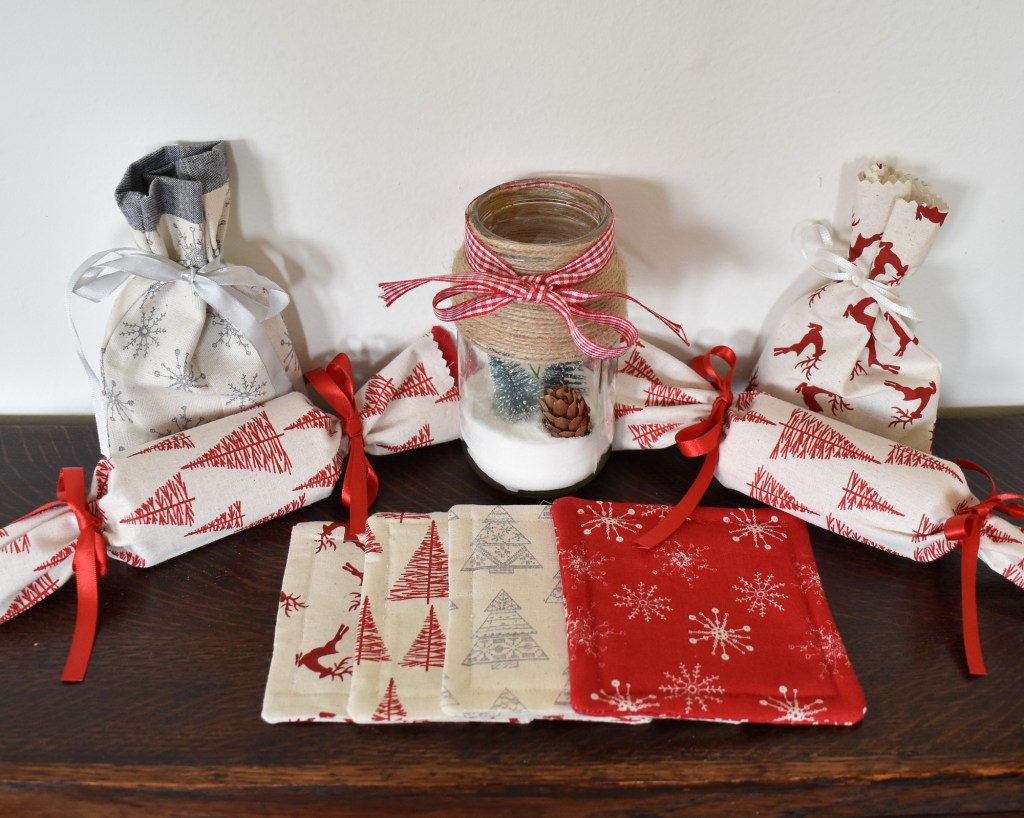
Throughout these Twelve Crafts of Christmas I have tried to incorporate a little bit of everything. To cover every corner of the house so that those of you feeling crafty and festive can bring your very own beautiful, handmade touches to every part of your home and life. And to finish up I am going to show you three different ways to use up some of those leftover pieces of fabric, ribbon, and other crafty bits and pieces that some of us always seem to have hanging around.

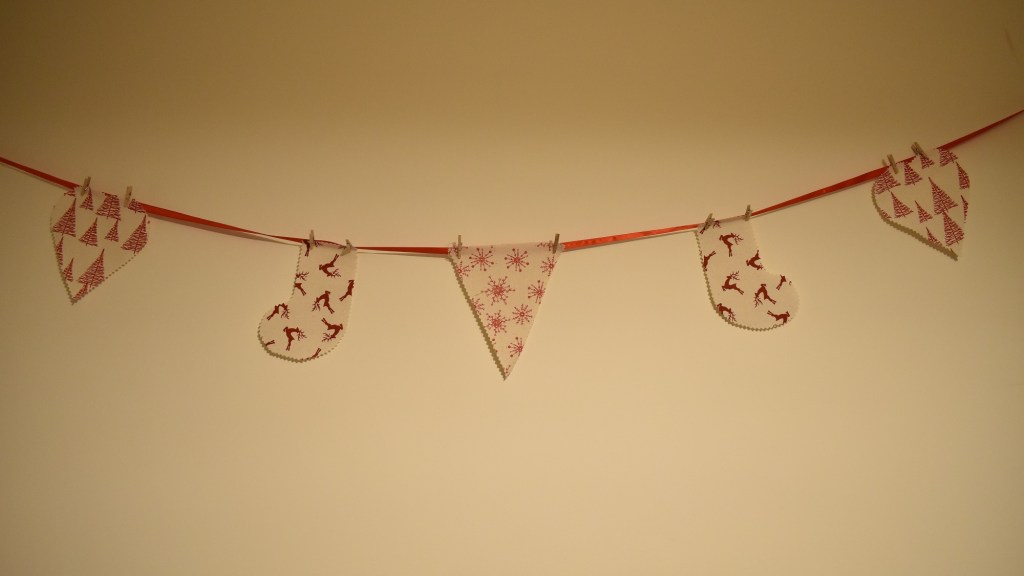
No-sew bunting

This is the perfect extra touch for those of us who perhaps don’t have time to do all the sewing involved in true bunting but still want to adorn our walls in this traditional way. The beauty of this is you can use up any leftover pieces of fabric, any size, any colour, and make any shape you want out of what you have.

What you’ll need:

Fabric (whatever you have leftover)

Ribbon (as long as you want it to be)

Pinking shears

Cardboard for making templates (the back of cereal box is perfect)

Scissors

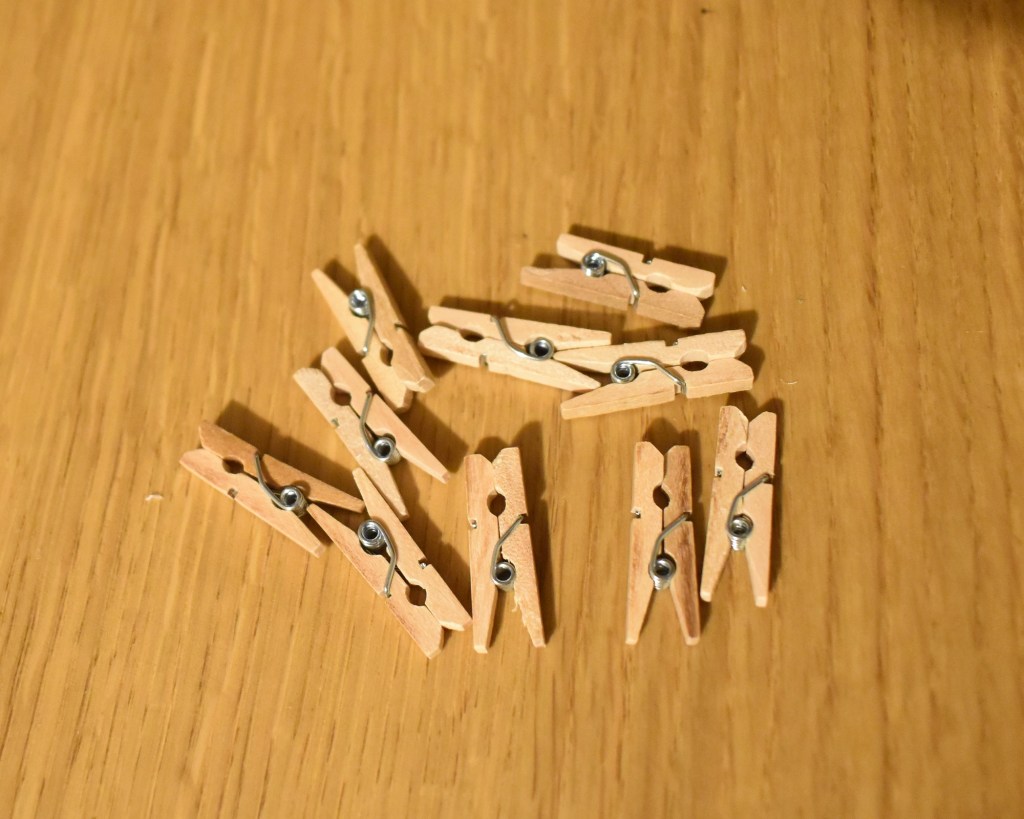
Mini craft pegs

How to make your no-sew bunting

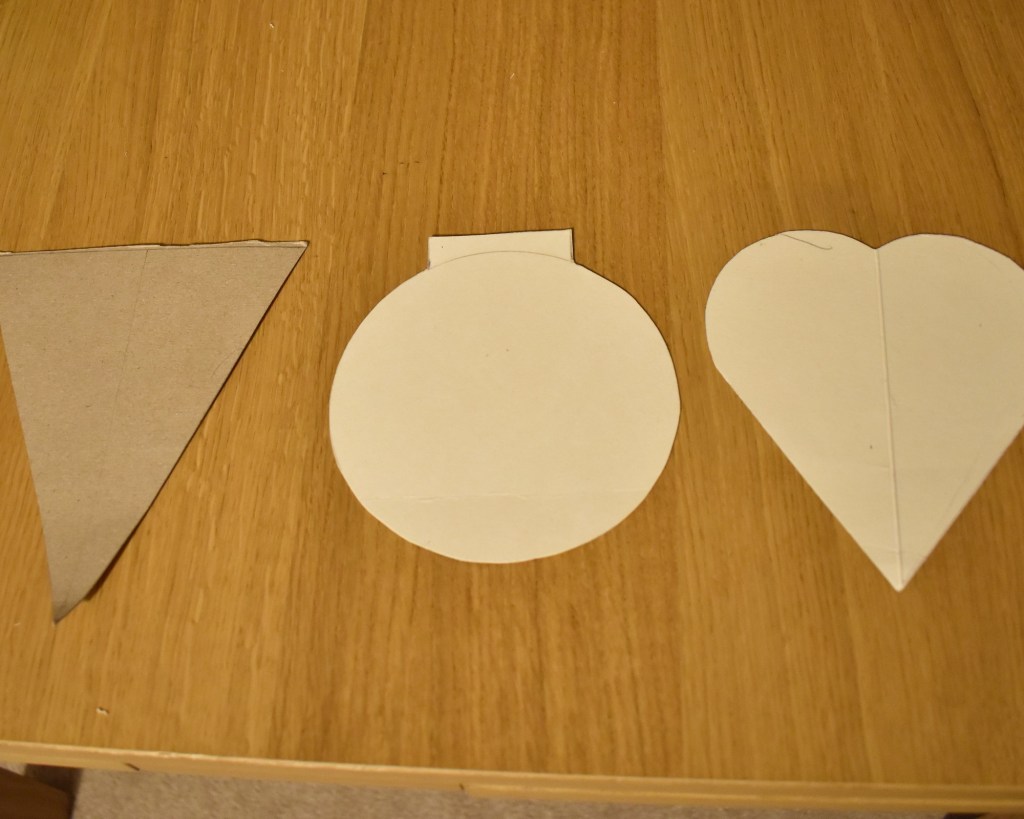
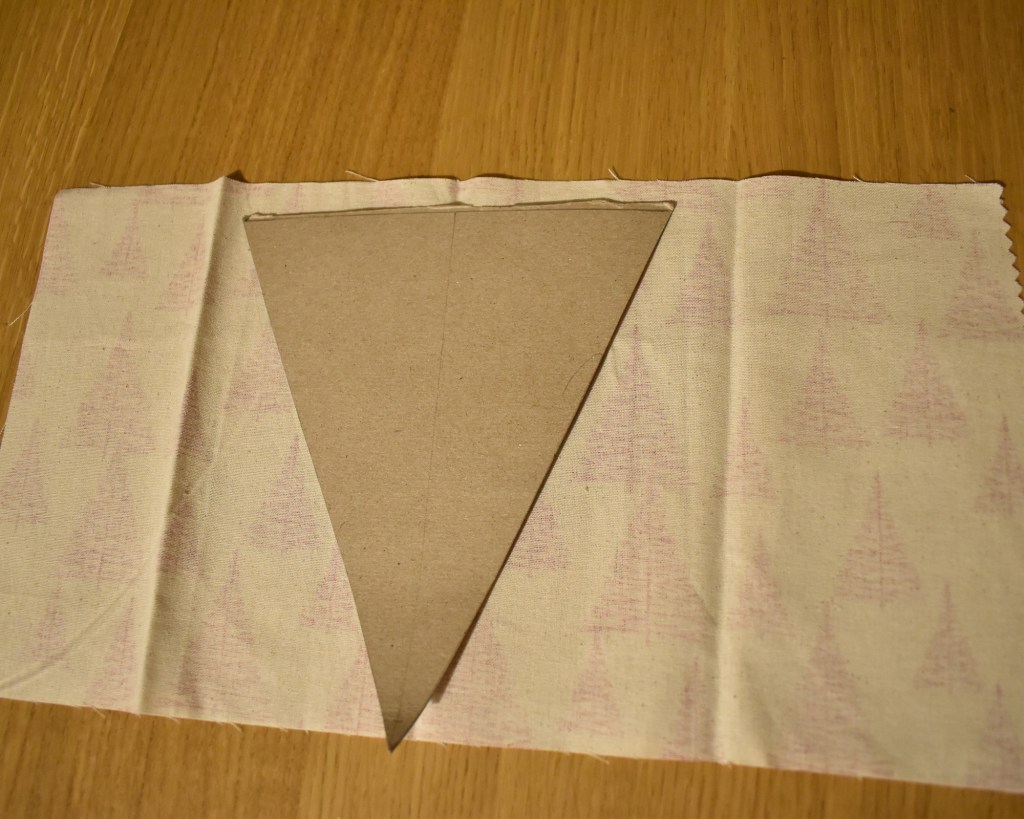
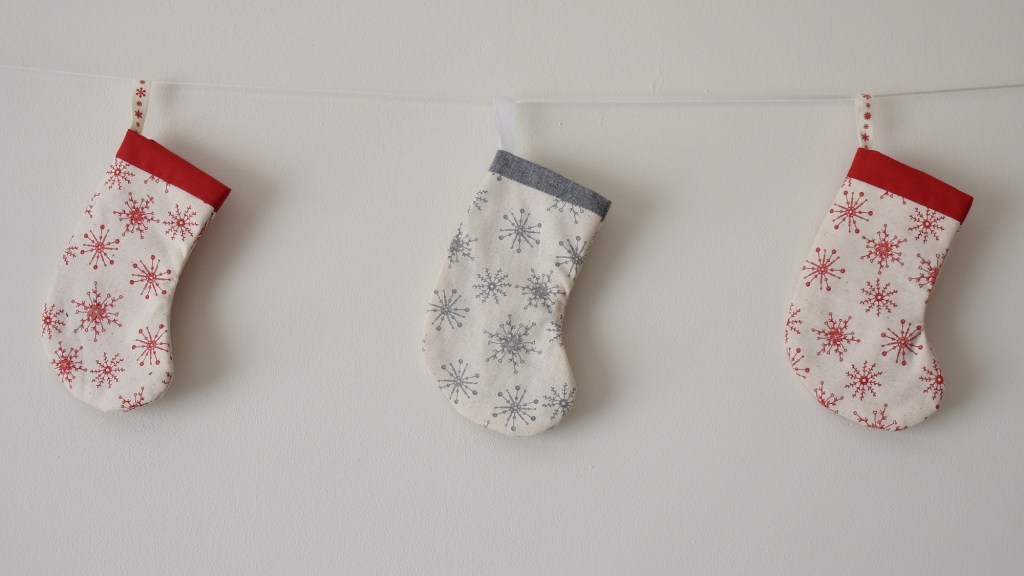
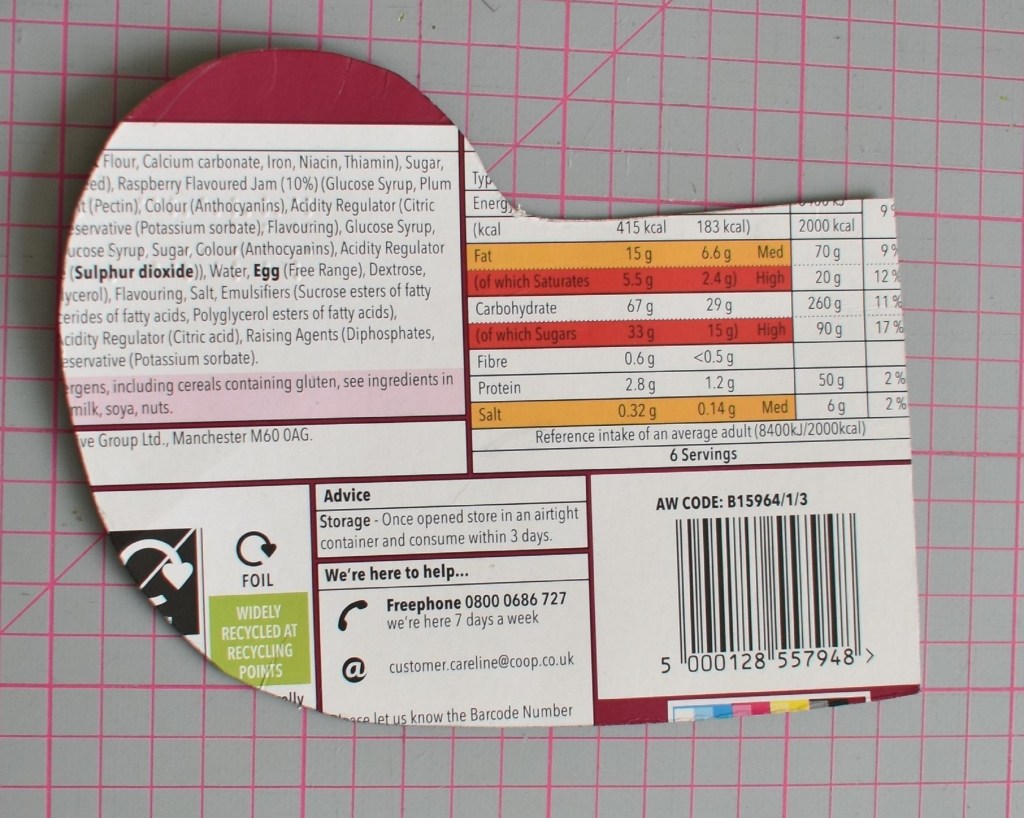
1) First of all you will want to make templates for whatever shape you want to use. For my bunting I opted for traditional triangles, baubles, stockings and hearts.

Top Tip

For instructions on how to create a perfect triangle shape check out Week 11:

https://wordpress.com/post/jilliansharplesdesign.com/981

For the baubles, I simply drew around an appropriate sized plate and added a wee rectangle on one edge for the top.

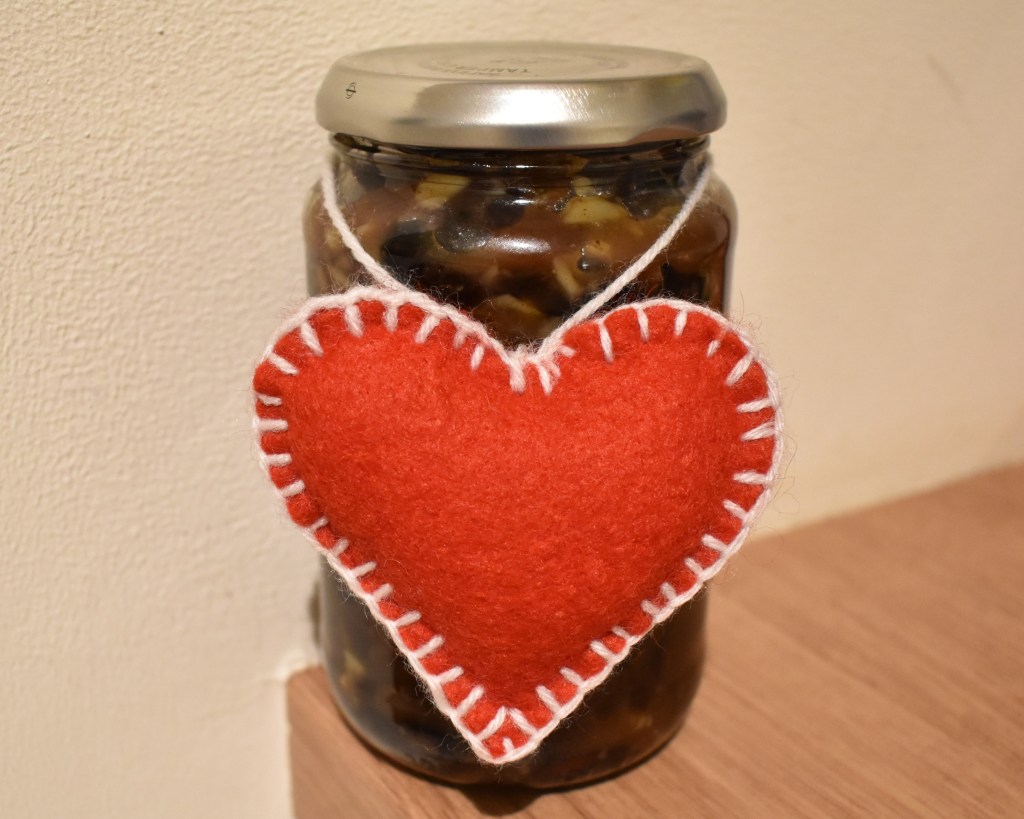
For the heart please see below under the hanging hearts craft

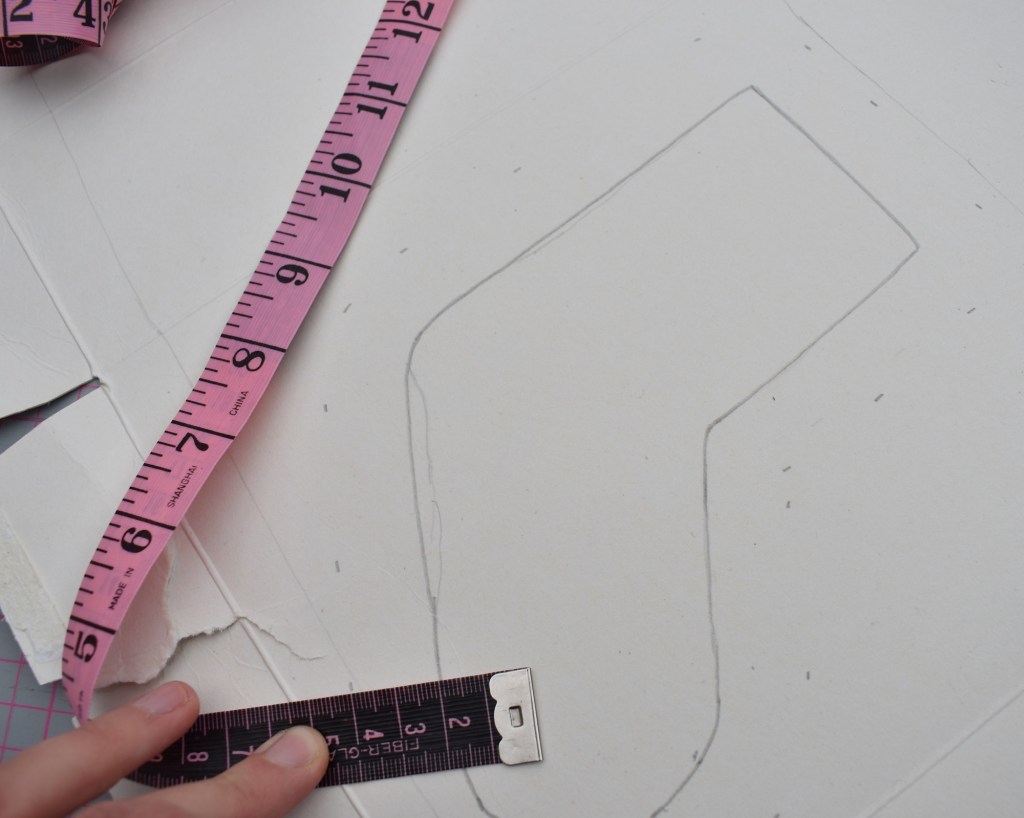
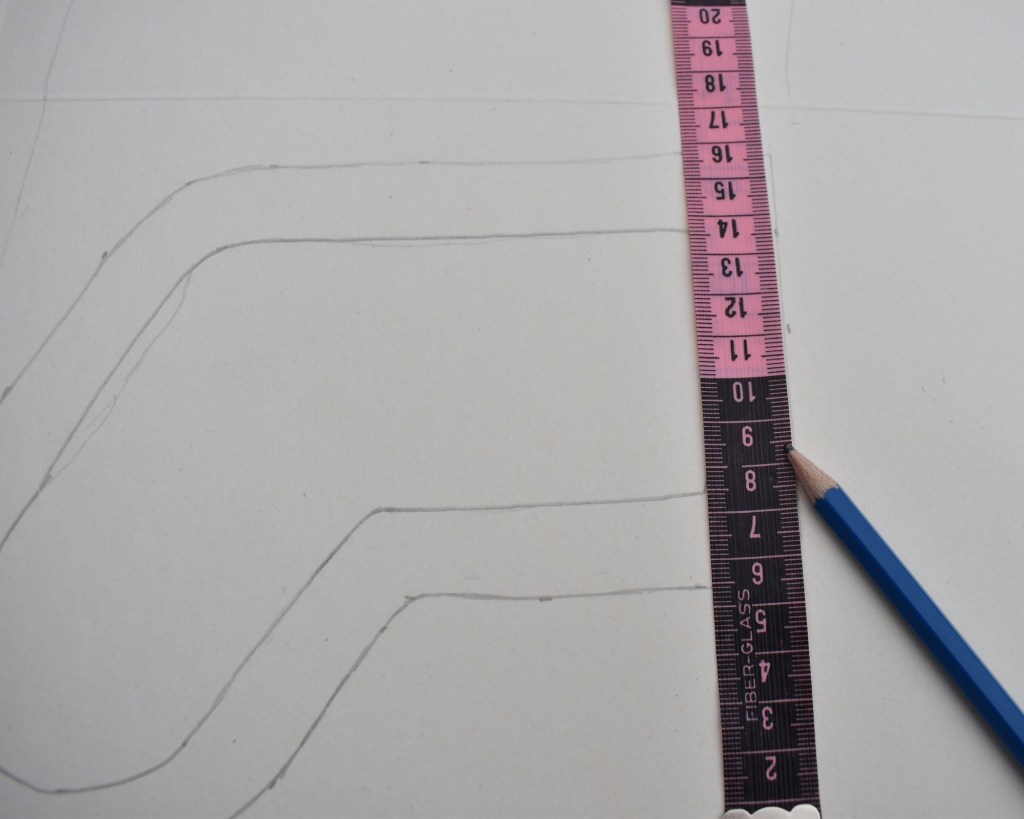
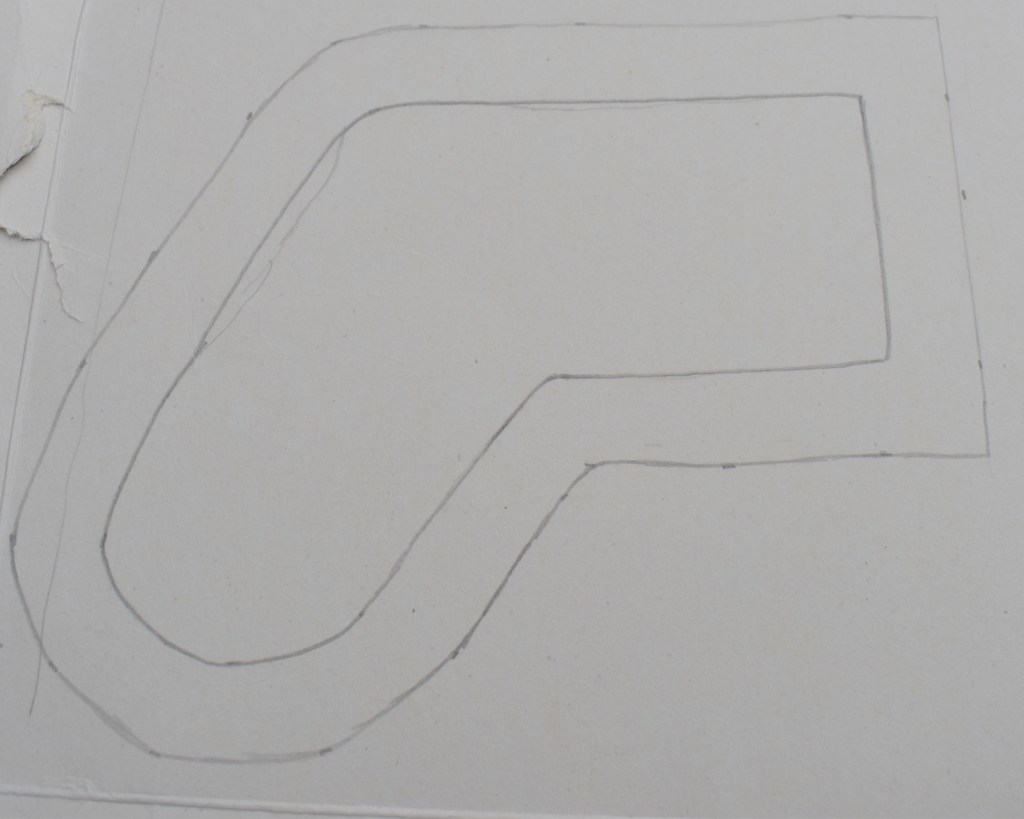
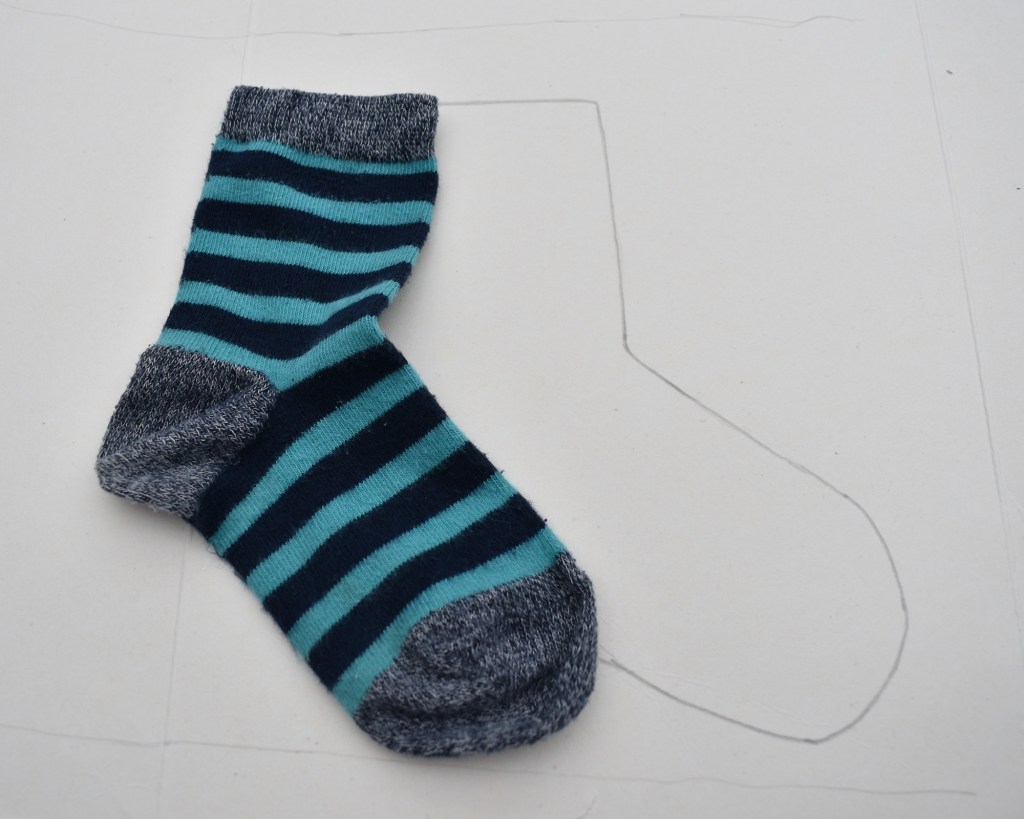
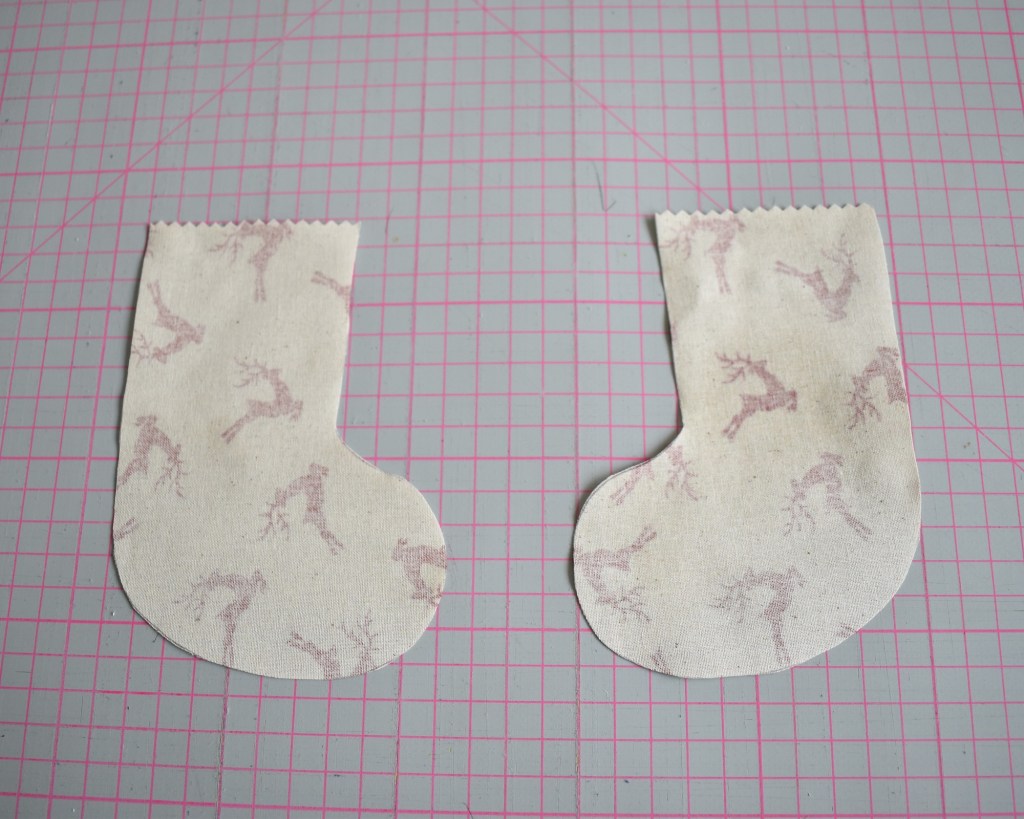
For stockings, simply draw around a sock of an appropriate size

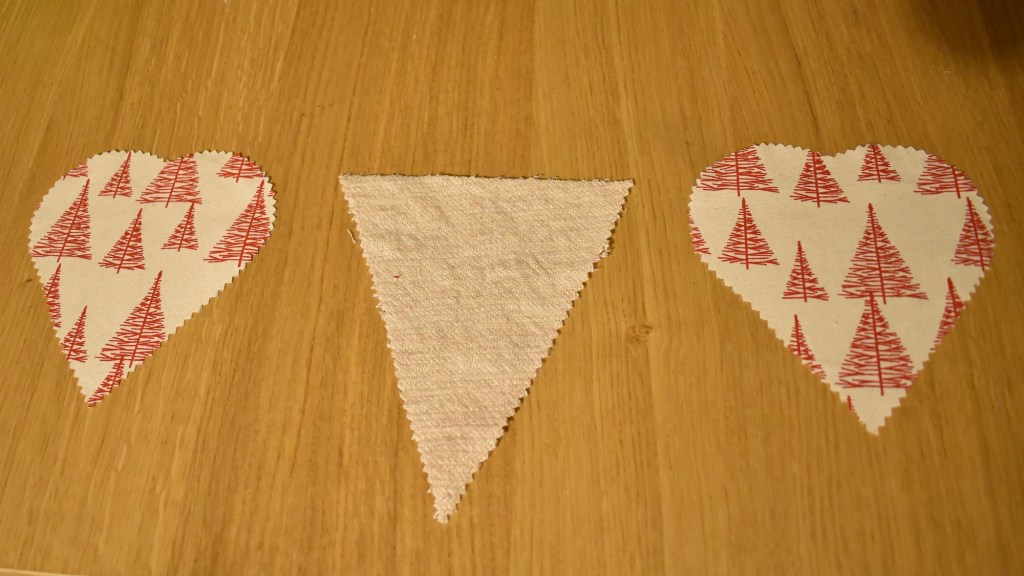
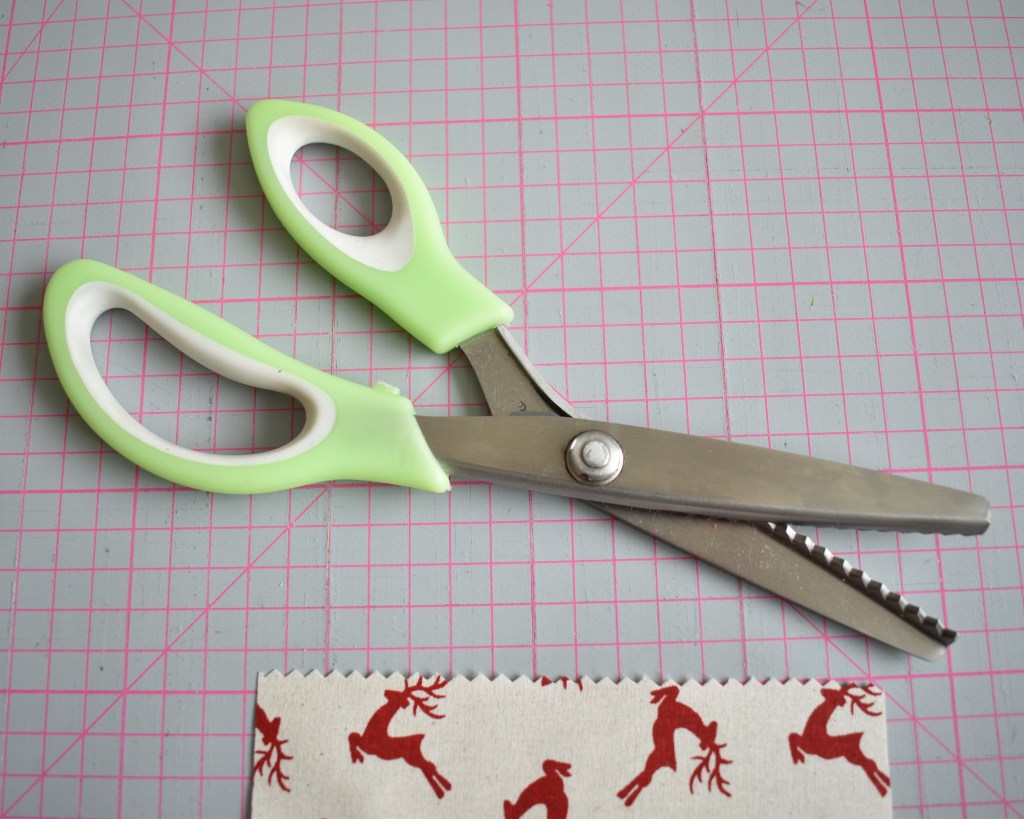
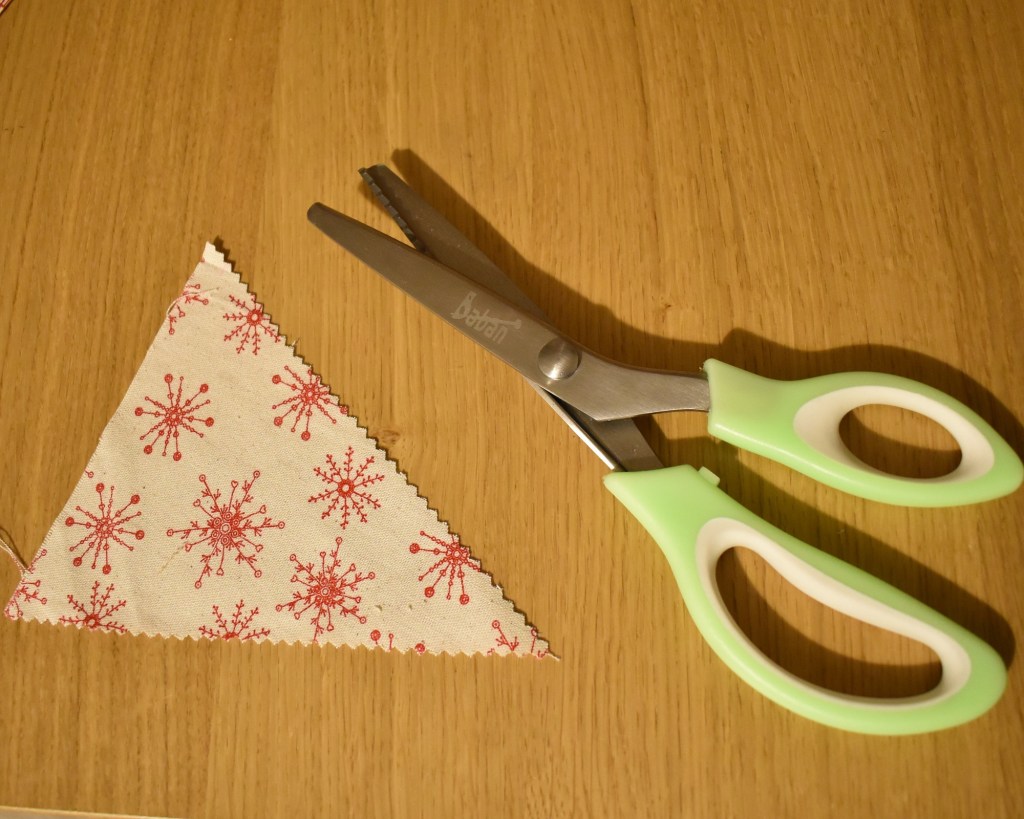
2) Using pinking shears cut out the shapes. This is the easiest option as pinking shears create an attractive triangular edge that helpfully prevents fraying, meaning you can use these year after year. If you don’t have pinking shears, or you like a more rustic look you can also just use a regular pair of scissors and embrace any fraying as part of the design.

3) Hang your ribbon where you would like the bunting. I put mine between two doors and simply used blu tac to secure the ribbon to the frame. It can’t be seen and leaves no mark but hanging between pictures or mirrors, or along fireplaces are also lovely ideas.

4) Using the craft pegs simply hang your shapes to the ribbon. I used two pegs for each shape so they hang evenly. You can measure the distance between each if you like or simple follow your eye.
And, Voila! Some simple but attractive bunting that takes hardly no time at all but finishes off an empty space with a lovely handmade touch

Glass Jars

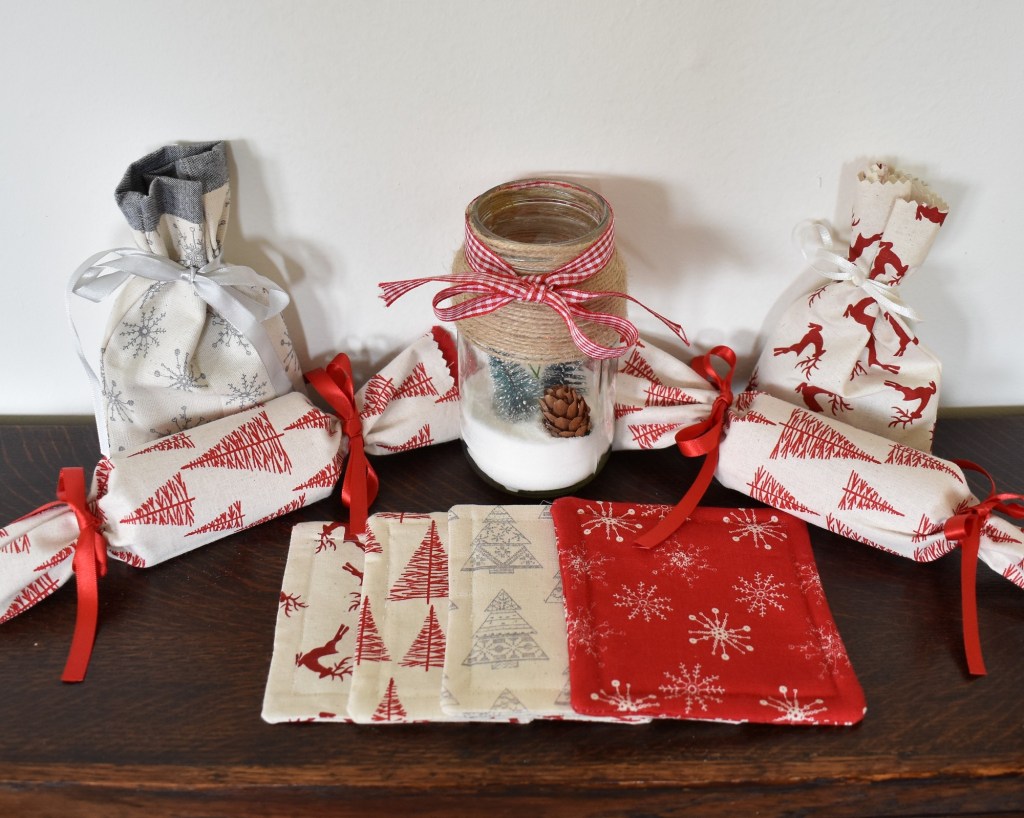
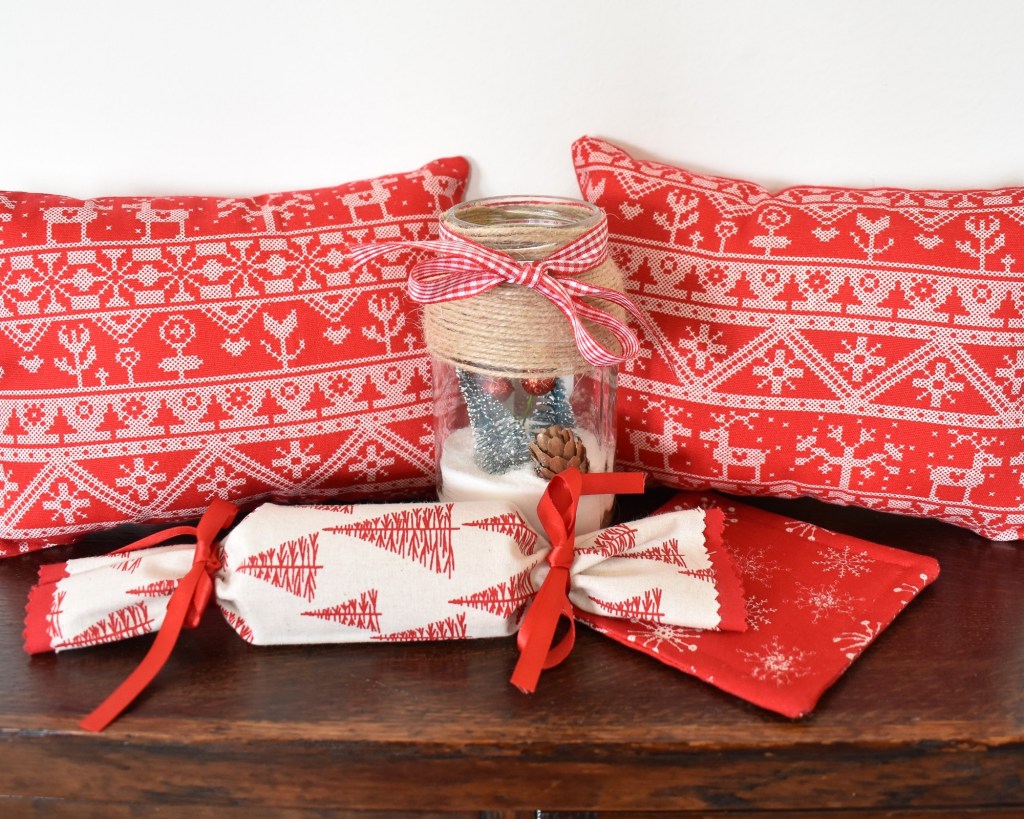
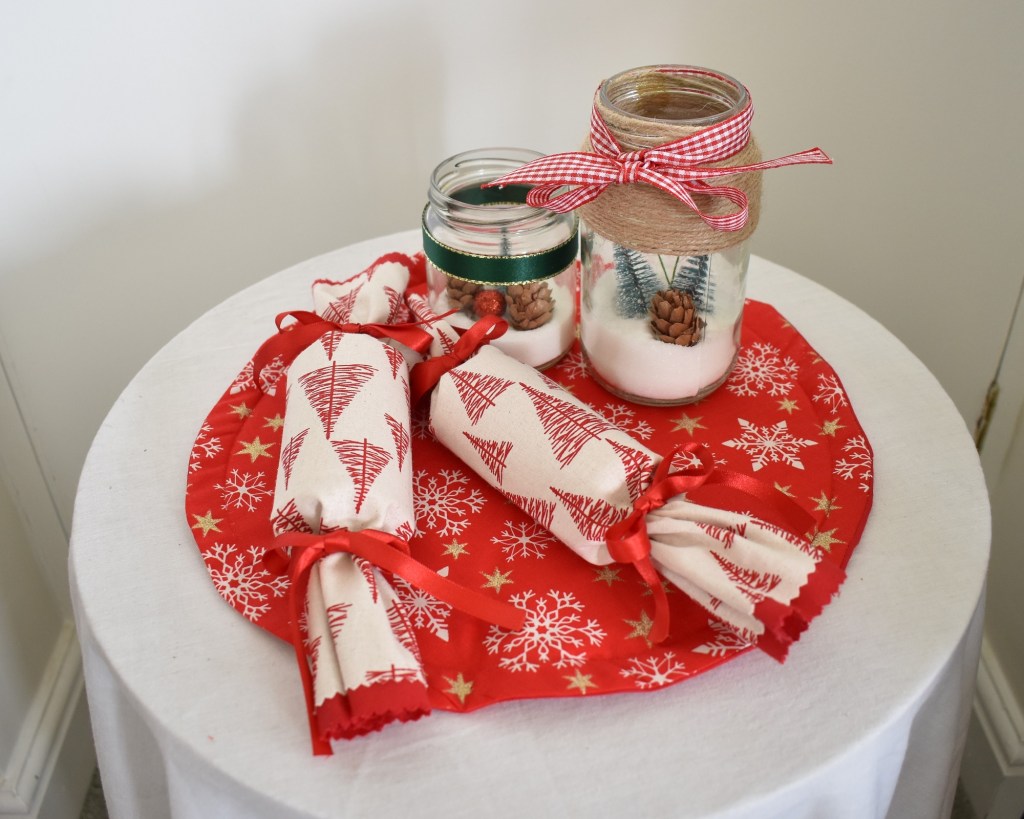
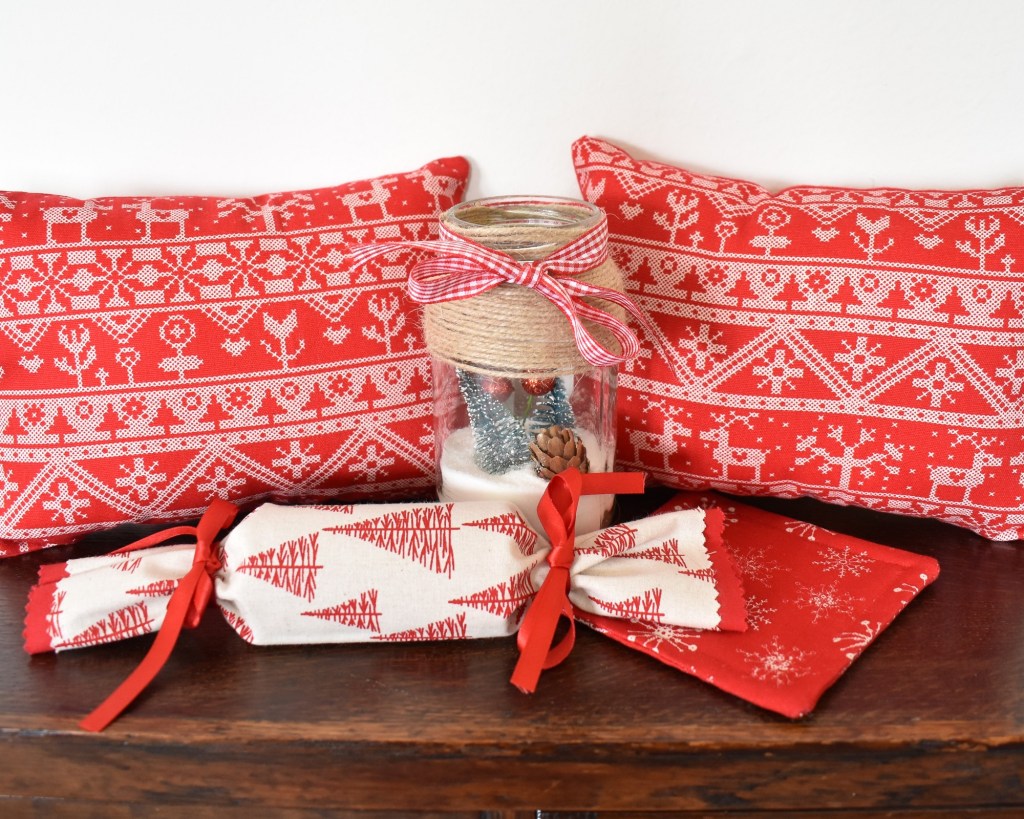
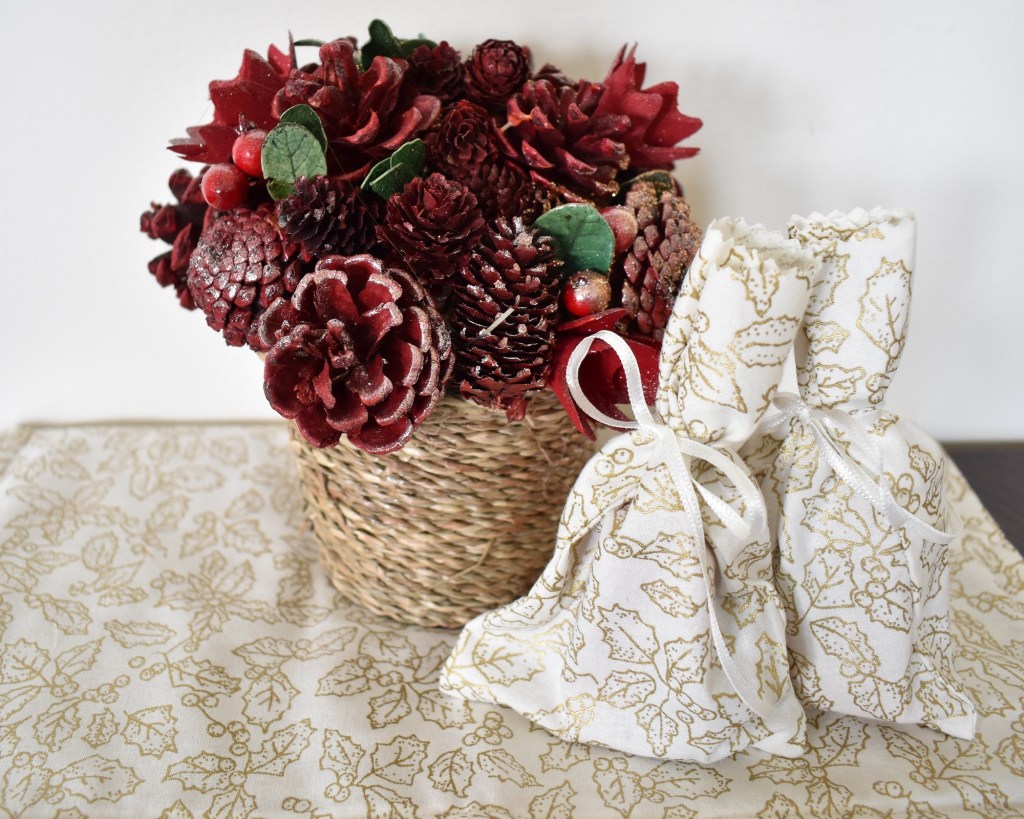
These are particularly perfect for if you want to create an extra handmade table piece or to fill a corner of a window sill, or if you want something sweetly festive to pop a candle in. They are a great way to use up extra pieces of ribbon that always seem to be hanging around a crafters sewing box! Through the process of working through these crafts I have been amazed at how many ribbons and odd pieces of decorative items I have come across and this little project seemed the easiest way to use many of them up.

What you’ll need:

Glass jars (fully washed and dried in whatever size you fancy )

Ribbon, string, pieces of fabric

Scissors, fabric glue

Decorative items to place inside (The Works is a great place to pick up cheap craft supplies that are perfect for these kinds of projects, I got mini trees, baubles and pine cones)

  1. For my first jar, I simply glued a piece of ribbon around the top, filled it with sugar to imitate snow, and inserted some of my craft supplies. It would also be cute to simply add a candle.

For my second
The Twelve Crafts of Christmas #11 Christmas Bunting

On the eleventh day of Christmas Jillian Sharples Design gave to me, some lovely Christmas bunting . . .

Hi there, so here we are inching closer and closer to Christmas now! Maybe you’re starting to think about putting up the Christmas tree and finalising your Christmas decorations. Maybe there’s just a few odd presents you still want to buy, or maybe you’re the kind of person who leaves it all till December so you’re just starting to think about it. Whichever way you approach the festive season it is definitely on it’s way. But, not to worry, there’s still time for me to show you a couple more Christmas crafts so that you can add a little bit more of the handmade to Christmas 2020.

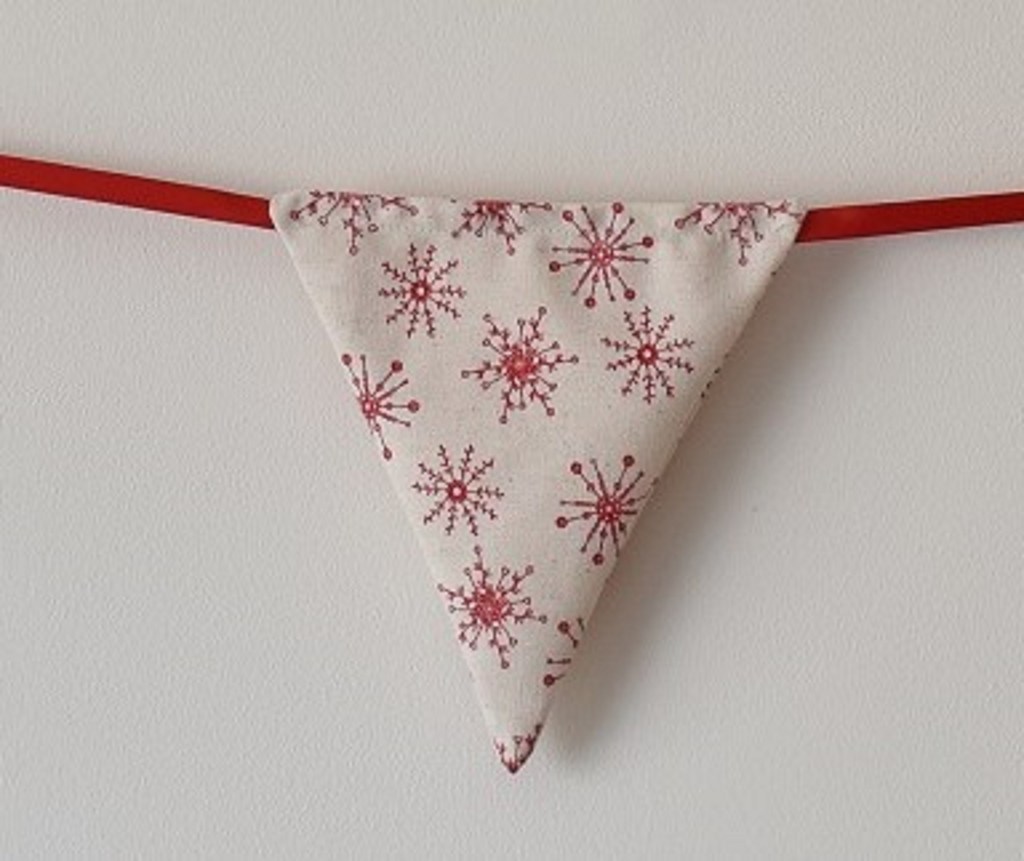
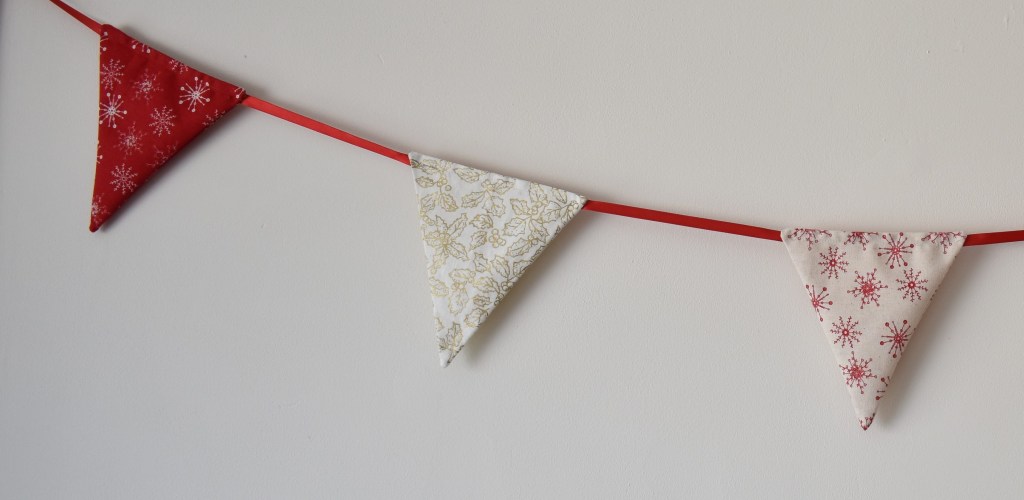
And this week we’re going to be looking at an old and firm favourite, bunting! Always popular for special events and holidays, or even for just decorating your own house. It is nice and simple to make and shouldn’t take up too much of your precious time!

What you’ll need for your Christmas bunting:

Fabric or fat quarters (the template measures 18 cm x 20 cm so you’ll be able to get 4 triangles, or 2 pieces of bunting when sewn, out of each fat quarter)

Card to make your bunting template (see note below), pencil, ruler and scissors 

Sewing machine 

Needle, pins, matching thread 

Cutting board, cutting ruler and roller cutter if you have them

OR

Scissors and a tape measure  

Ribbon to hang the bunting from (the length of this is entirely your choice depending on how long you want your bunting to be)

First things first…

Making your template

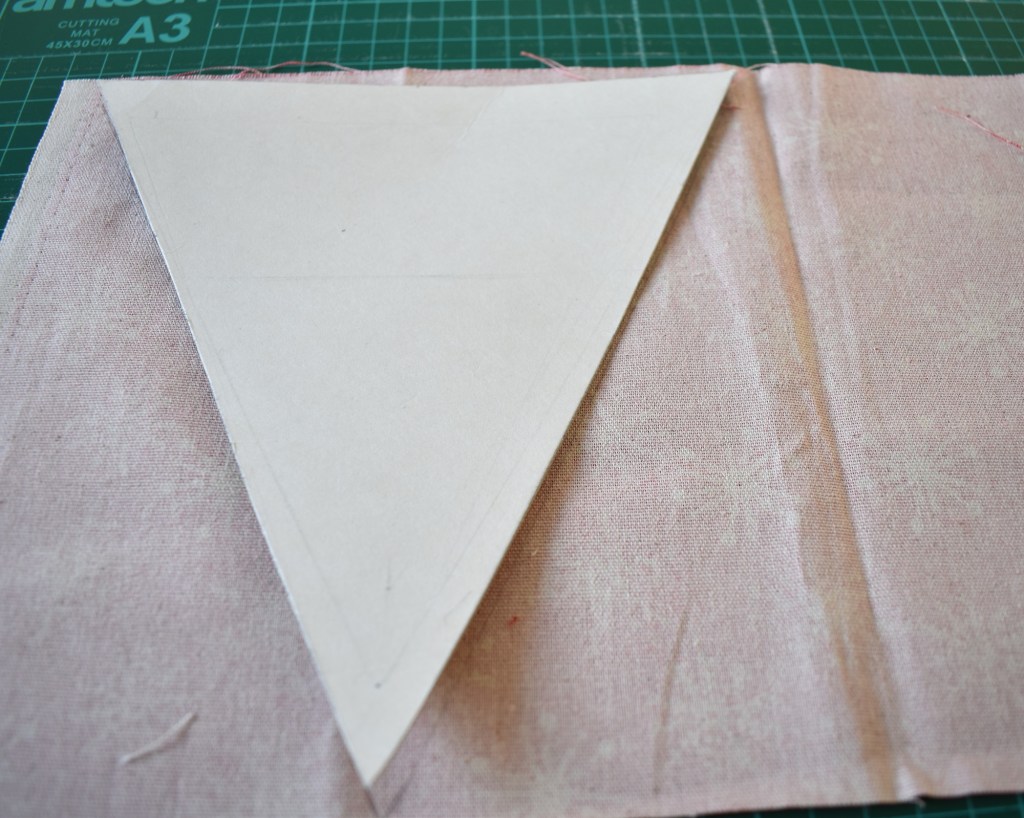
Using the card make a simple triangle template, the top edge should measure 17 cm, the two side edges should measure 21cm each.

Top Tip

Draw your top line, find the middle point and a draw a line straight down 19 cm (measure in from the edge of the card at the top and bottom to make sure this line is straight). Draw your two side lines so they join the main line at the 19cm point. This will give you two sides of 21 cm.

Making your bunting

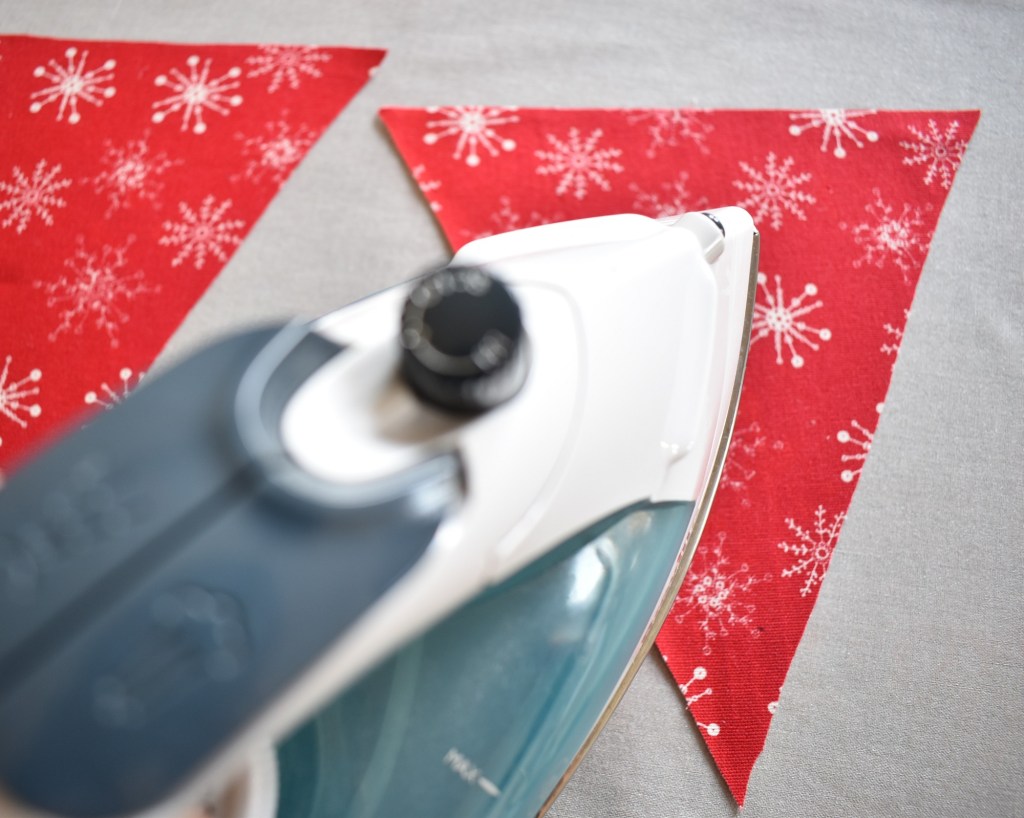
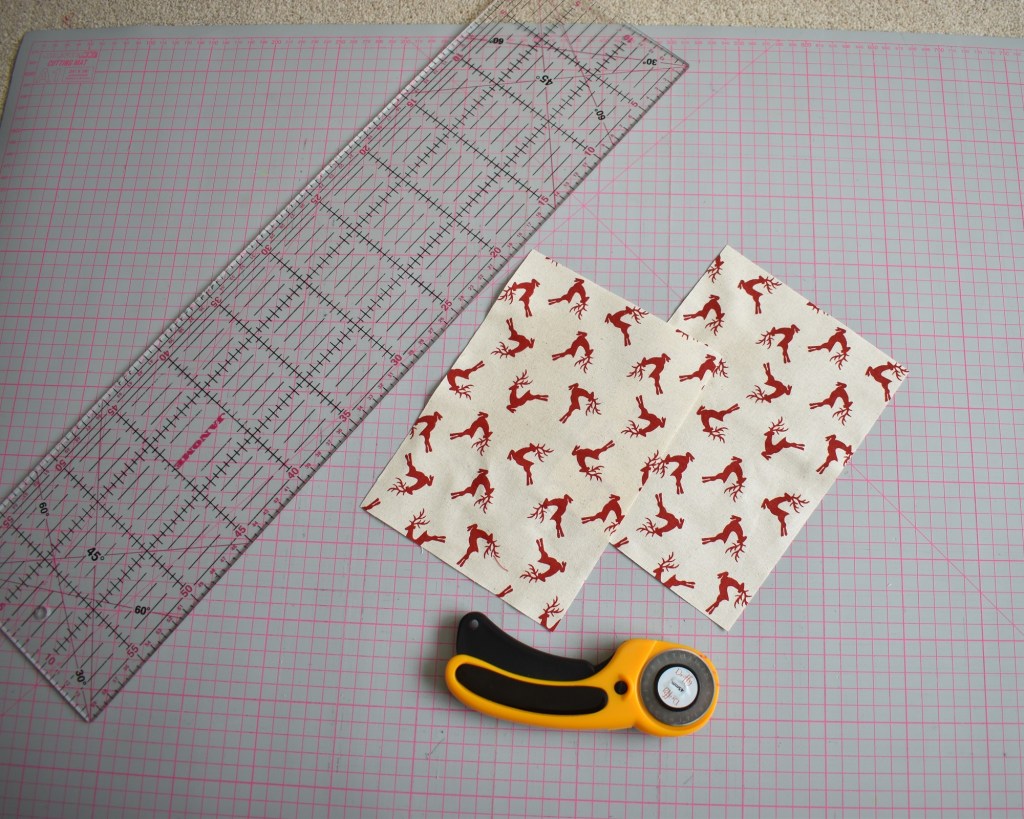
1) If necessary iron your fabric to remove any creases. Place the template on the back side of the fabric and draw round it twice. For the second triangle, turn the template upside down and place it alongside the long edge of the first. This will result in less fabric wastage that you may wish to use for something else. Cut out your triangles.
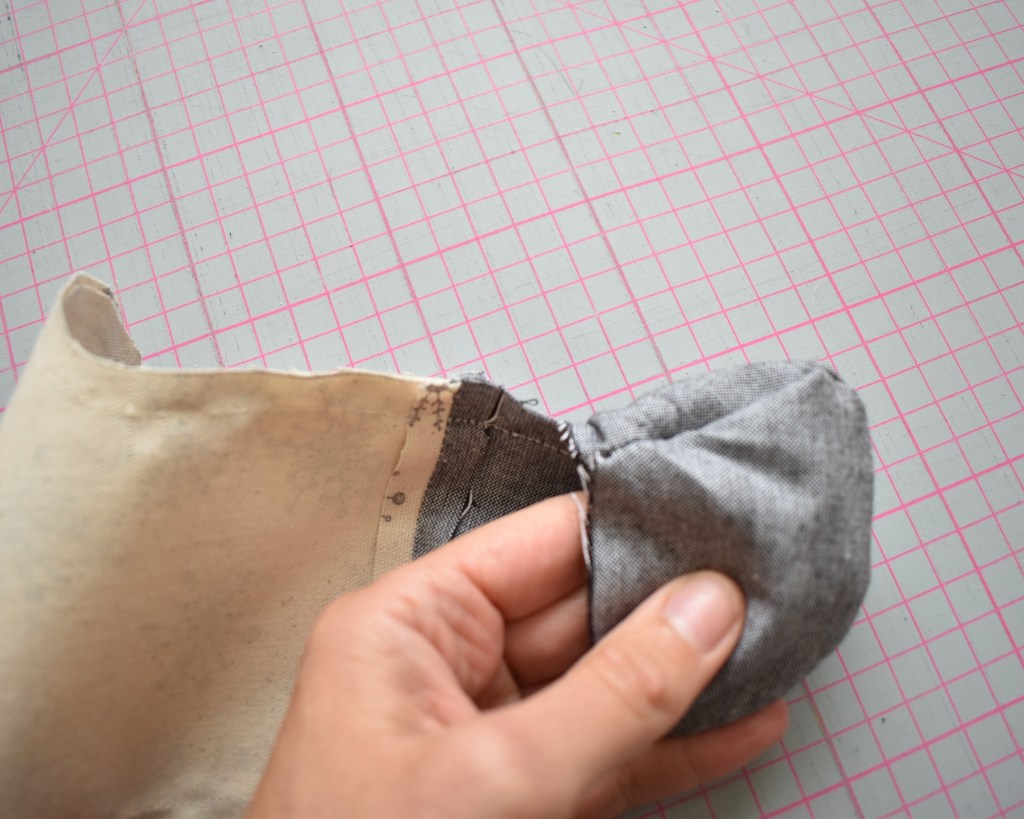
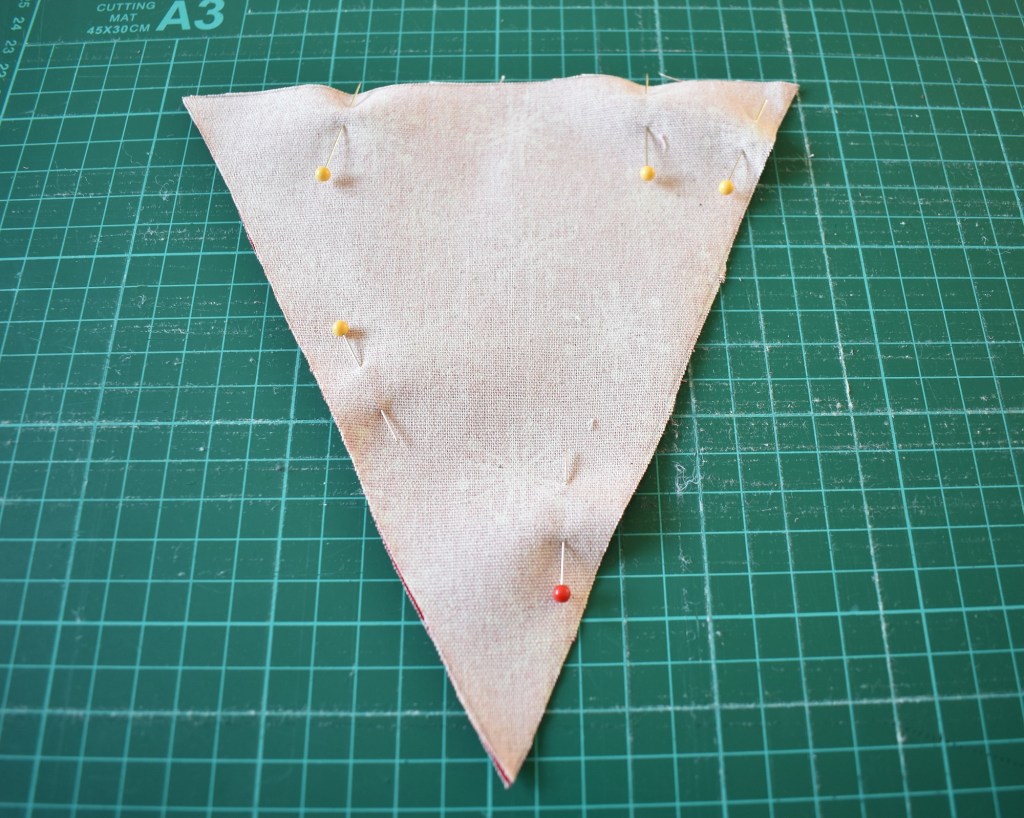
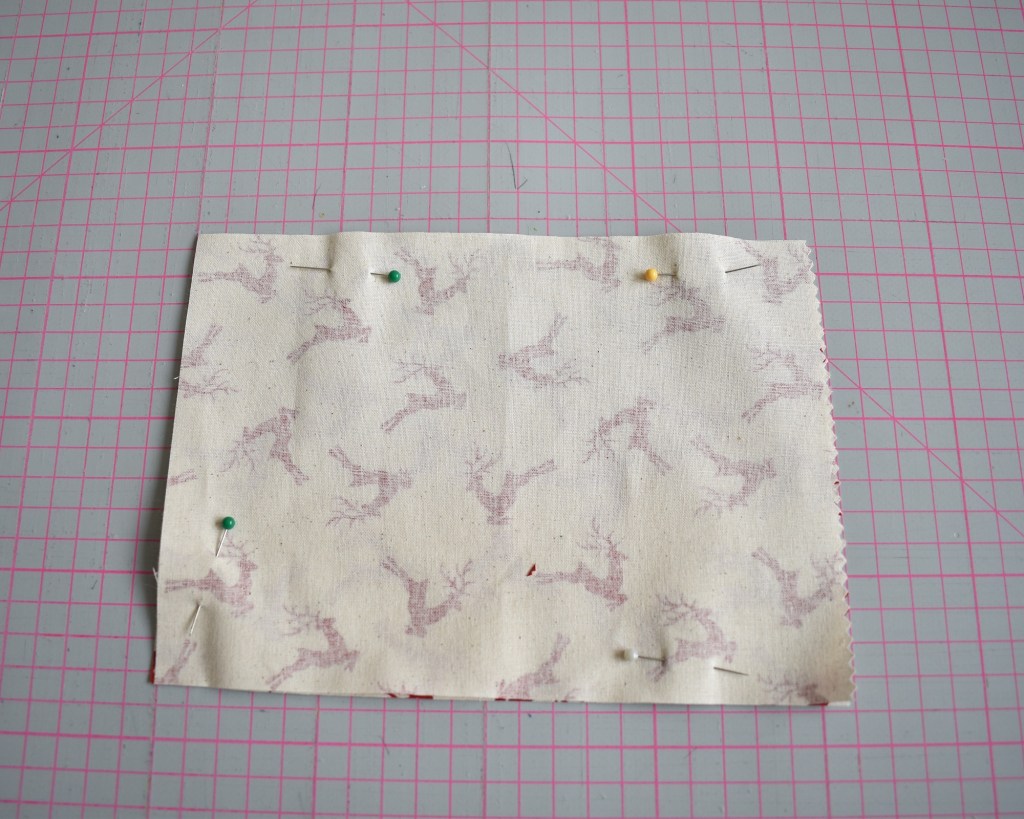
2) Place the first two triangles on top of each other face sides together and pin together leaving a gap of 8-10 cm along the top edge.

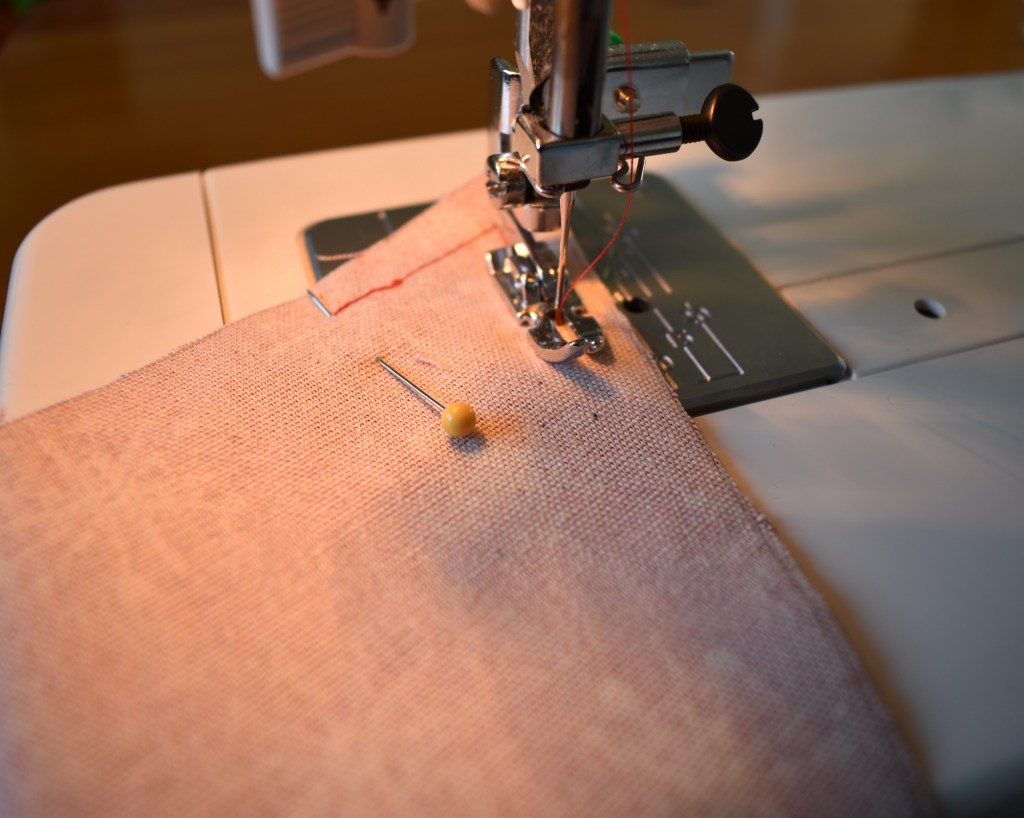
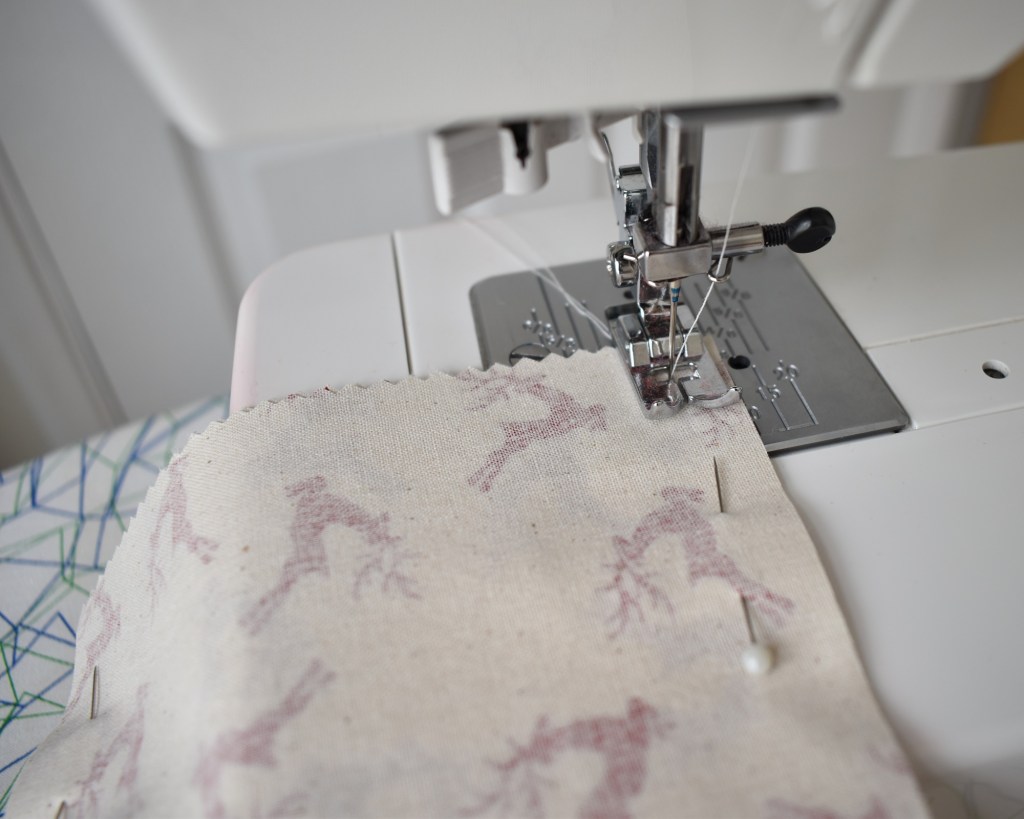
3) Start on one side of the gap, 1 cm from the edge of the fabric and 1 cm from the gap and do a few backstitches at the start and end of your stitch line. This will secure the stitches and prevent fraying.

Quick note

Please be aware that while, along the sides, the gap from the stitch line to the edge of the fabric should be 1cm, the gap into the triangular corners will be larger around 1.5-2 cm. What you want to check is that when you turn the triangle each time you are still 1cm from the edge on the next straight.

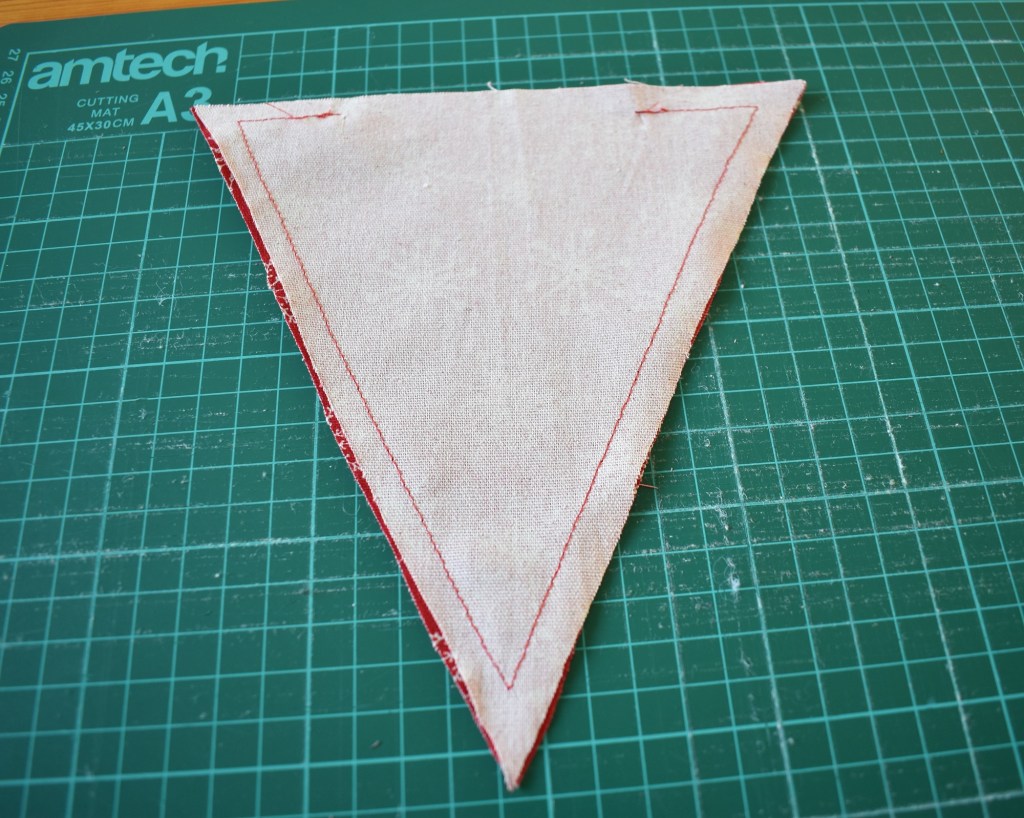
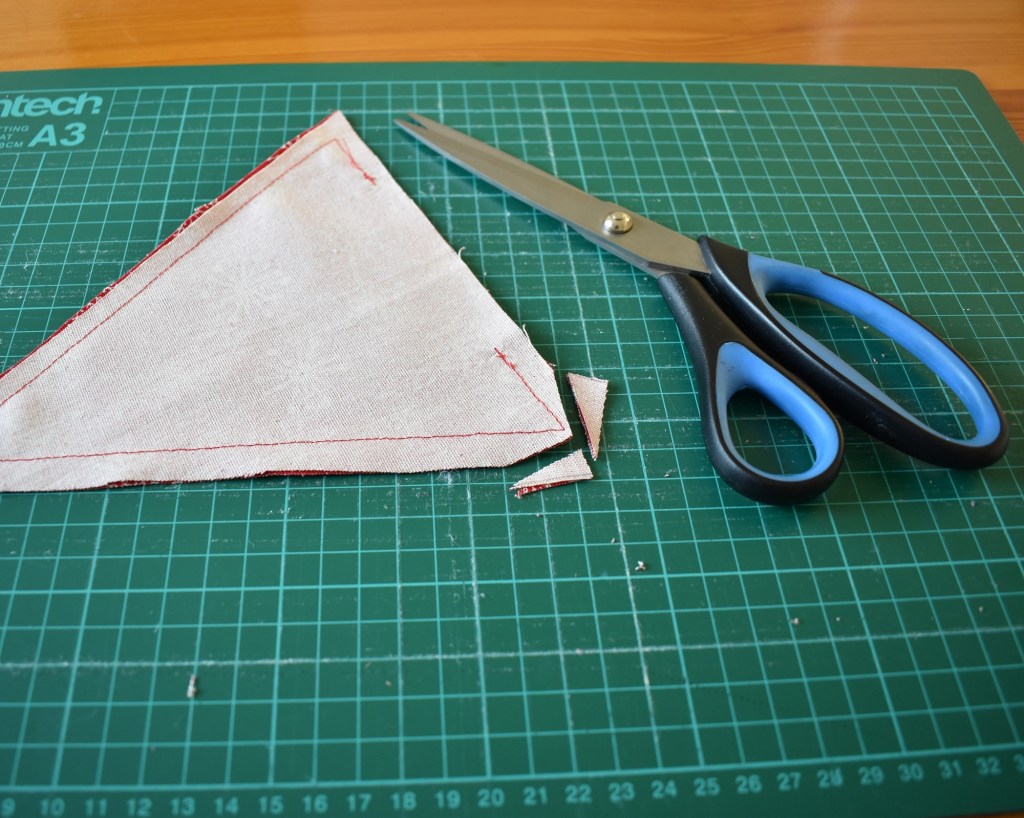
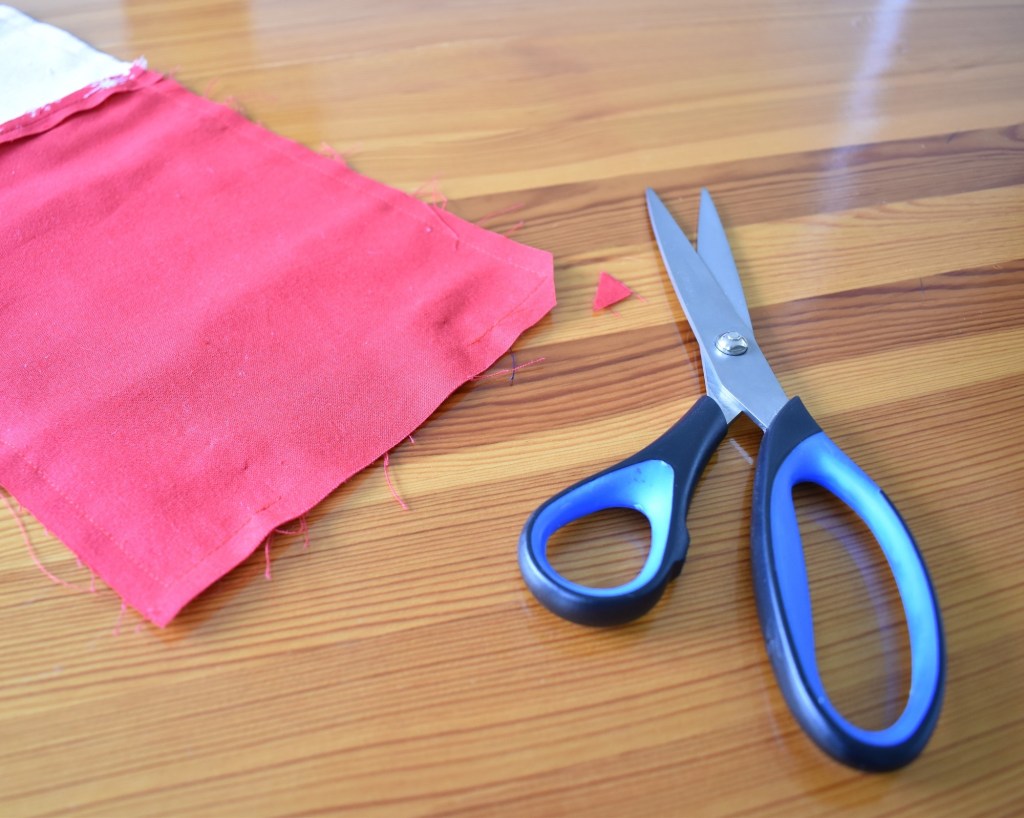
4) Cut away a point at each of the three corners, this will make the corners stand out better. But, be careful not to cut into the stitches.

5) Using your gap, turn the triangle in the right way and, using a simple ladder stitch, sew up the gap.

Top Tip

If you are unsure of how to do ladder stitch, or slip stitch as it is also known, please watch my youtube video

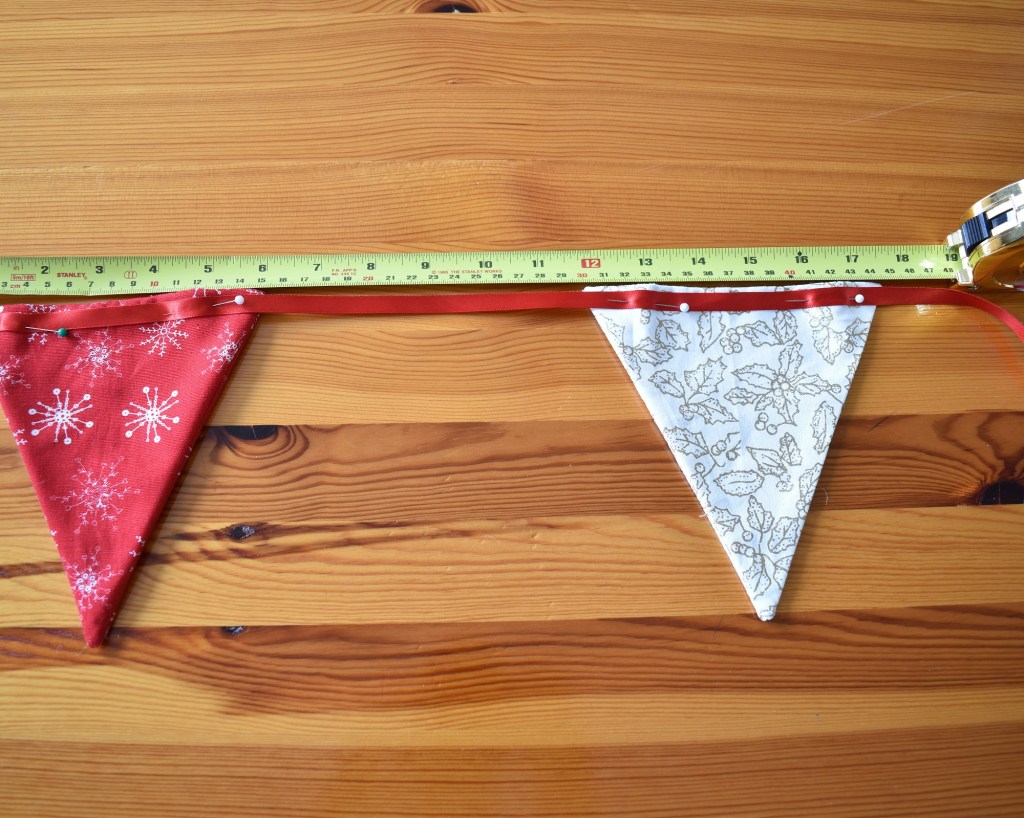
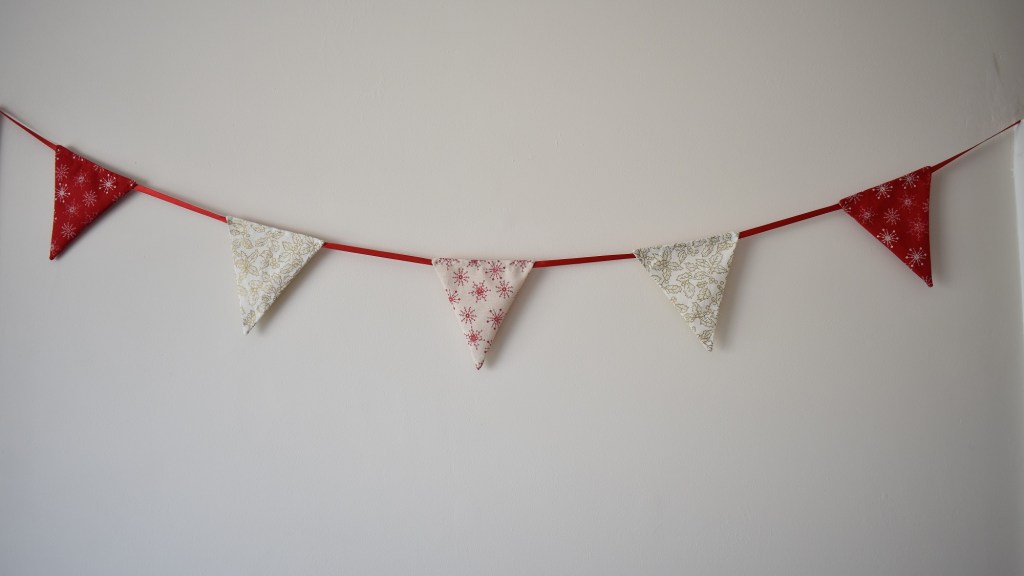
6) Once you’ve made as many triangles as you’d like, lay them out along your ribbon to decide how far apart you need to place them. First, fold the ribbon in half to find the centre point and then work outwards from there so that they are placed equally. Please note that whether you place a triangle across the centre point or start your measuring from there will depend on whether you have an equal number of triangles. For example, here I used 5 triangles so i placed my first one over the centre point. I also placed my triangles 15cm apart.

Once you have the triangles equally positioned, place them behind the ribbon and pin on.

7) Sew each triangle on the ribbon individually, doing a few backstitches at the beginning and end of each to secure the stitches.

As I was using up different scraps of fabric for this project, I had to use different colour thread for the different triangles so that it wouldn’t be visible.

Time Saver

If your triangles and your ribbon are all matching in colour, or close enough, you could simply sew one continuous line all the way along the length of the ribbon. Although the stitches would be visible on the ribbon if you looked closely, as it will be hung this really won’t be seen.

And Voila! You have a lovely set of bunting to hang round your house

Well, that’s it for this week, join me next week for our twelfth and final craft of Chrismas when I’ll be showing you a couple of different craft ideas that you can use to finish up some of those leftover pieces of fabric or ribbon as well as anything else you may have lying around the house! And, best of all, the suggestions I’ll be giving you will be great not just to add an extra bit of festive cheer to your own house, but can also be used to help decorate gifts for those hard to please individuals who may appreciate a handmade touch!

The Twelve Crafts of Christmas #10 Christmas Stocking Tree Decorations

On the tenth day of Christmas Jillian Sharples Design gave to me, a Christmas stocking tree decoration…

Hey, wow, so we’re on the tenth of our ‘Twelve crafts of Christmas’, how did that happen I wonder!? When I started these it was way back in September, Christmas was definitely a long, long, way away and to be honest it did seem a bit early. At least it seemed early to people who do all their planning and shopping at the last minute. Not my style, no way, seriously I tend to start thinking about Christmas by the end of Summer. And, I have to admit, I do wonder if it’s because of a job I once had. When I was a student I spent my university holidays working in the furnishing fabric department in Harrods. Yes, that’s definitely where my love of fabric came from and, yes, it really was a great place to work, I loved it, although it seems like a very long time ago now! Anyway, whenever I worked there in the summer they would always officially open their Christmas department around August 4th. Ok, that seems kind of early but of course it’s a shop and there’s a tourist market to capture! Well it really seems to have had a lasting effect on me as ever since I have genuinely felt as if before July is definitely too early, but any time after the start of August is a green light to start thinking about and planning Christmas! Why not, it’s all about spreading the love and joy, right?

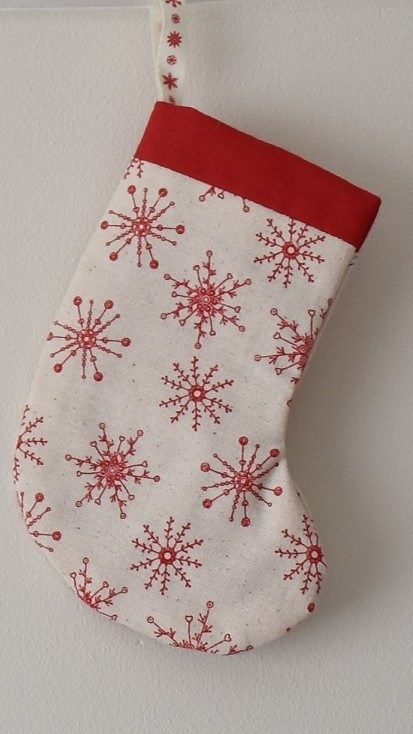
If you add into the mix the desire to get crafty and start planning a handmade Christmas, well, really, you can never start too soon right? Not if you want to get all your handmade touches just right to show off your home at it’s best. Which leads me to bring up what we are making today. I’m going to be showing you how to make these cute little Christmas stockings for your Christmas tree. Or, if you like, you could use them instead of bunting to hang round the house, or even use them as an advent calendar if you fancy making 24 of them!

I decided to include these as they always bring up lovely Christmas memories for me. When I was a kid my mum had little tree decoration stockings and would always put a wee gift or some chocolates in them. One each for me and my sister. Now I have to admit, while they still hang on her tree, they haven’t had gifts in them for many years! But she always used to like doing it and it’s a nice little tradition I’d like to continue with my son. He just loves presents so these little extras, no doubt with small cars in, will definitely be a hit this year!

So let’s get making…

What you’ll need for one Christmas Stocking Tree Decoration:

2 fat quarters (one for the main fabric and a contrasting one for the lining fabric and trim) 

Stocking template (see note below) 

Sewing machine 

Needle, pins, matching thread 

Cutting board, cutting ruler and roller cutter if you have them

OR

Scissors and a tape measure  

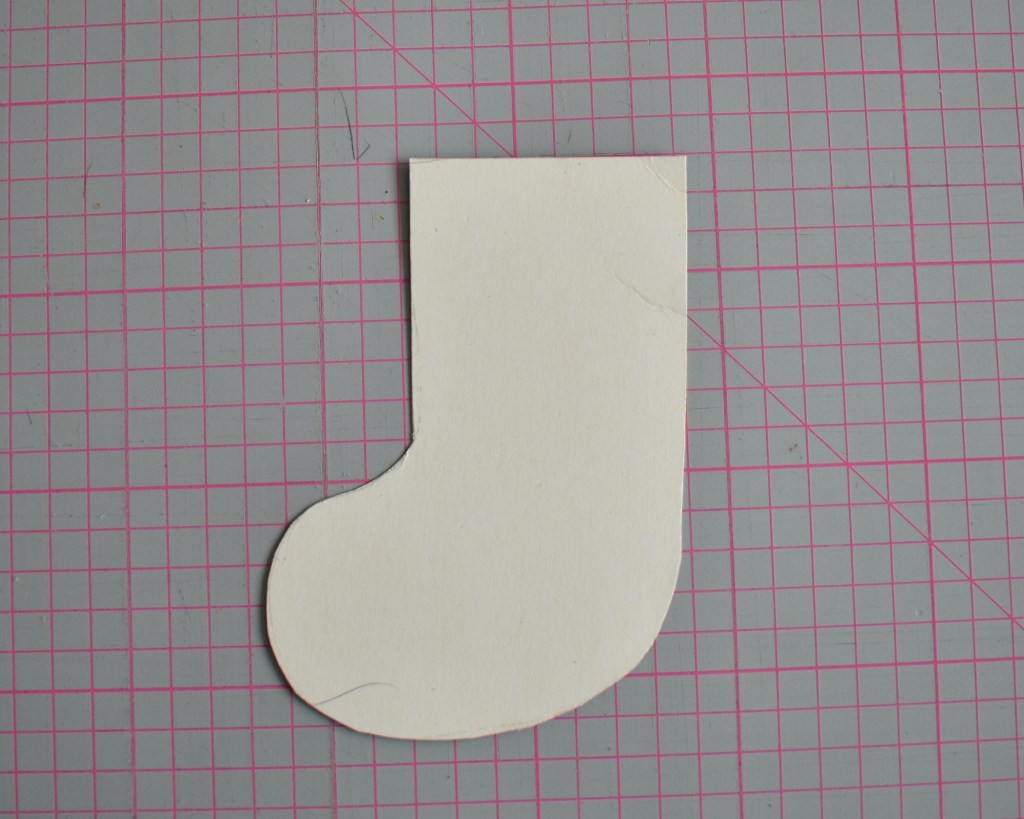
For the template 

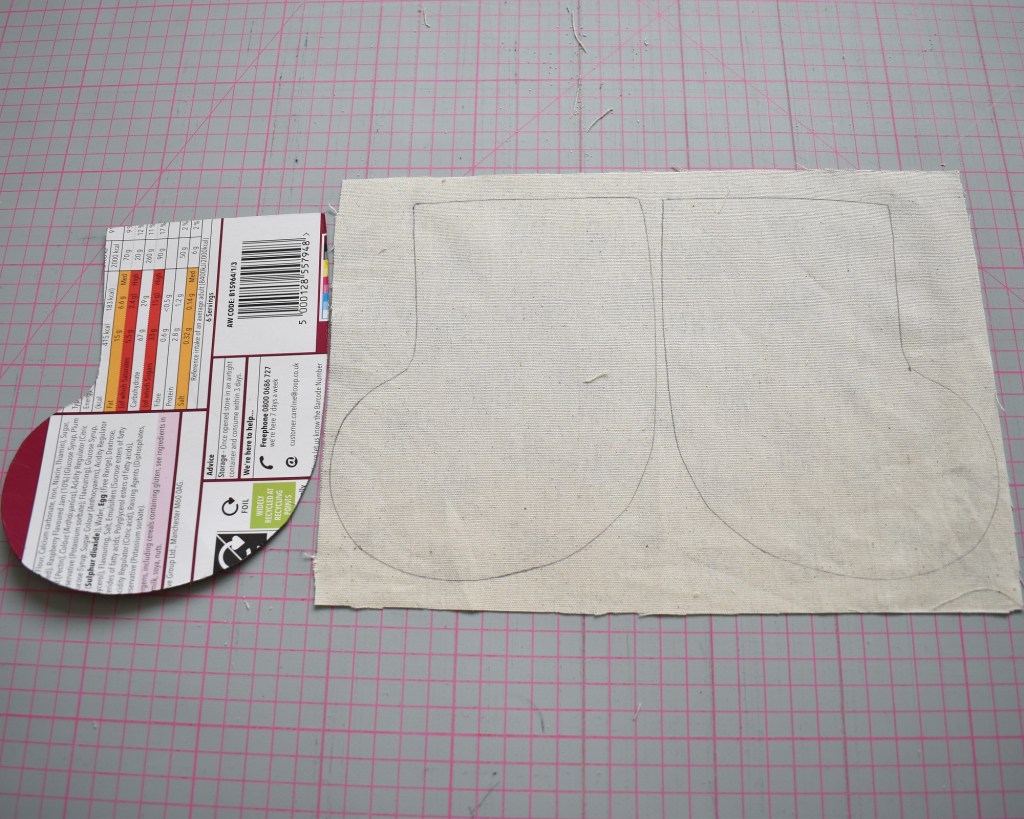
For the template you can simply draw around a sock of the size that you would like to use. Remember to add one 1cm all the way round for the hems.  

Top Tip 

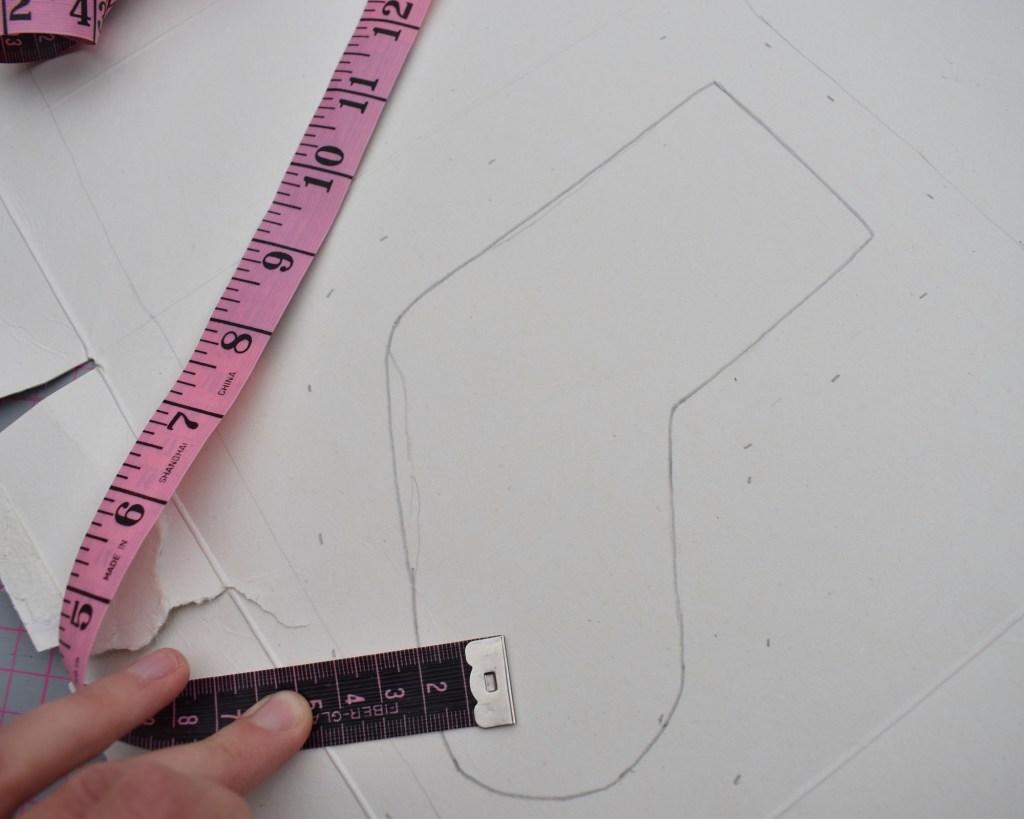
It is very simple to make a template larger. Once you have the original template drawn, use a ruler to add 1cm (or as much as you like) all the way round and then join the dots. 

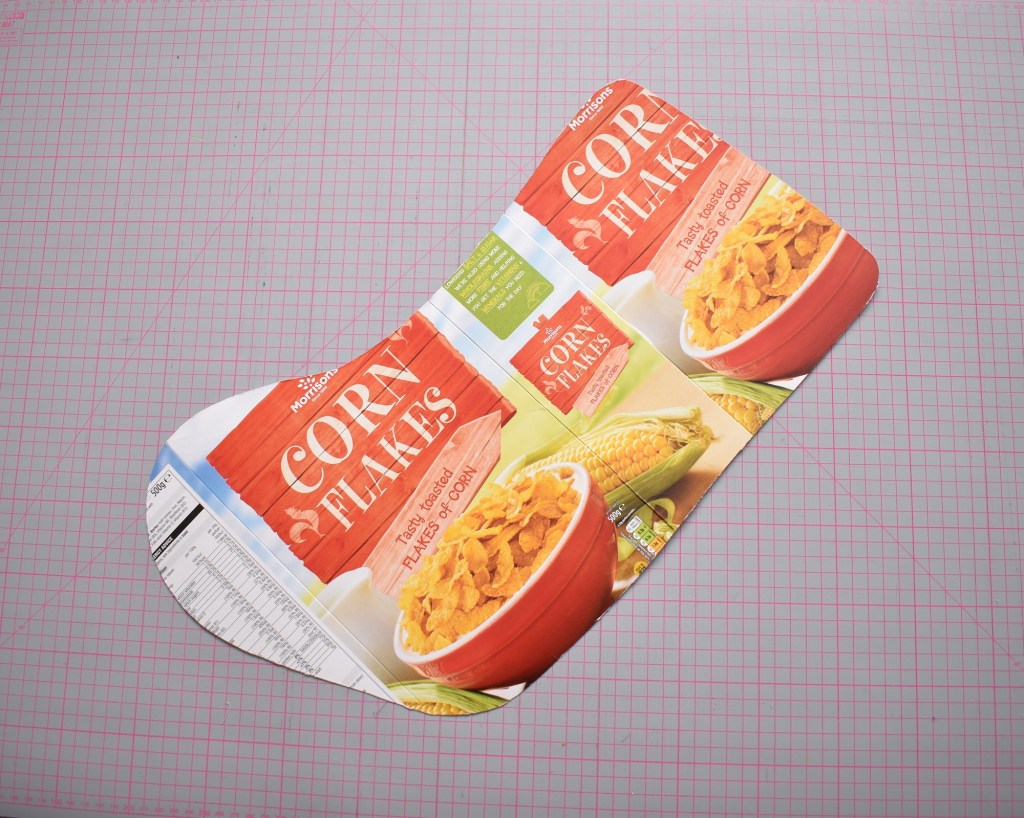
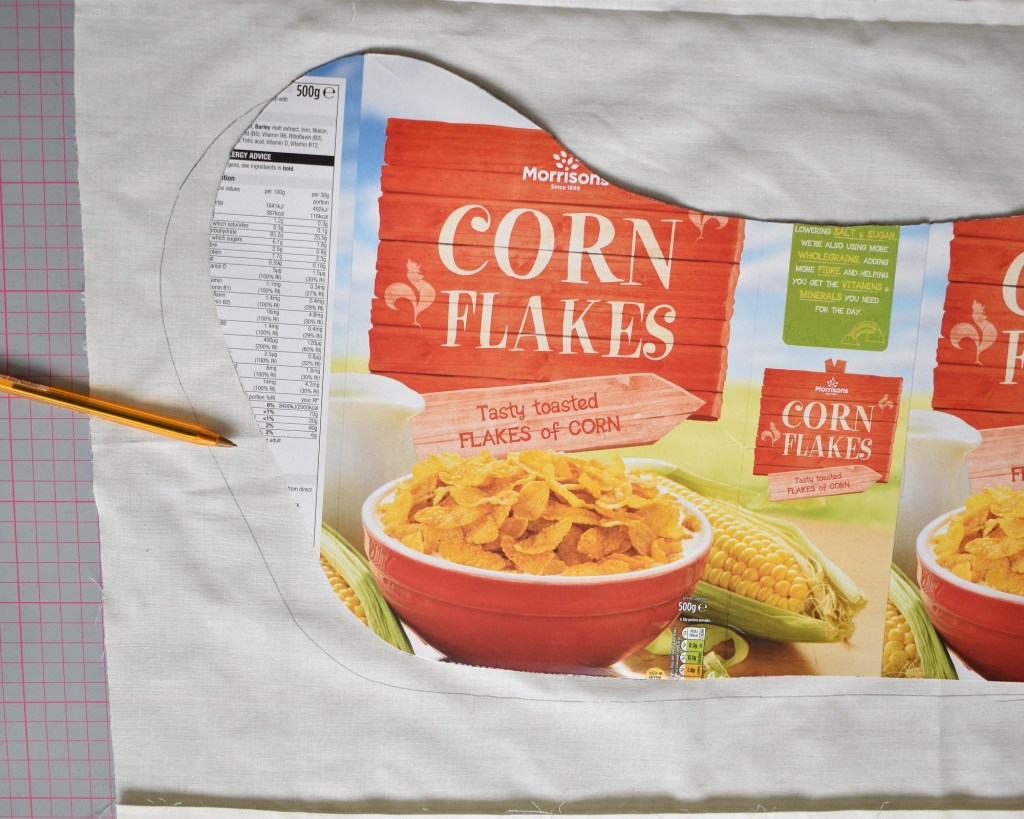
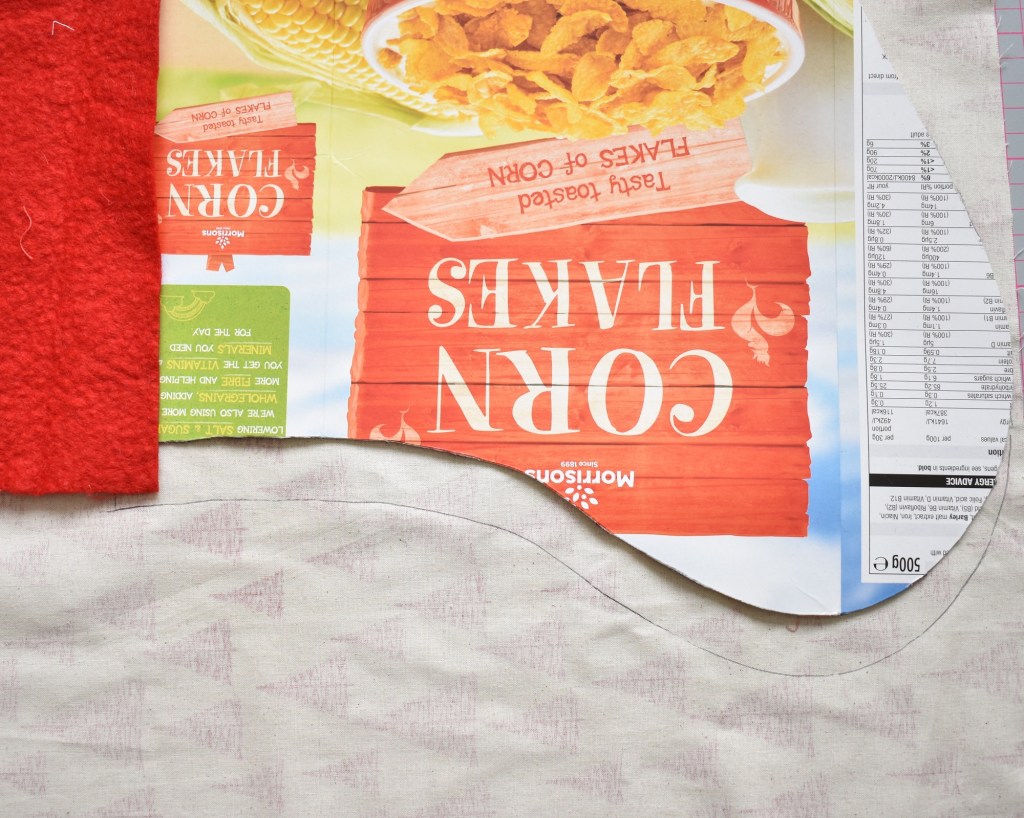
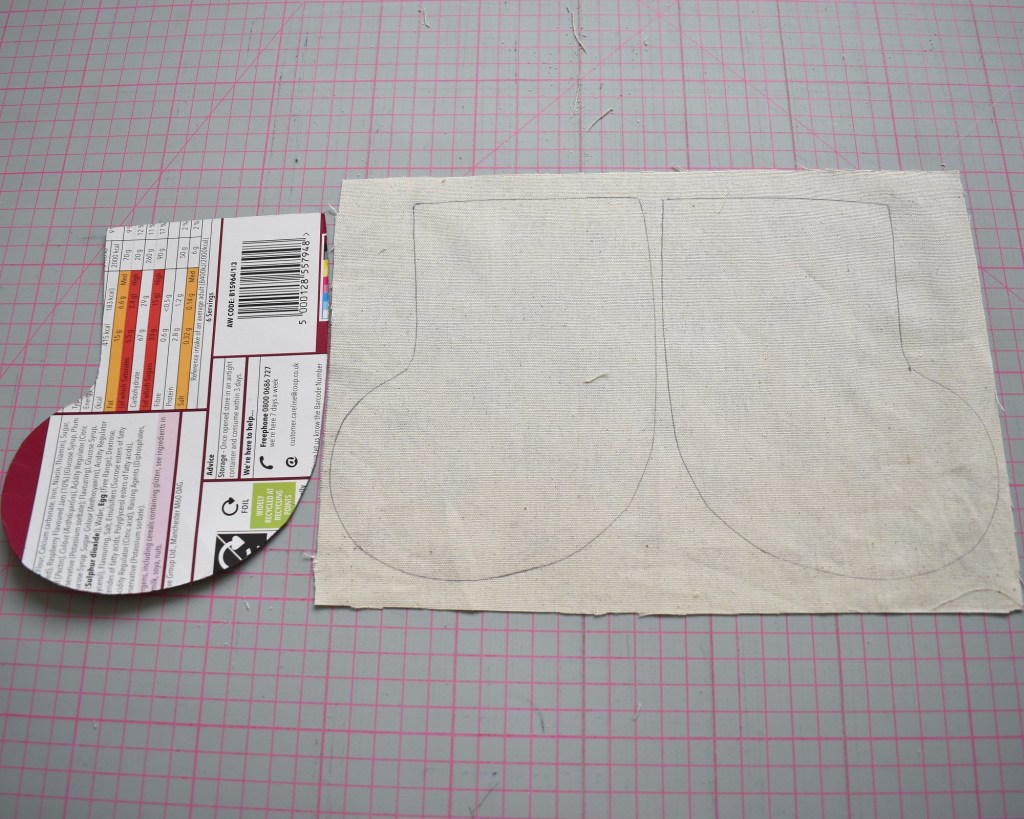
For the template you can simply use a cereal box. The card is nice and firm so it is perfect for this kind of project. 

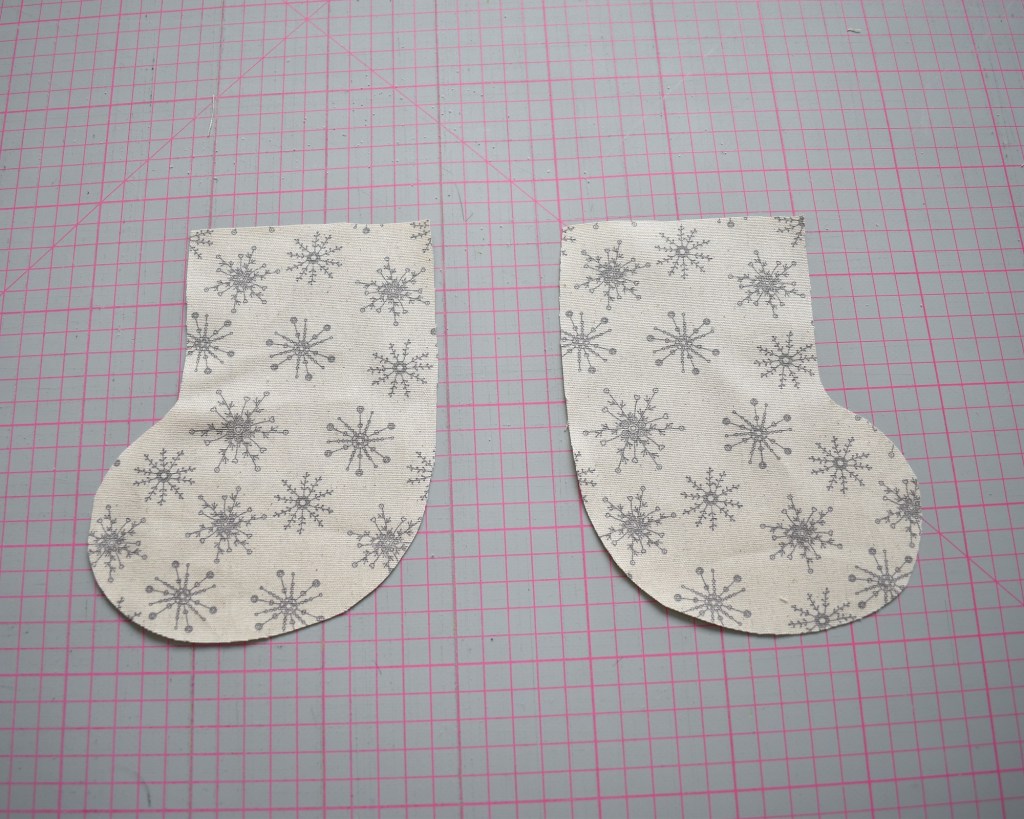
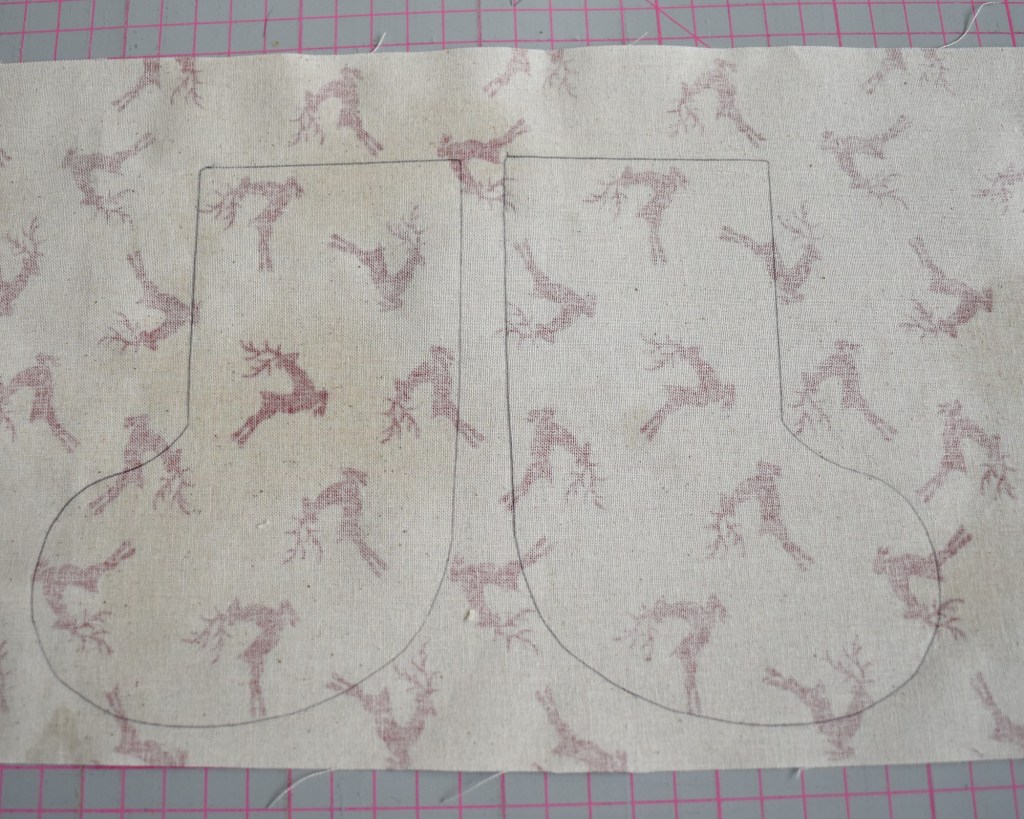
1) Once you’ve made your template, draw round it twice on the main fabric you are using and twice on the lining fabric.

Top Tip  

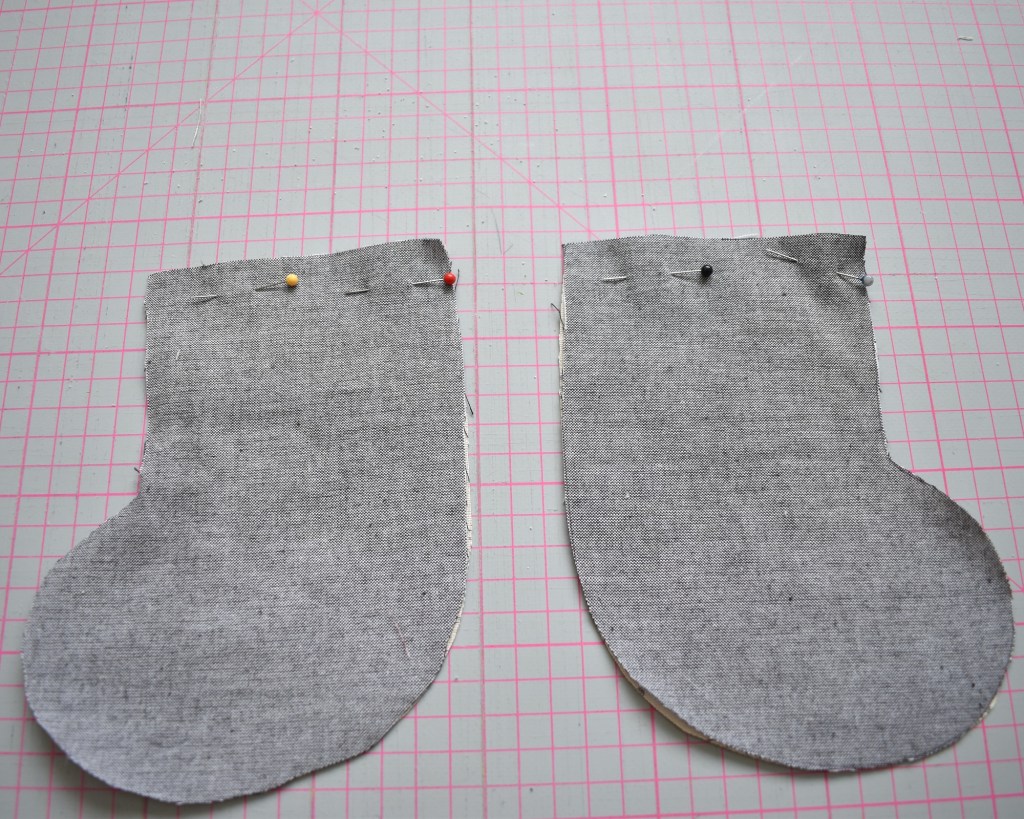
To make sure your stocking fits together, you will want the toe of the front and back piece of main fabric to be facing in different directions.  

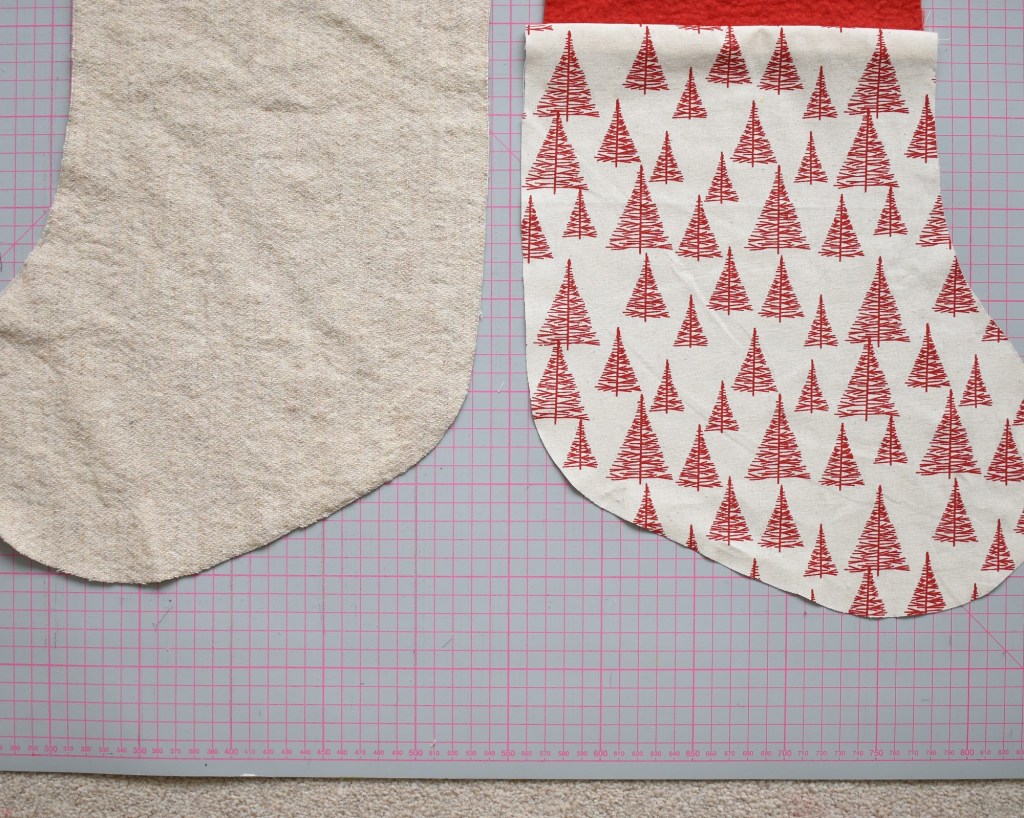
You’ll see in the photos below that the toe of one foot (the front) is facing to the right while the toe of the second (the back) is facing to the left. 
You will want to make sure the lining pieces do likewise but before cutting your lining, take time to note that it wants to be 2cm longer than the main fabric. This is because it will form a trim around the top edge of the stocking.

To achieve this, draw around the template but don’t complete the top horizontal line. Measure up 2cm on each side to extend the length of the stocking and then join them across the top. 

Alternatively, you can make two templates if you prefer but I wouldn’t think it is necessary.

2) Cut out your 4 stocking pieces. 

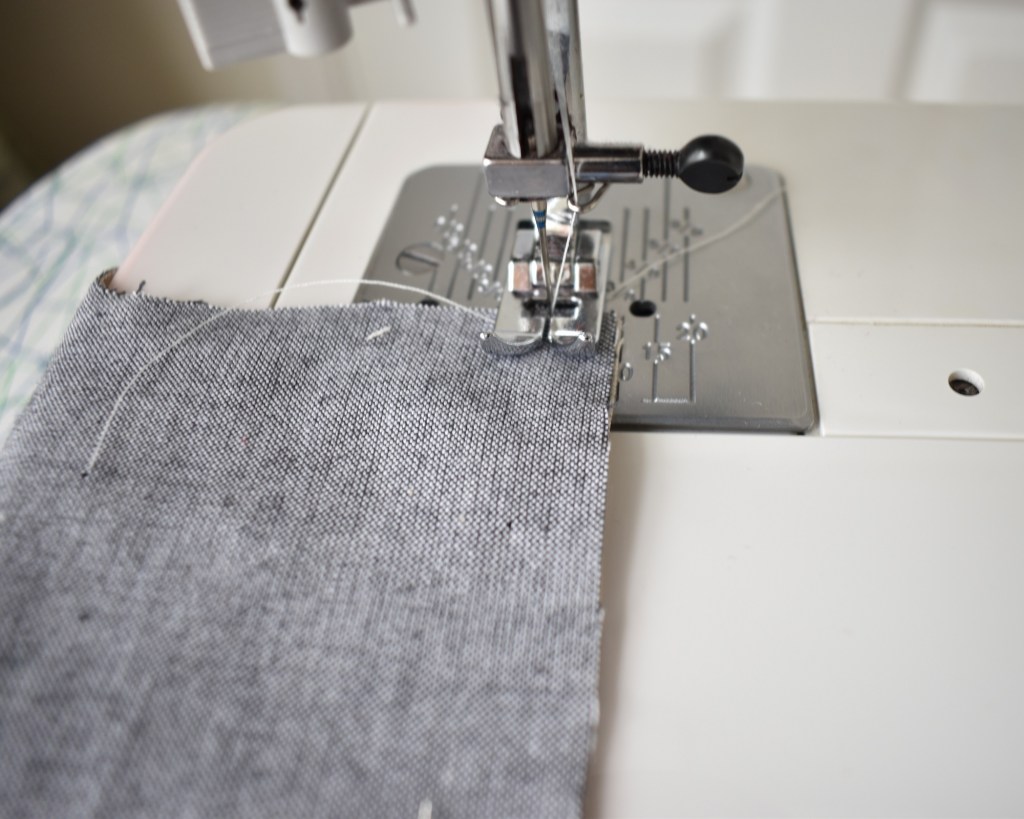
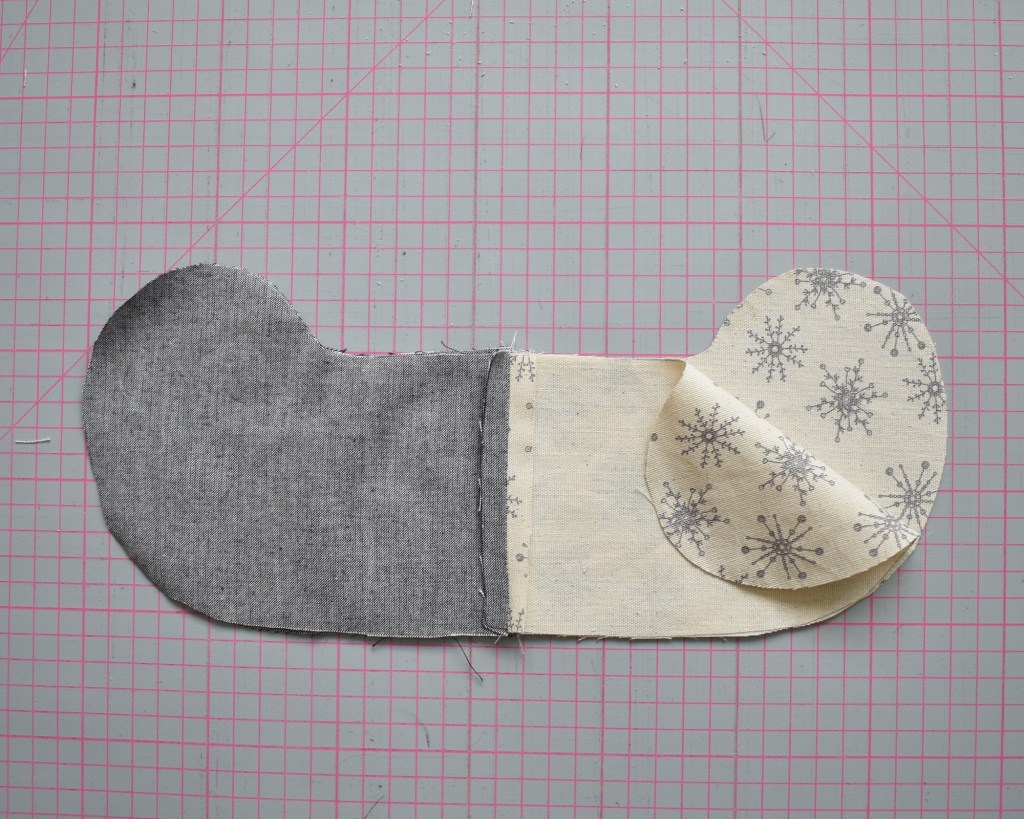
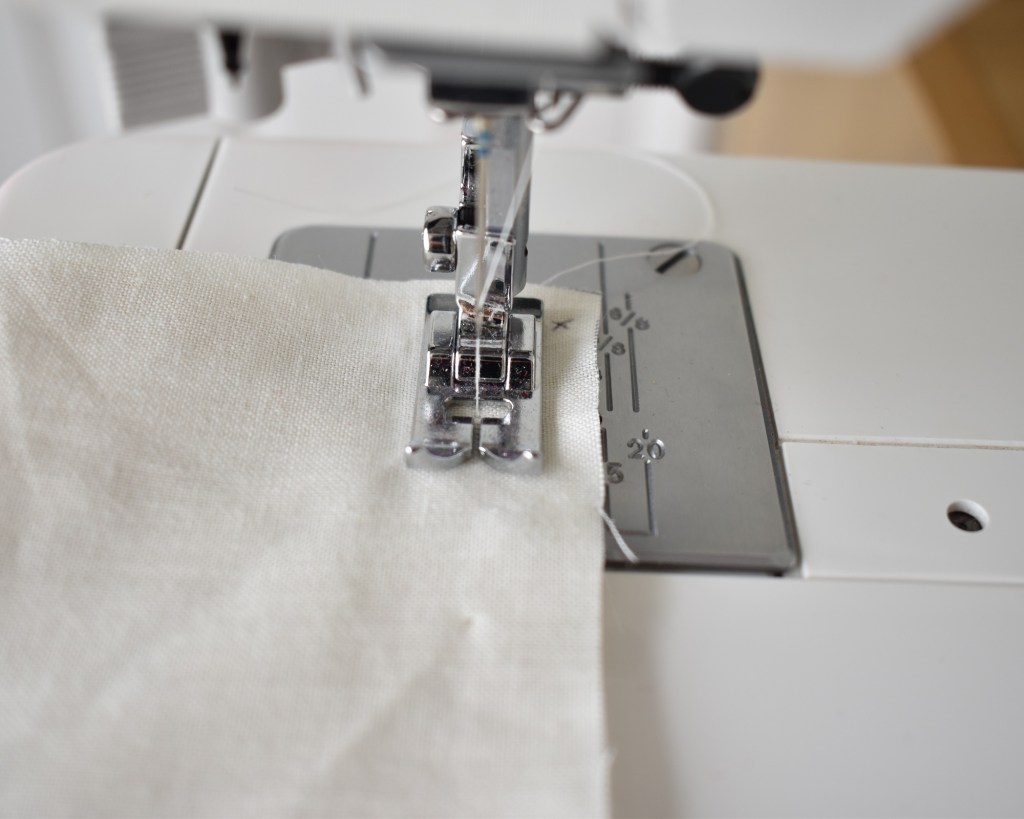
3) Lay the front piece of main fabric down, face side up, and lay the first piece of lining fabric on top of it, face side down. Pin together and stitch along the top, 1.5cm from the edge. Repeat for the back piece of fabric and lining.  

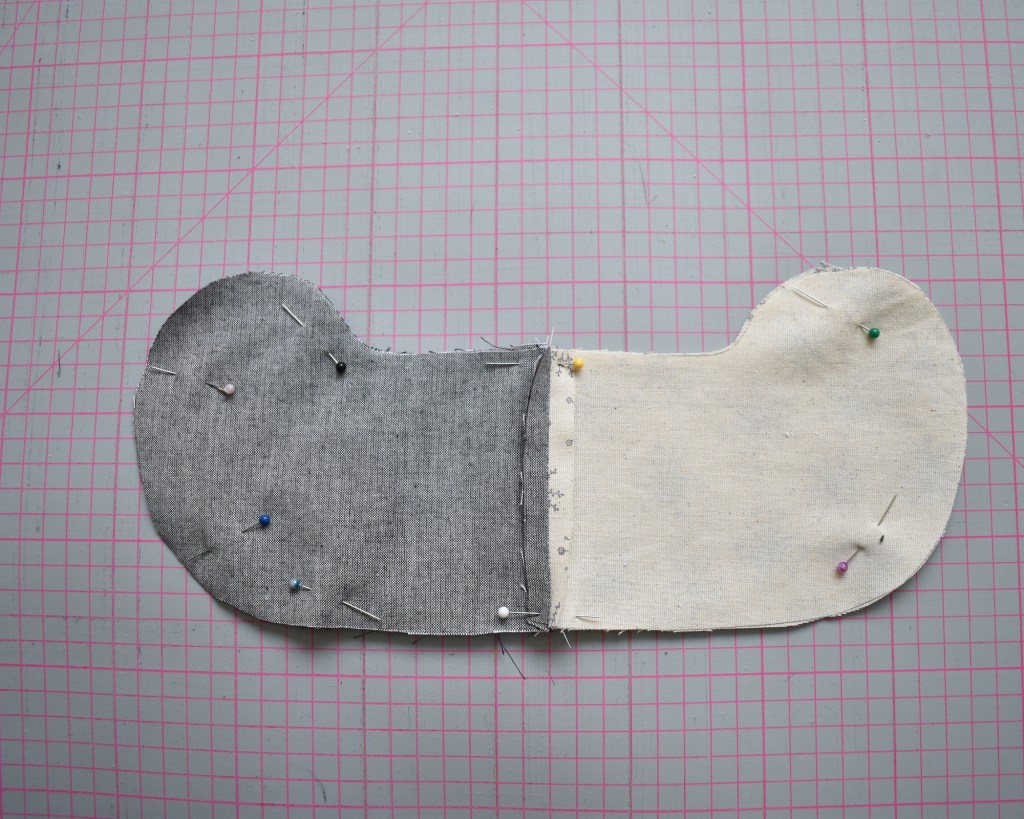
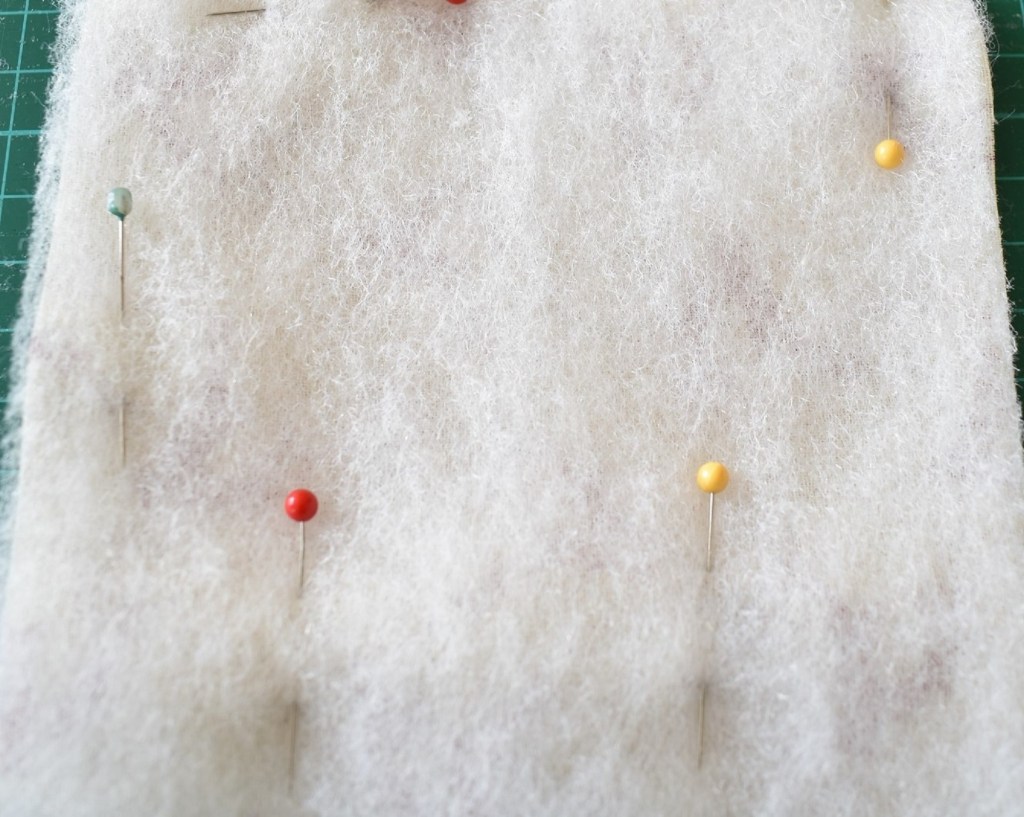
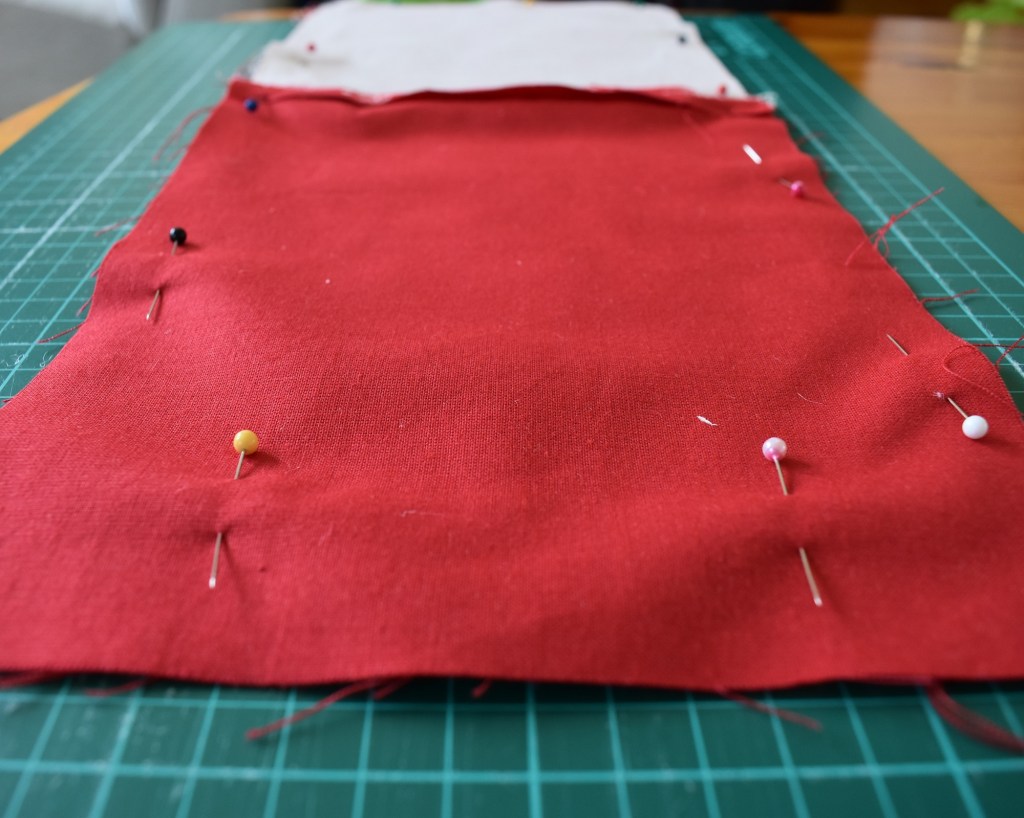
4)  Next, lay the front main piece of fabric and lining down, face side up, and place the back piece on top, face side down. Pin together all the way round leaving a space of about 5cm along the sole of the lining fabric which will be used for turning. I tend to put these pins in vertically so that it looks like a doorway, then I remember not to sew through it. 

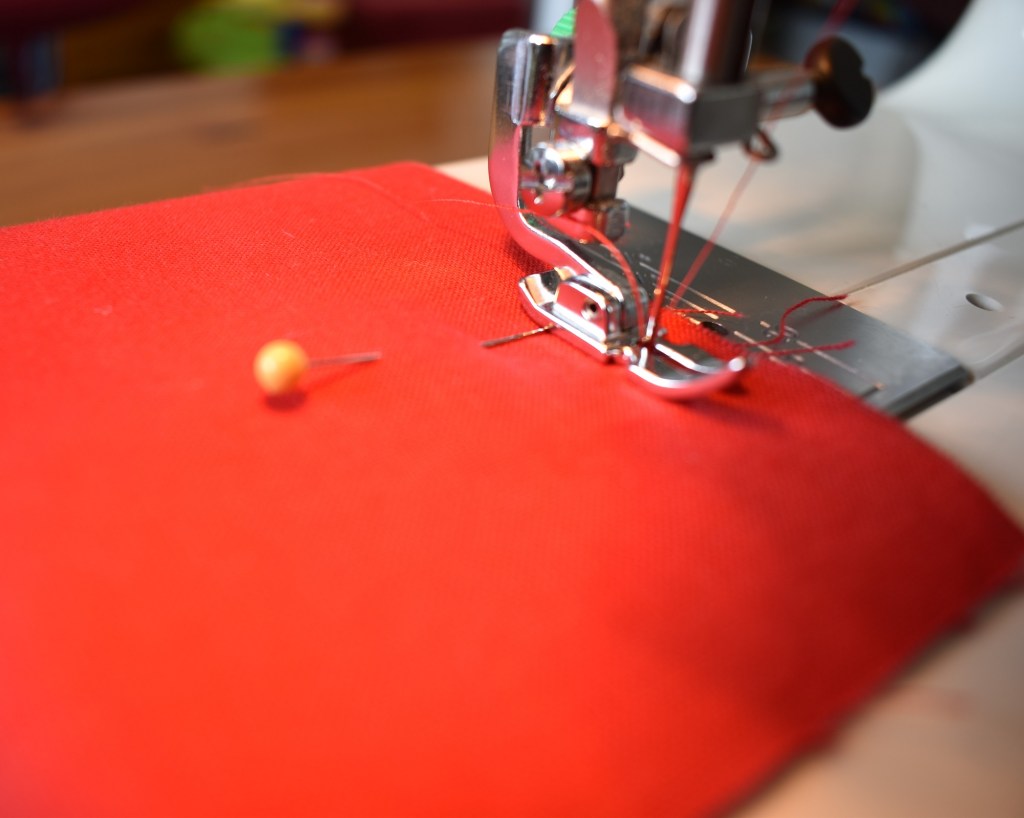
6) Sew the stocking together 1cm from the edge of the fabric and starting about 1cm from one side of the gap. Start with a few backstitches here in order to secure the stitch line and prevent fraying. Remember to do a few backstitches when you arrive at the other side of the gap or doorway too. 

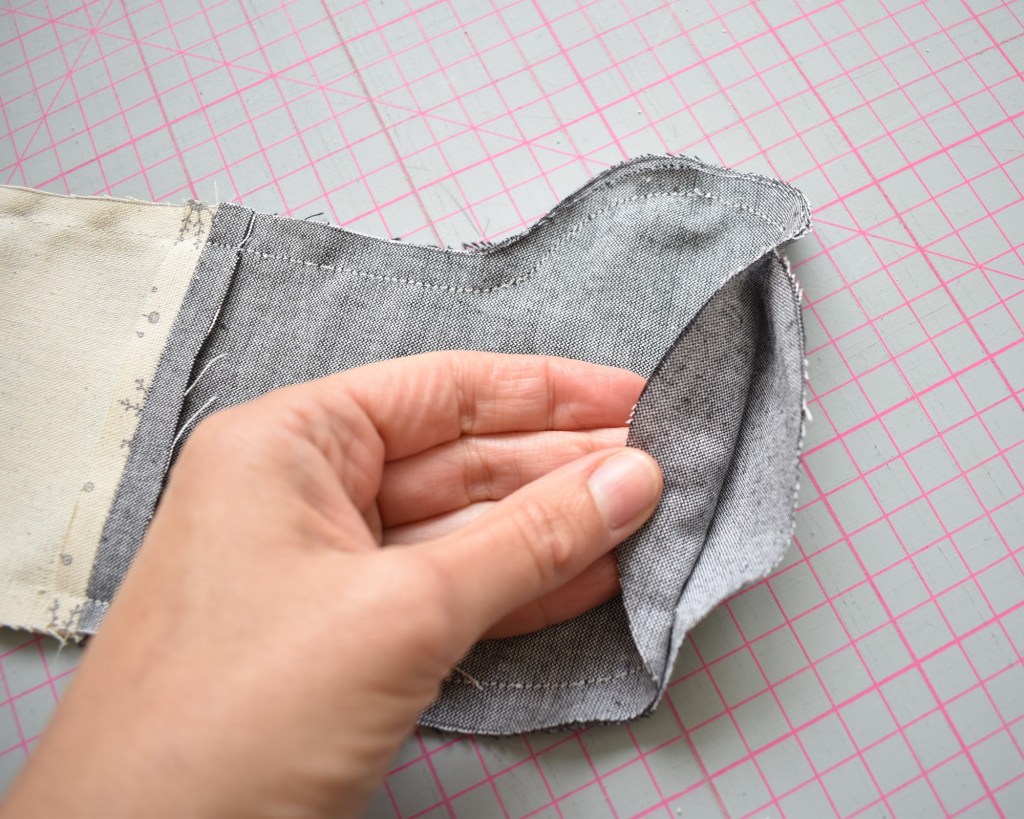
7) Using the gap turn the stocking in the right way. 

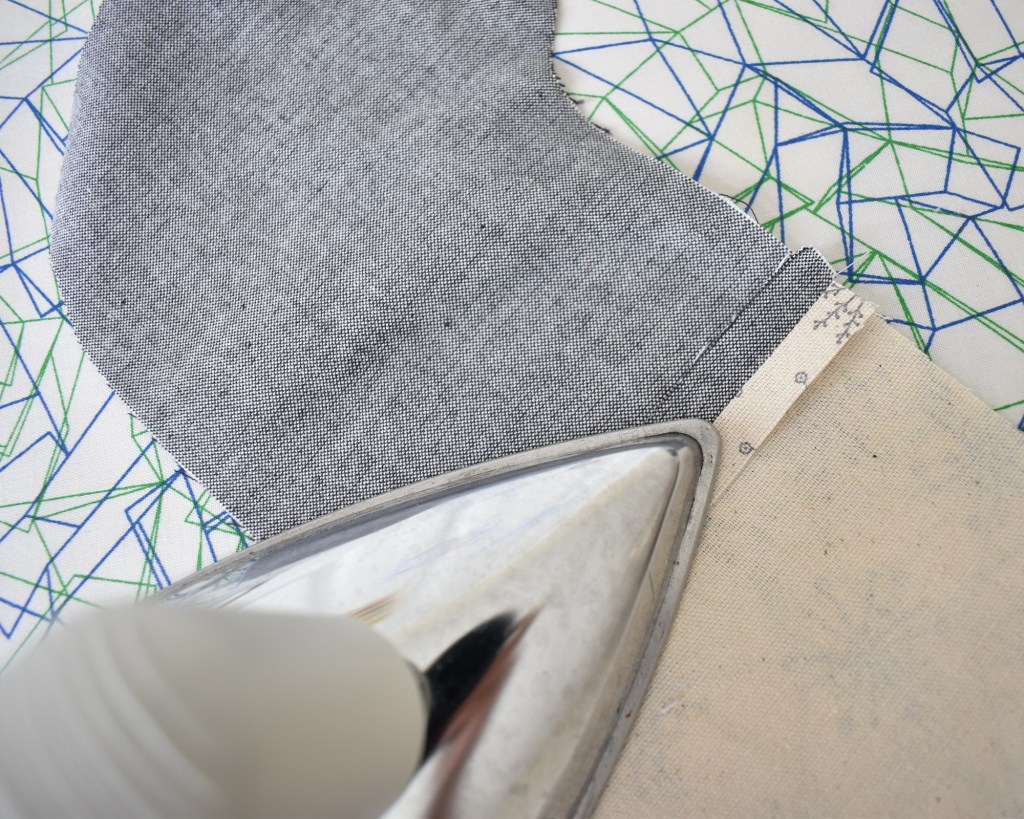
8) Flatten the hems of the gap down, using an iron if need be, so they are straight and, using a simple ladder stitch sew up the gap. 

Top Tip

If you are unsure of how to do ladder stitch, or slip stitch as it is also known, please watch my youtube video

9) Once you have sewn up the gap, push the lining fabric down into the foot of the stocking and smooth it round. 

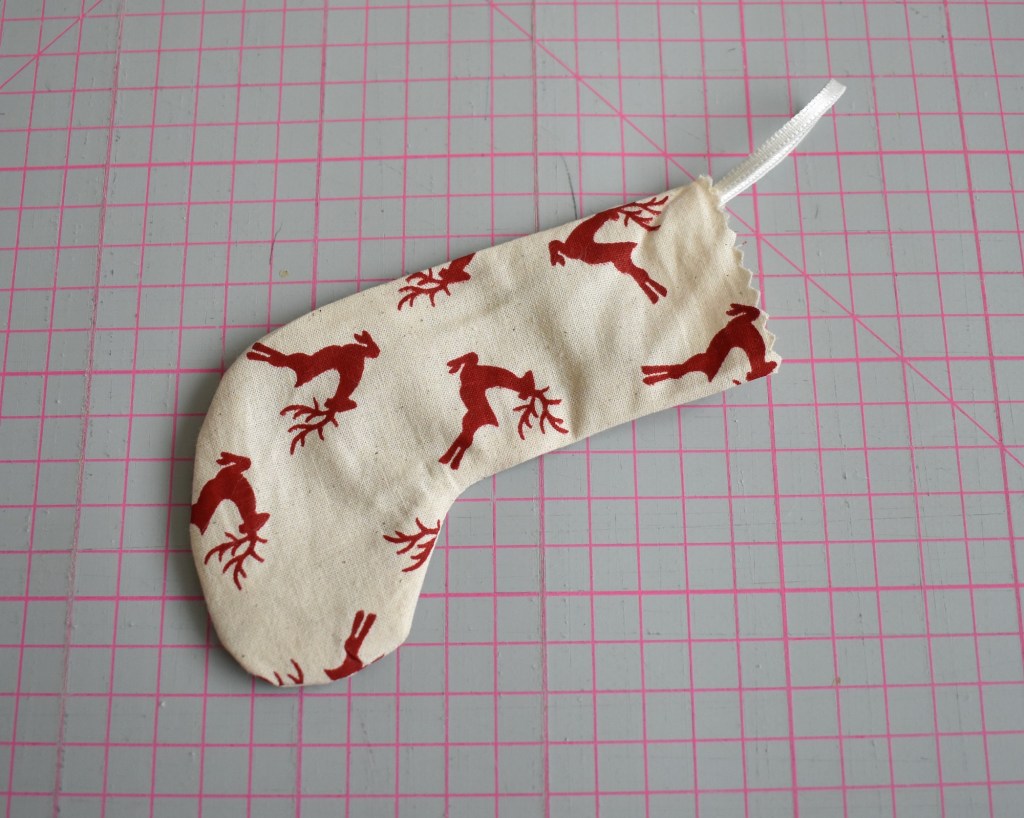
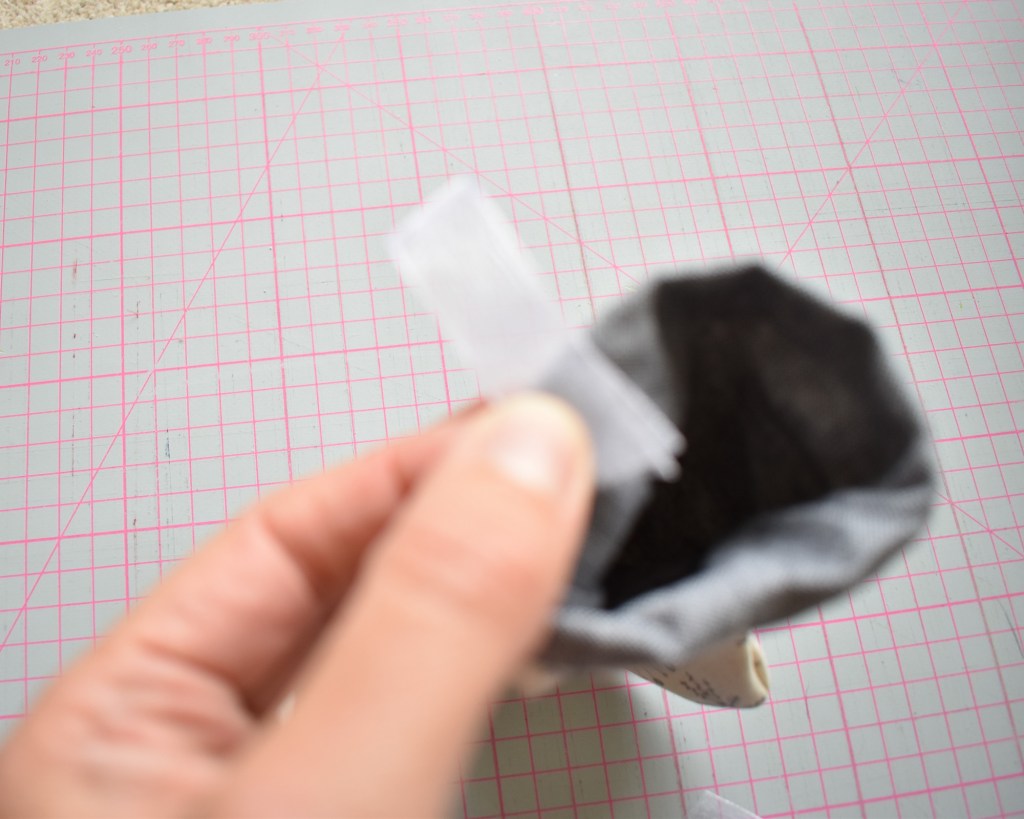
10) Use your ribbon to add a hanging hook at the top, back side of the stocking. Fold the ribbon in two and place the bottom end about 1cm down from the top on the back of the stocking. Hand sew with neat, small, stitches around the 3 sides to secure it. 

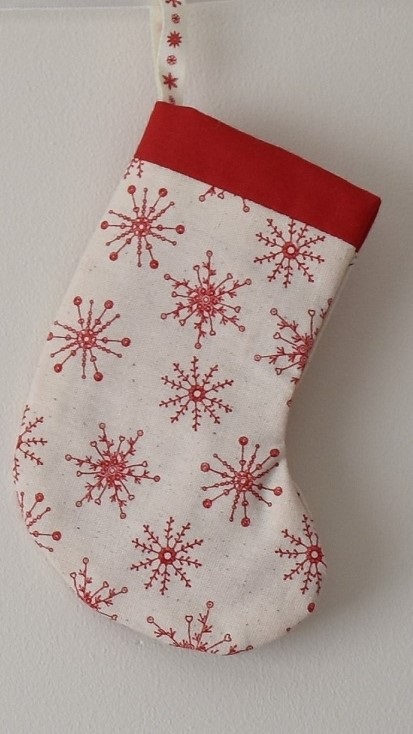
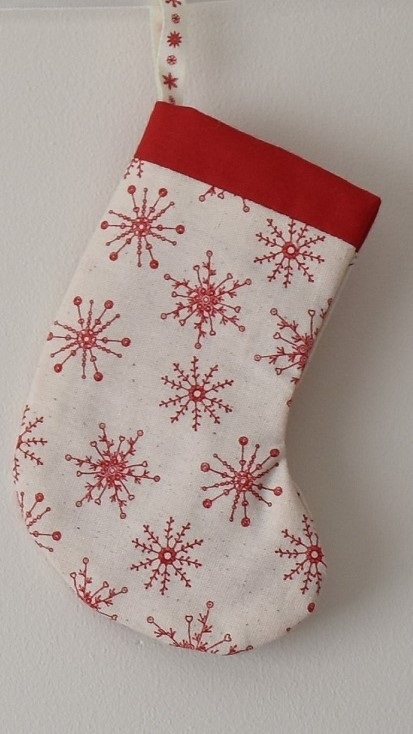
And, Voila! You have a lovely little stocking to hang on the tree. Or, you could make several to hang on a ribbon as an alternative to traditional bunting. 

So, isn’t that just super cute? Now all you need to do is find a nice little gift to pop in it as an extra surprise for someone you love! Join me again next week, for our eleventh craft of Christmas when I’m going to show you how to make some lovely festive bunting.

The Twelve Crafts of Christmas #9 Christmas Napkins

On the ninth day of Christmas Jillian Sharples Design gave to me, a set of christmas napkins to adorn my festive table…

Well here we are, a week into lockdown. While the country isn’t quite standing still to the same degree as it was during the first lockdown of the year, I’m sure there are still plenty of you sitting around wondering how to pass the time! And, given that we’re now well into November, with Christmas edging closer and closer, maybe it’s time to start planning that perfect handmade Christmas.

This week’s offering is most definitely the easiest, at least in my humble opinion! So if, with the extra time you may now have on your hands, you are just starting to think about getting crafty for a handmade Christmas, this is a perfect place to start, and will definitely wet your appetite for making some more handmade festive treats this year!

In fact this craft project is amazingly simple. It requires no cutting of fabric, you can simply use the fat quarters at whatever size they are, making this a nice, quick project too. Sometimes simple is best and sometimes simple just makes for a lovely change. Here you can genuinely produce something really beautiful to add to your handmade table with minimal effort. Just what you need at the end of a long day!

What you’ll need for a set of 4 napkins:

4 individual fat quarters (these will likely measure anywhere between 40cm x 40cm and 50cm x 50cm)

Pins, needle, matching thread, sewing machine 

Iron and ironing board

Making your Christmas Napkins:

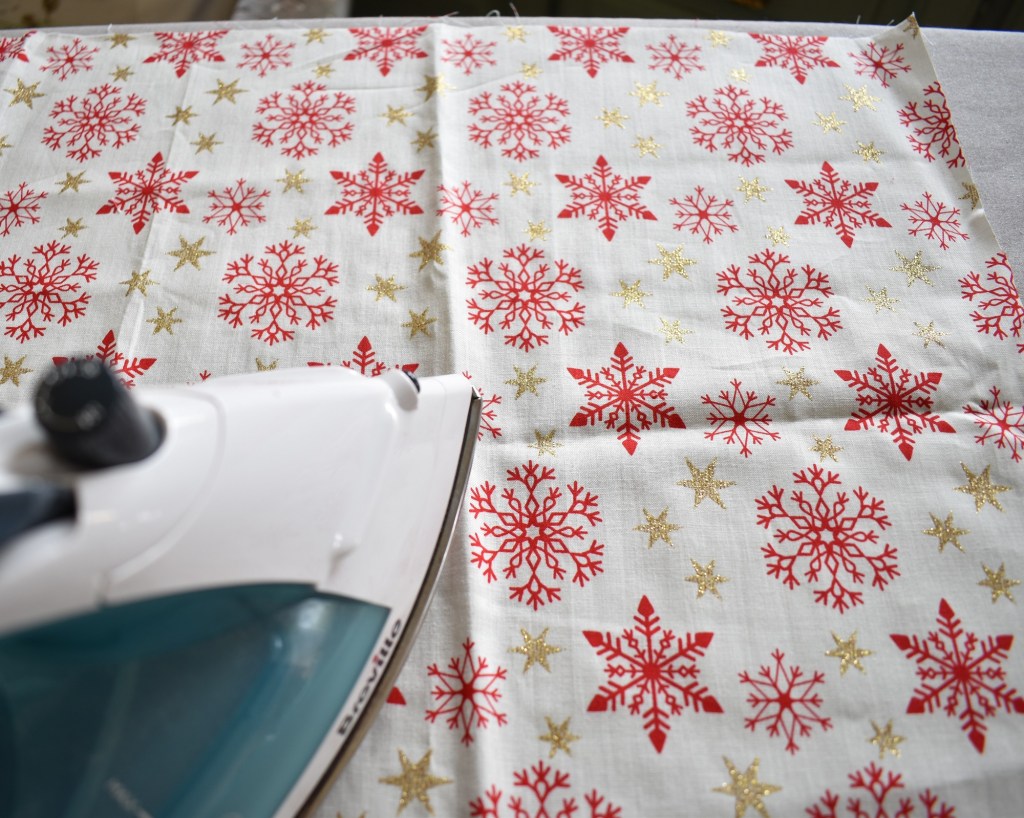
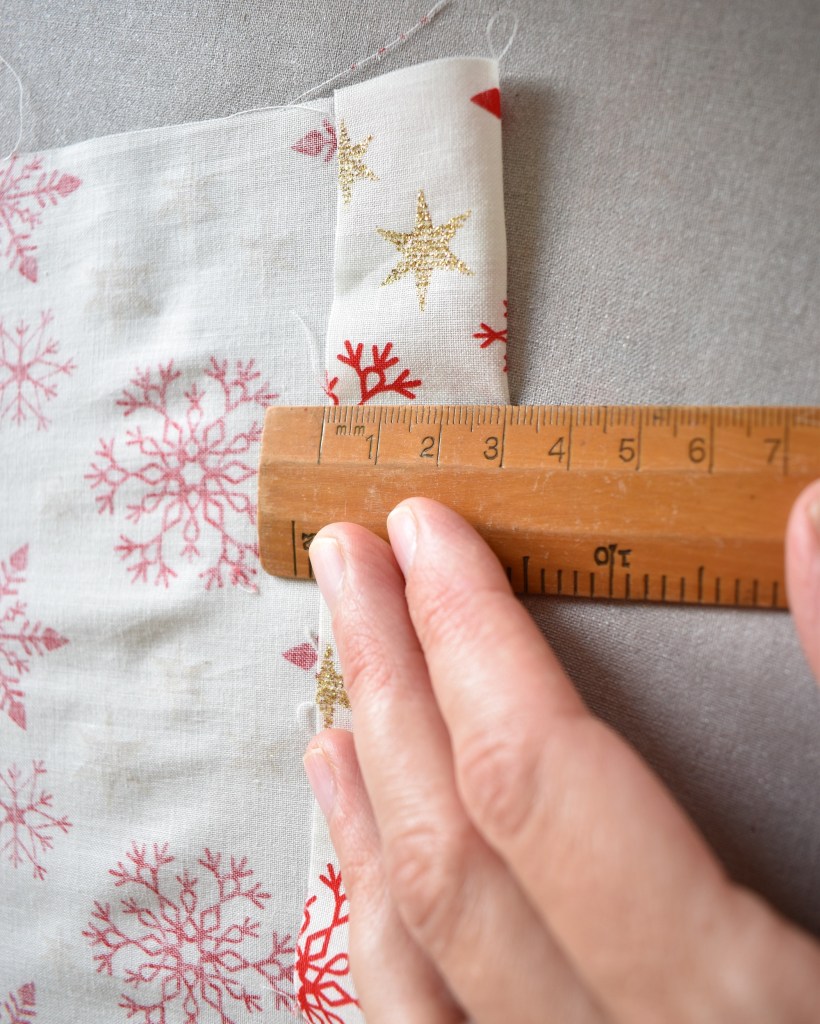
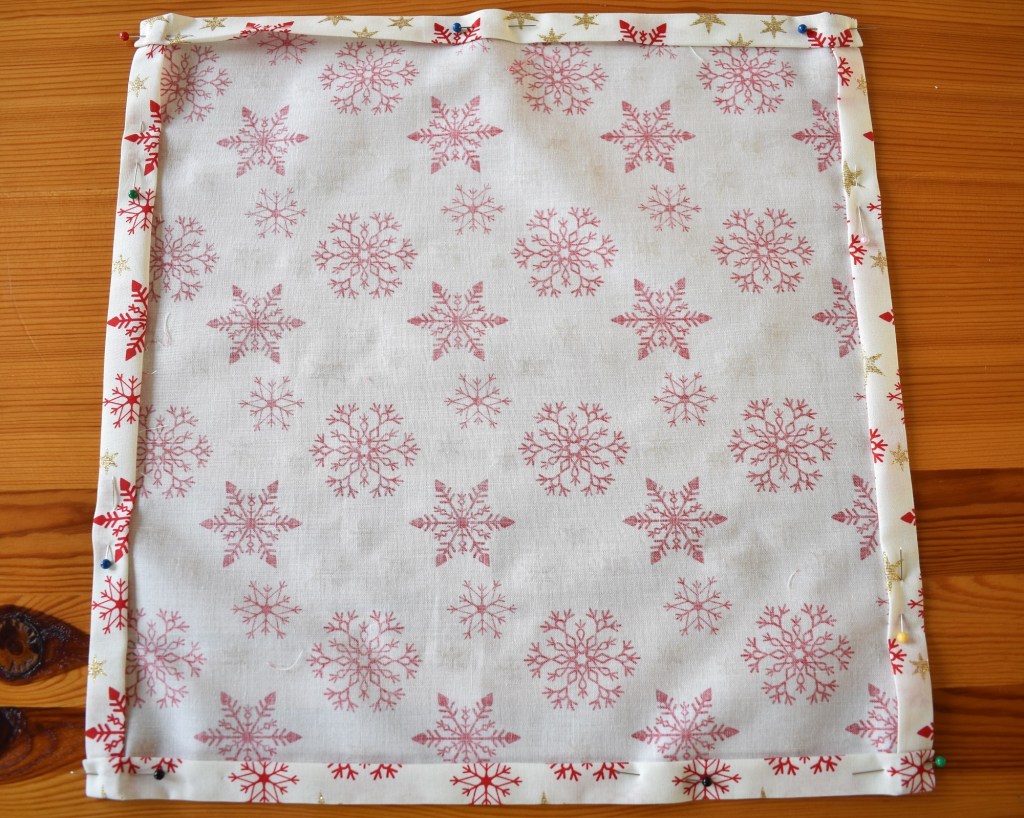
1) Iron the fabric to remove any creases. Next, lay the fabric face side down and all the way around the first piece of fabric fold and iron flat a 3cm hem. Once you have this, fold the hem in on itself and iron again. This will give a hem of 1.5cm all the way round. Pin to secure as you go.

2) At the corners you can simply fold one edge on top of the other and pin down.

3) Using the sewing machine, stitch all the way round the hem. Leaving a couple of milimeters between the stitch line and the inside edge of the fabric.

When you have come all the way round, back to the start of your stitch line, continue to stitch over the line again for about 1cm. This secures the stitches and prevents fraying.

Once you have ironed and pinned your hem all the way round, folding the corners down on each other, you can sew a stitch line all the way round.

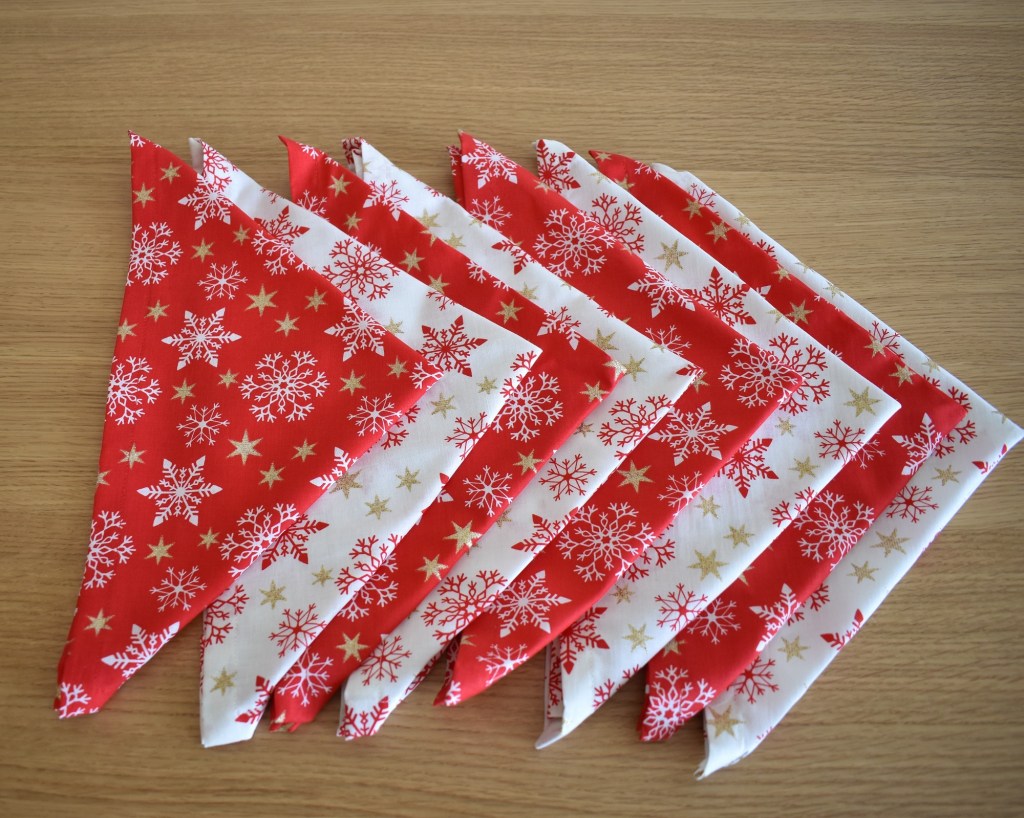
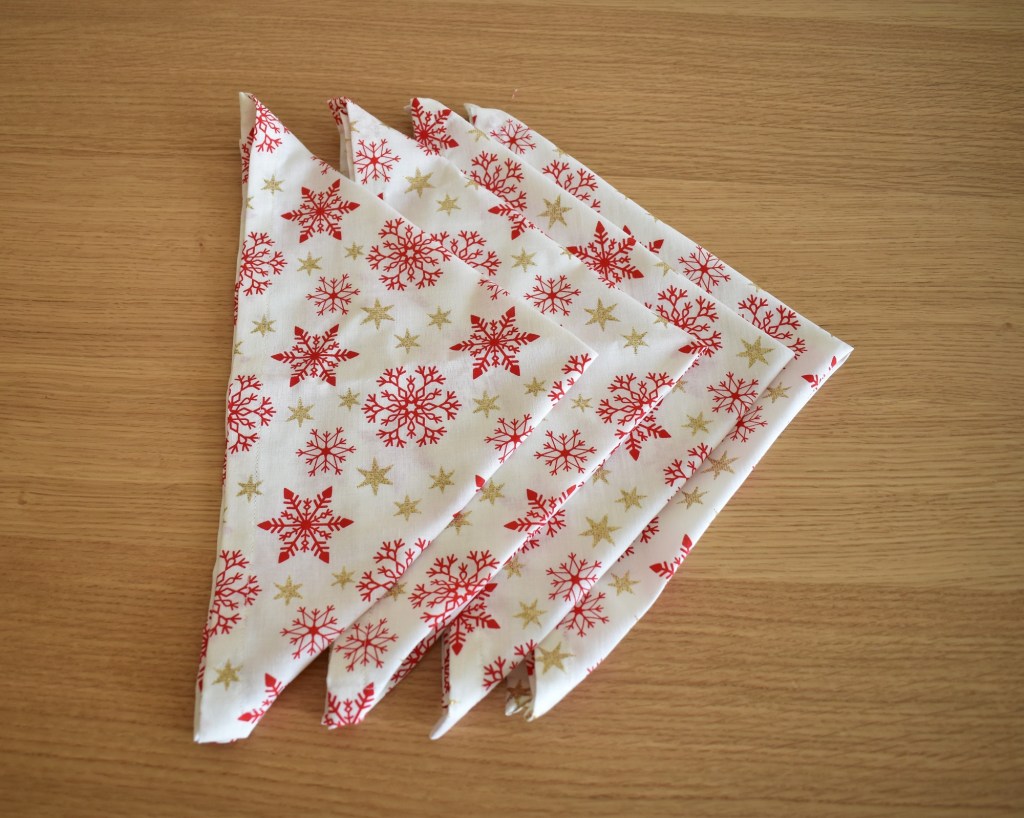
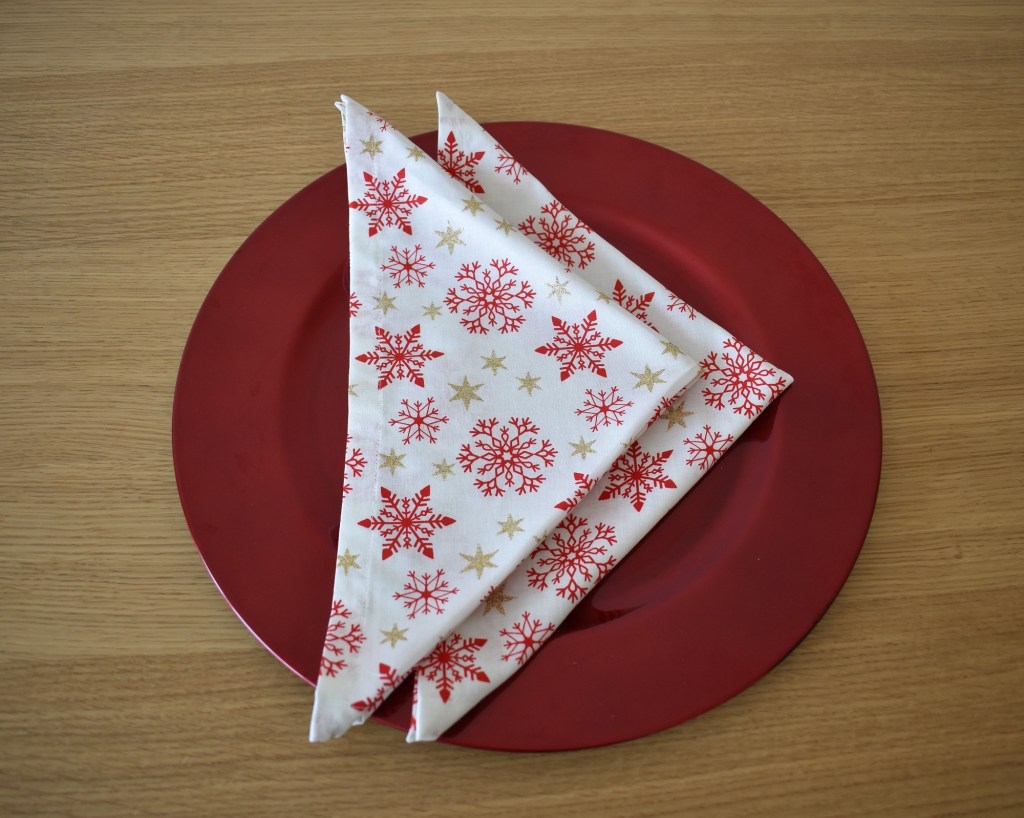
And, Voila! You have a set of lovely Christmas napkins. Nice and simple!

Wow, so after making Christmas coasters, placemats, crackers and napkins we really do have everything we need to create a beautifully special handmade festive table for Christmas 2020.

So, having finished the mammoth task of preparing the Christmas table, which has such a central role in our festive celebrations, lets move on next week to think about Christmas decorations. Over the next, and final, three weeks of my ‘Twelve Crafts of Christmas’ I’ll show you a small yet lovely range of Christmas decorations that are simple and straightforward to make and which will add yet more special touches to your decorations this Christmas.

The Twelve Crafts of Christmas #8 Reusable Christmas Crackers

On the eighth day of Christmas Jillian Sharples Design gave to me, some reusable Christmas Crackers to fill with lovely goodies for Christmas day…

Wow, the eighth day of christmas! Well, kind of, thankfully for our Christmas preparations there are actually a few more days to go than that! Fifty one to be precise, but hey who’s counting! Thankfully, for anyone out there keen on completing as many festive crafts as possible for the creation of a truly handmade Christmas you still have plenty of time! There’s still time to think about exactly what look you are going for this Christmas, how to hone it and how to make this Christmas as perfect as possible.

That is to say, as perfect as possible within the current situation. It’s been said before and I’m sure will be said many times again this year, but it’s been a tough, tough year. Whichever way we look at it Christmas 2020 just isn’t going to be what it usually is. And, sadly, with only 51 days to go we can’t even begin to imagine what it will bring. Maybe we won’t get to celebrate with all our friends and family in one place, maybe we won’t get to go out to Christmas markets and other festivities like we normally would. Maybe we won’t get to go to church, to sing carols and watch the nativity, or drink mulled wine around a Christmas tree. And no matter how positive some of us try to feel, there is no getting away from the fact that this Christmas will be different. But, that’s not to say we shouldn’t make the most of what is on offer and make our homes as beautiful and thoughtfully decorated as possible so our nearest and dearest feel extra special this year.

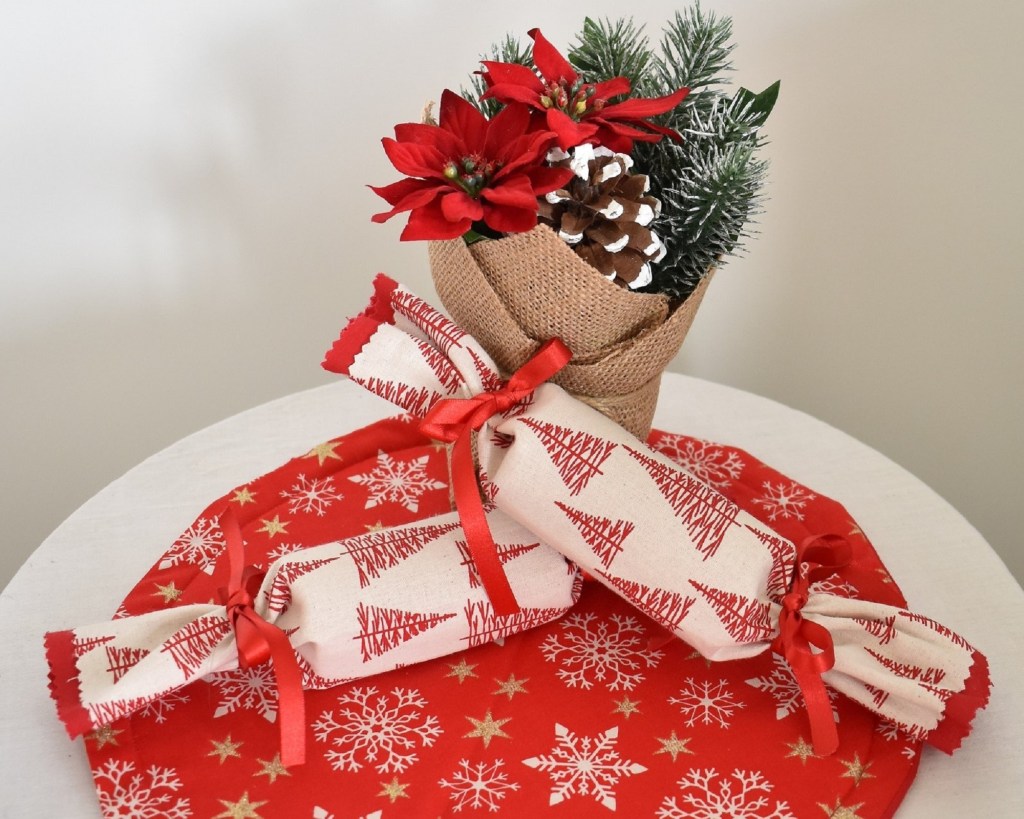
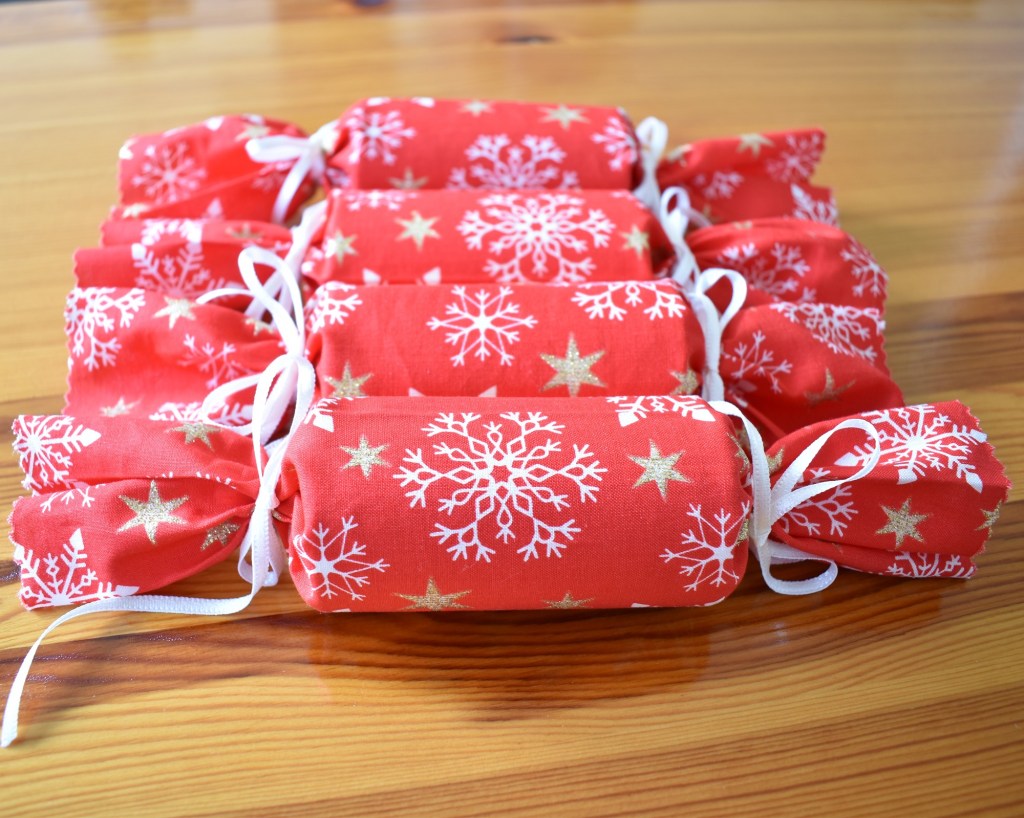
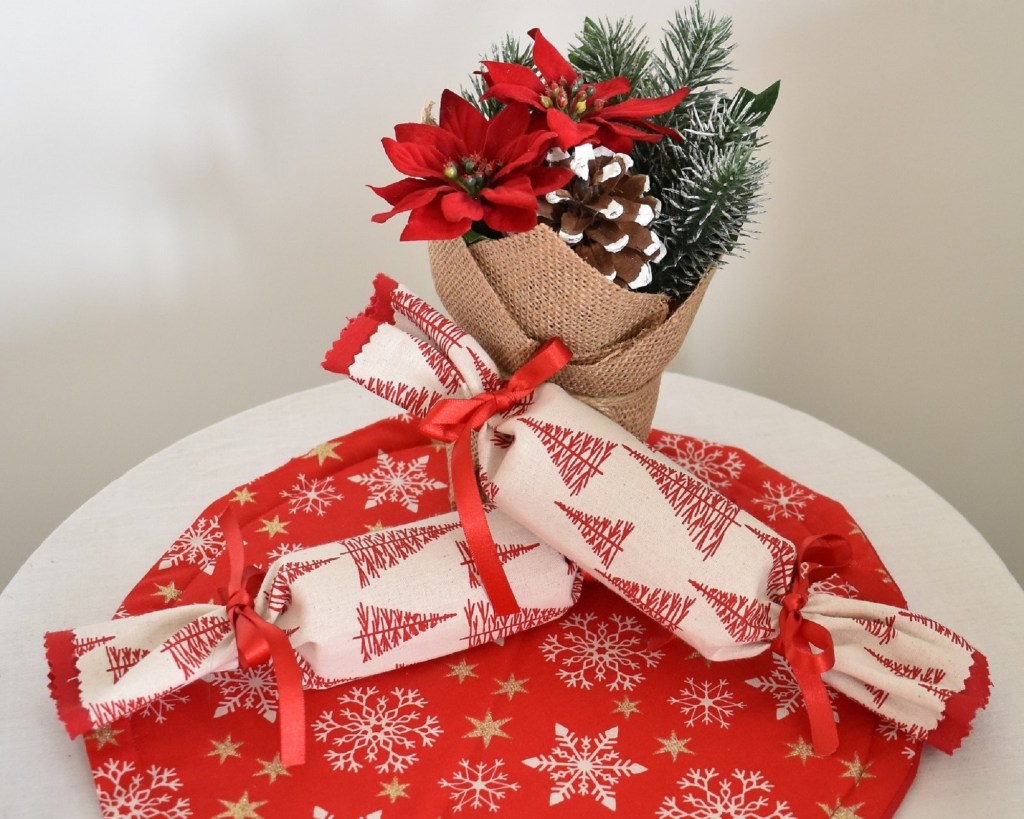
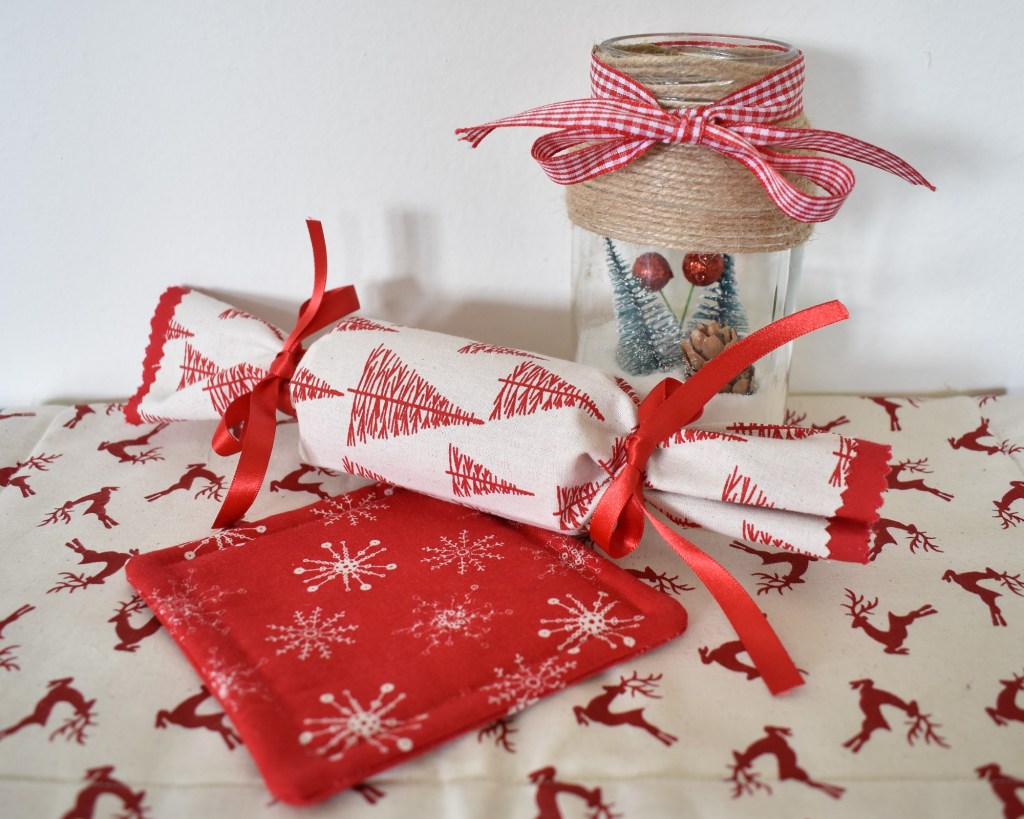
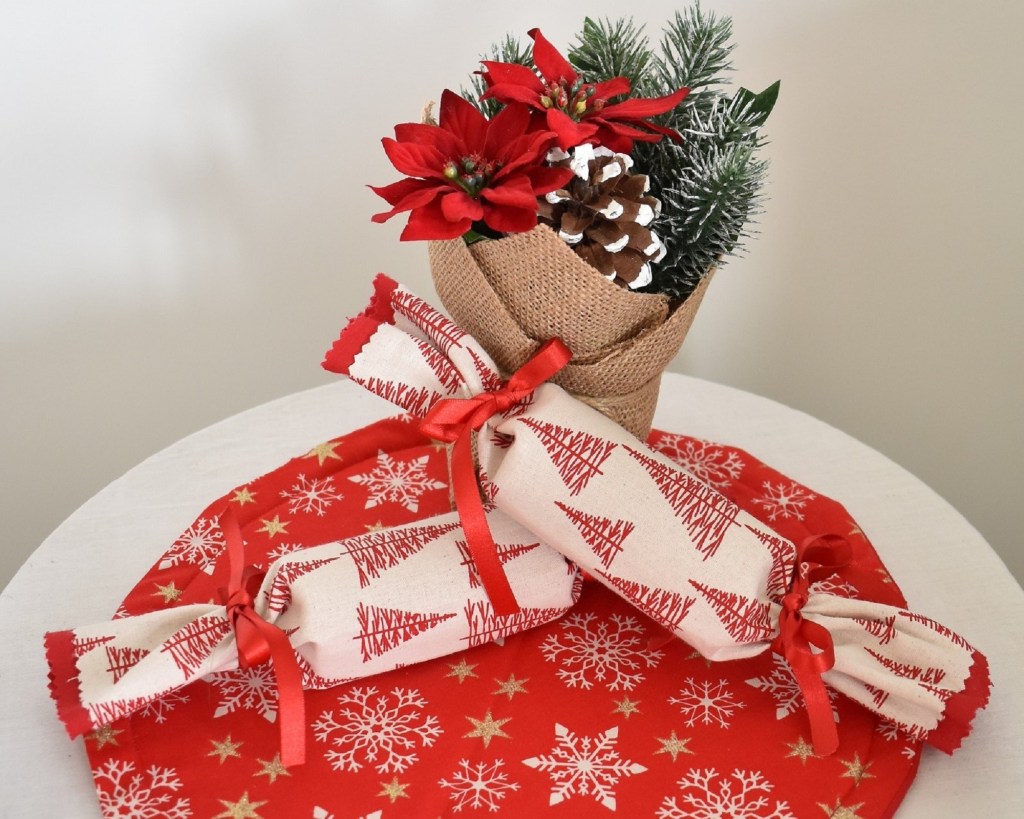
And, of course, that’s where I come in! This week I’m going to show you how to make some beautiful and reusable Christmas crackers. The true beauty of these is, of course, that they are reusable and therefore kinder to the environment and less wasteful. Plus of course they add that extra special handmade, thoughful touch, around your festive dinner table. What’s not to like! In fact I just love these! Probably my favourite of these Twelve Crafts of Christmas. They look stunning and are so simple to make. So let’s get going…

What you’ll need for a set of 4 crackers:

4 pieces of fabric measuring 29cm x 17cm 

8 lengths of ribbon measuring 40cm each

Cutting board (if you have one) 

Roller cutter or scissors 

Pinking shears

Cutting ruler 

Pins, needle, matching thread, sewing machine 

Piece of A4 card

Glass jar (the size doesn’t matter, I used a honey jar)

Making your Christmas Crackers

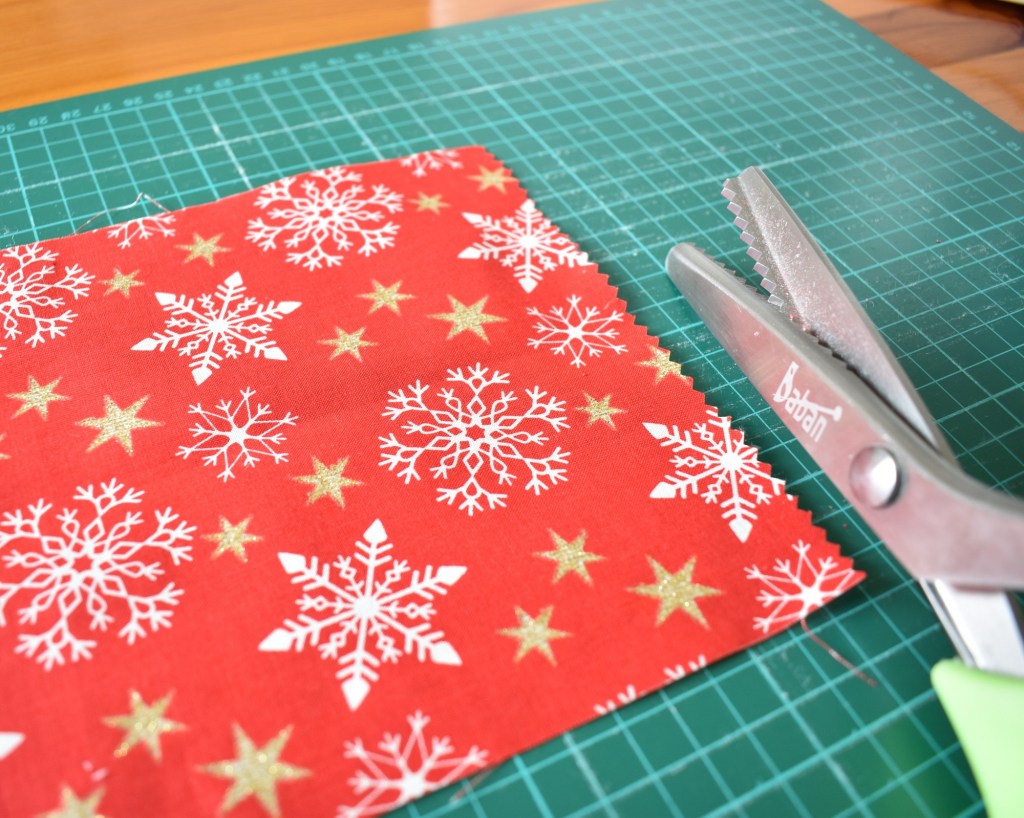
1) Having cut your 4 pieces of fabric to size using either your roller cutter or scissors, use the pinking shears to trim the shorter edges of each piece. Cut as close to the edge as possible so that you don’t lose too much of the fabric length but can see the pinked triangles neatly along the edges.

If you wanted you could of course sew hems along each of the shorter edges, but I like the effect of the pinked edges and of course it saves time!

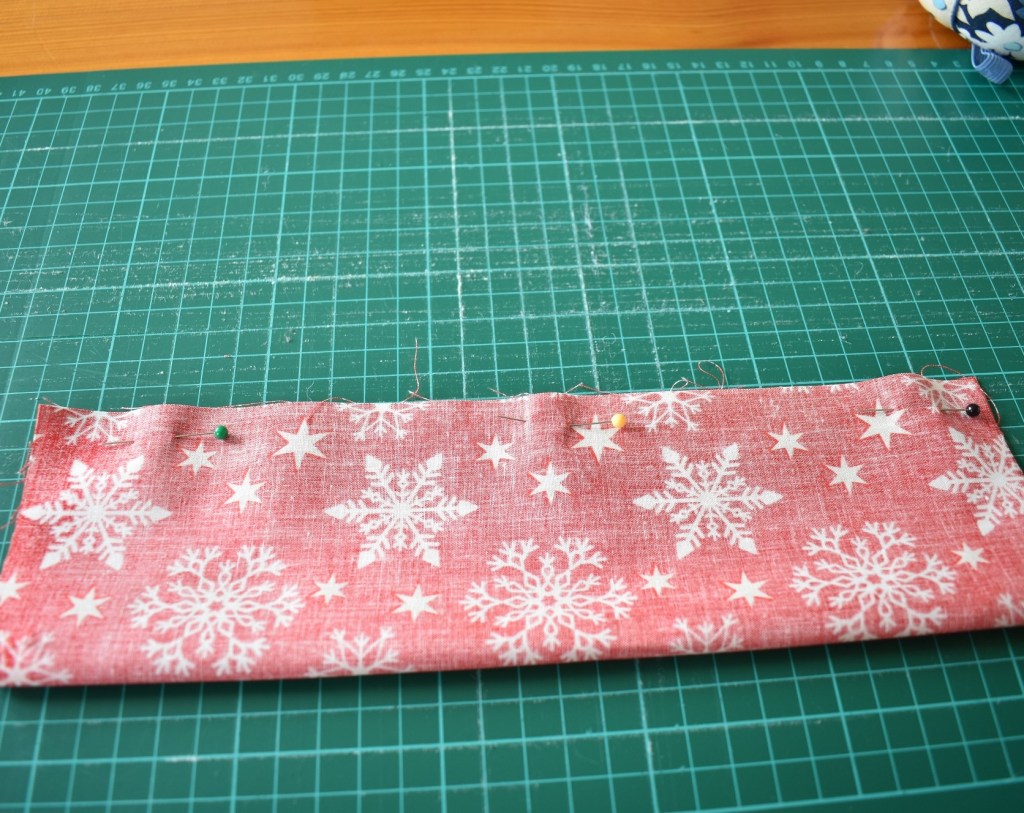
2) Fold the first piece of fabric in half lengthways. Fold inwards so that the face side of the fabric is inside. Pin in place.

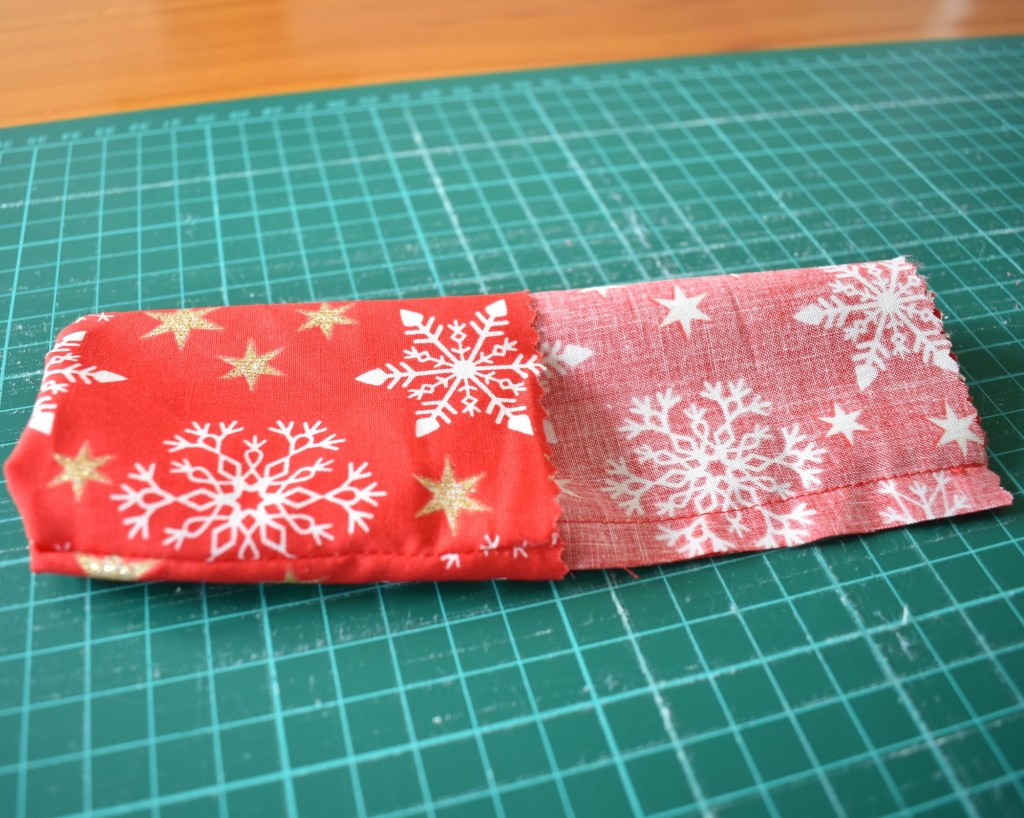
3) Sew a stitch line along the length of the fabric 1 cm from the edge. Start about 1 cm from the end of the fabric and do a few backstitches first. Repeat this at the end before casting off. This secures the stitches to prevent fraying. Stitch as close to each end of the fabric as possible leaving just a milimeter or two at each end.

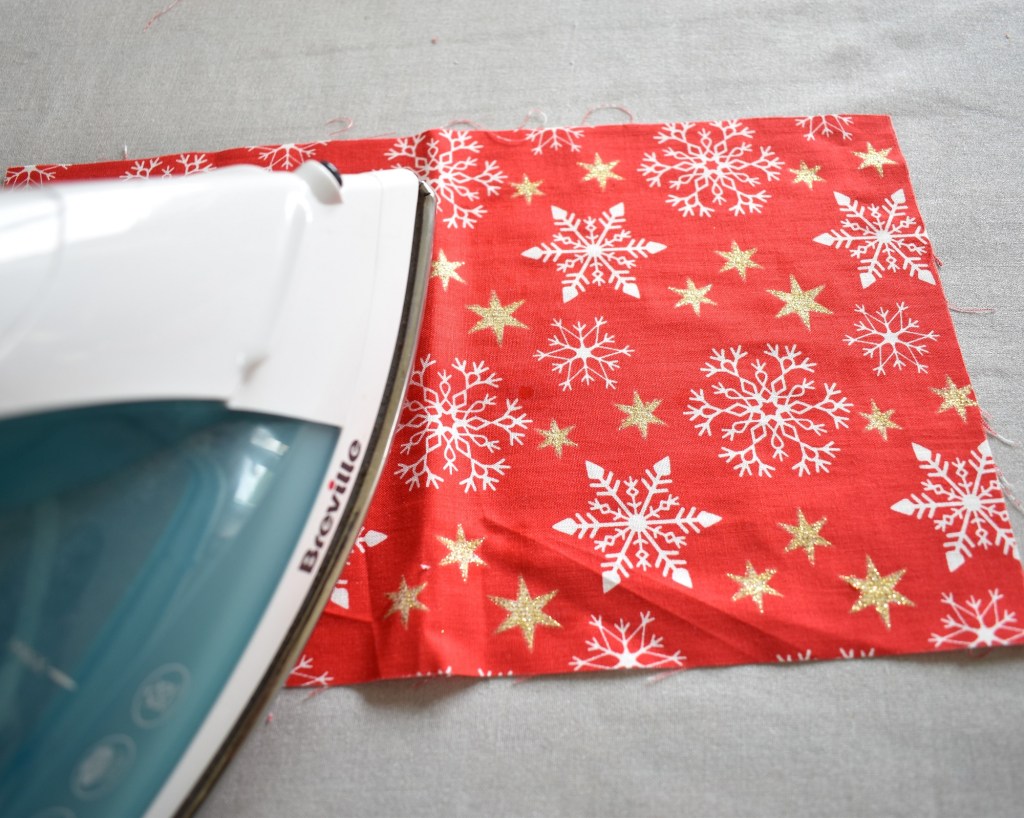
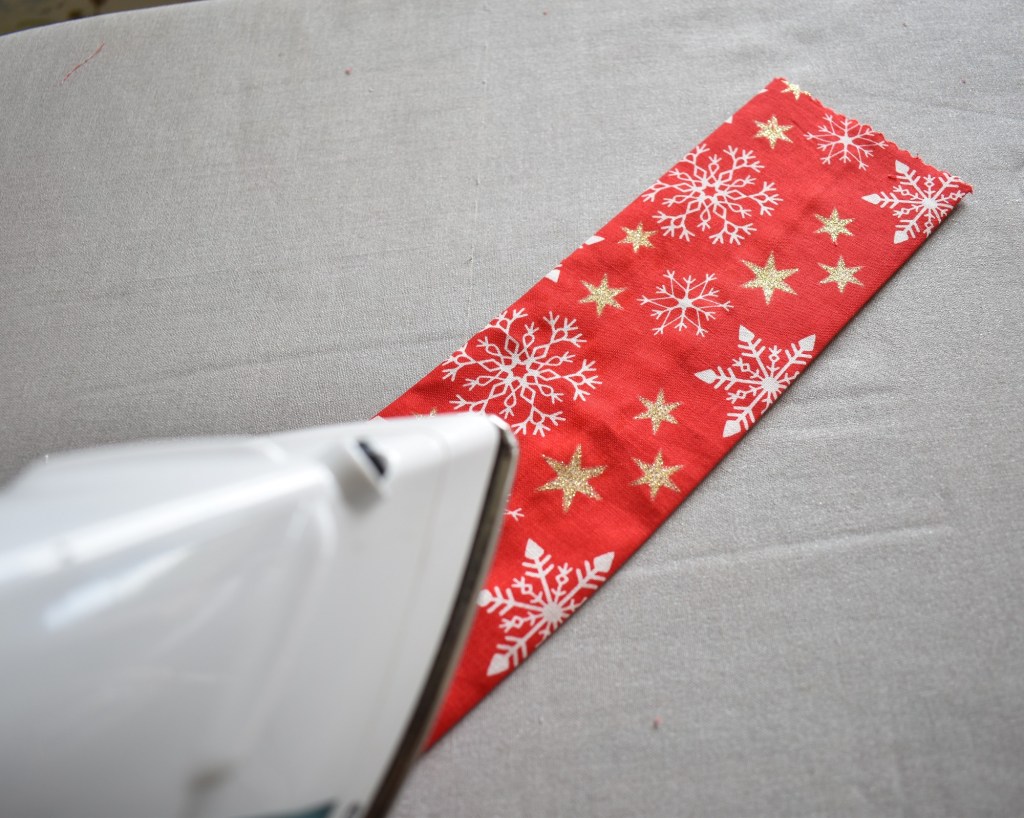
4) Turn the fabric in the right way. Iron flat if need be.

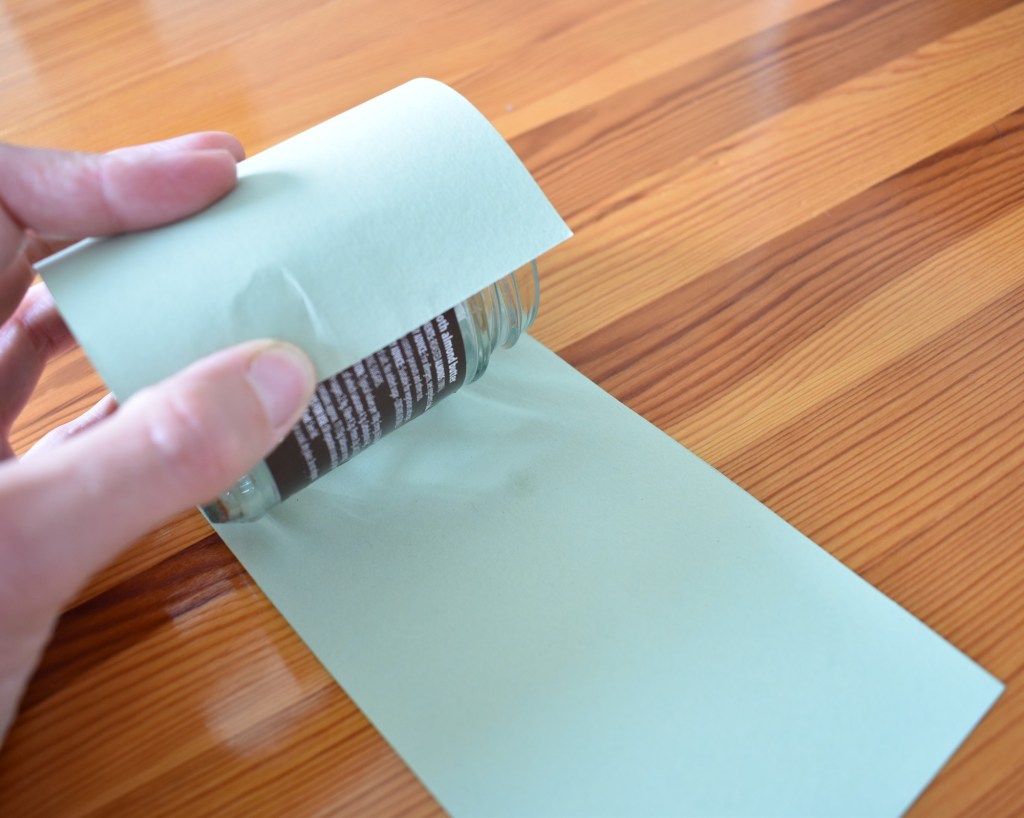
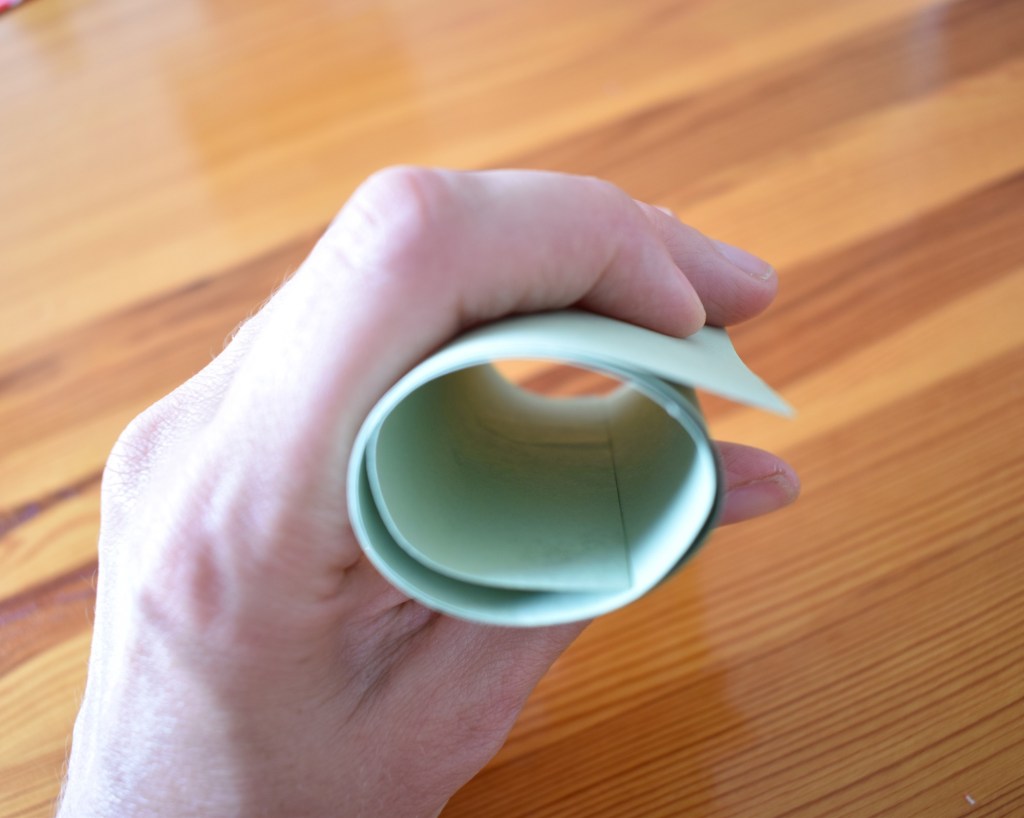
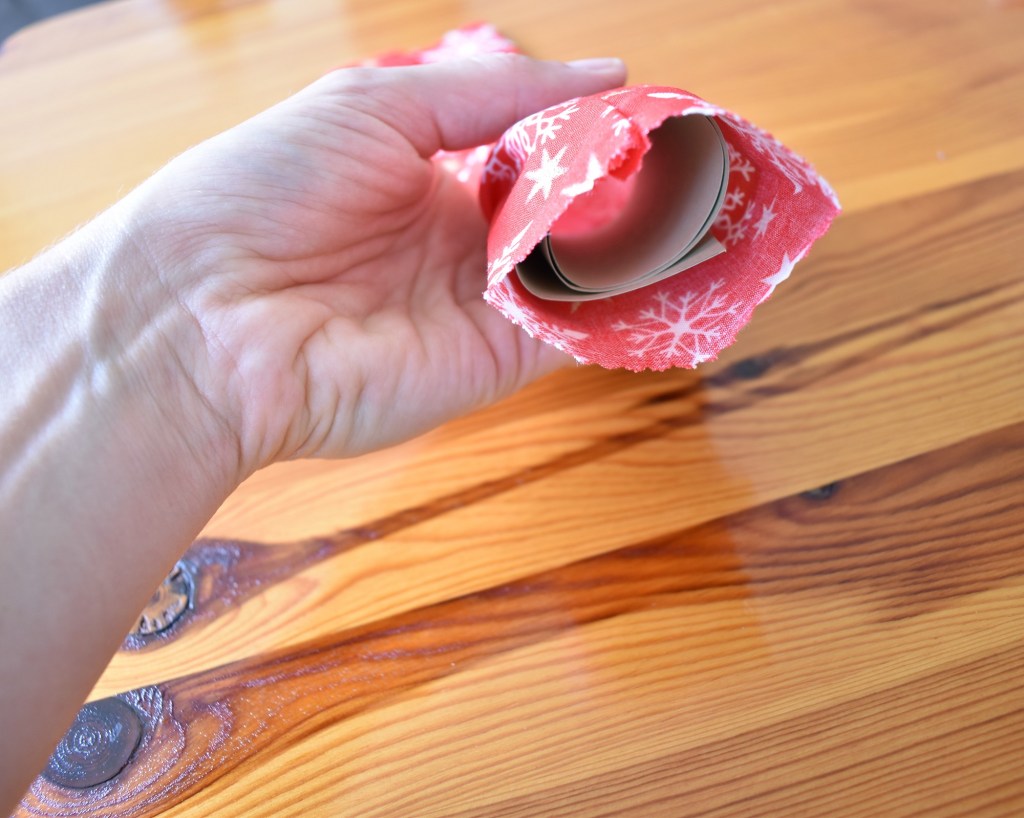
5) Take your piece of A4 card and cut lengthways into 4 widths of 8cm. Place a rolled piece of card into each cracker.

Top Tip

Take each length of card and roll it around the glass jar, hold it in place for a few seconds, then place it inside the cracker.

If you try to use card that is already circular, for example a kitchen roll, you will not be able to adapt the size of the cylinder. By using a jar, which is larger than the cracker, you encourage the card to roll but can then tighten it to fit inside the fabric. Trust me, this works!

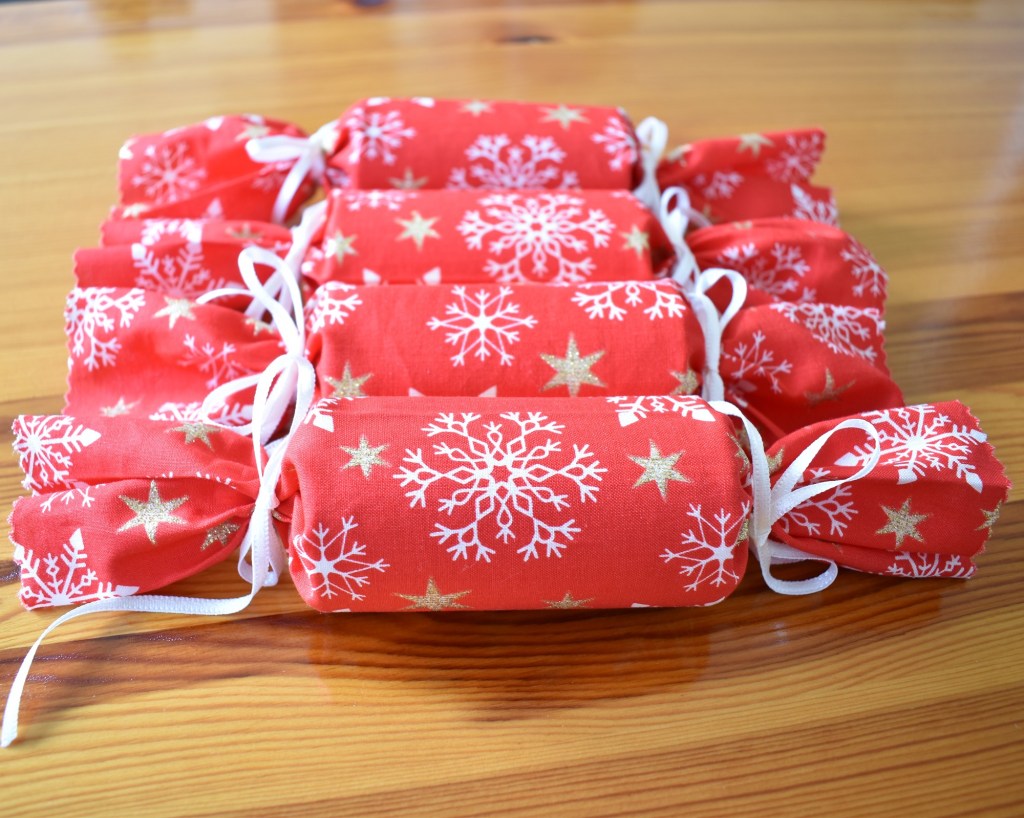
6) Cut the ribbon into lengths of 40 cm if you’ve not already done so. Tie a bow around each end of the cracker, pushing them as close to the cardboard as possible.

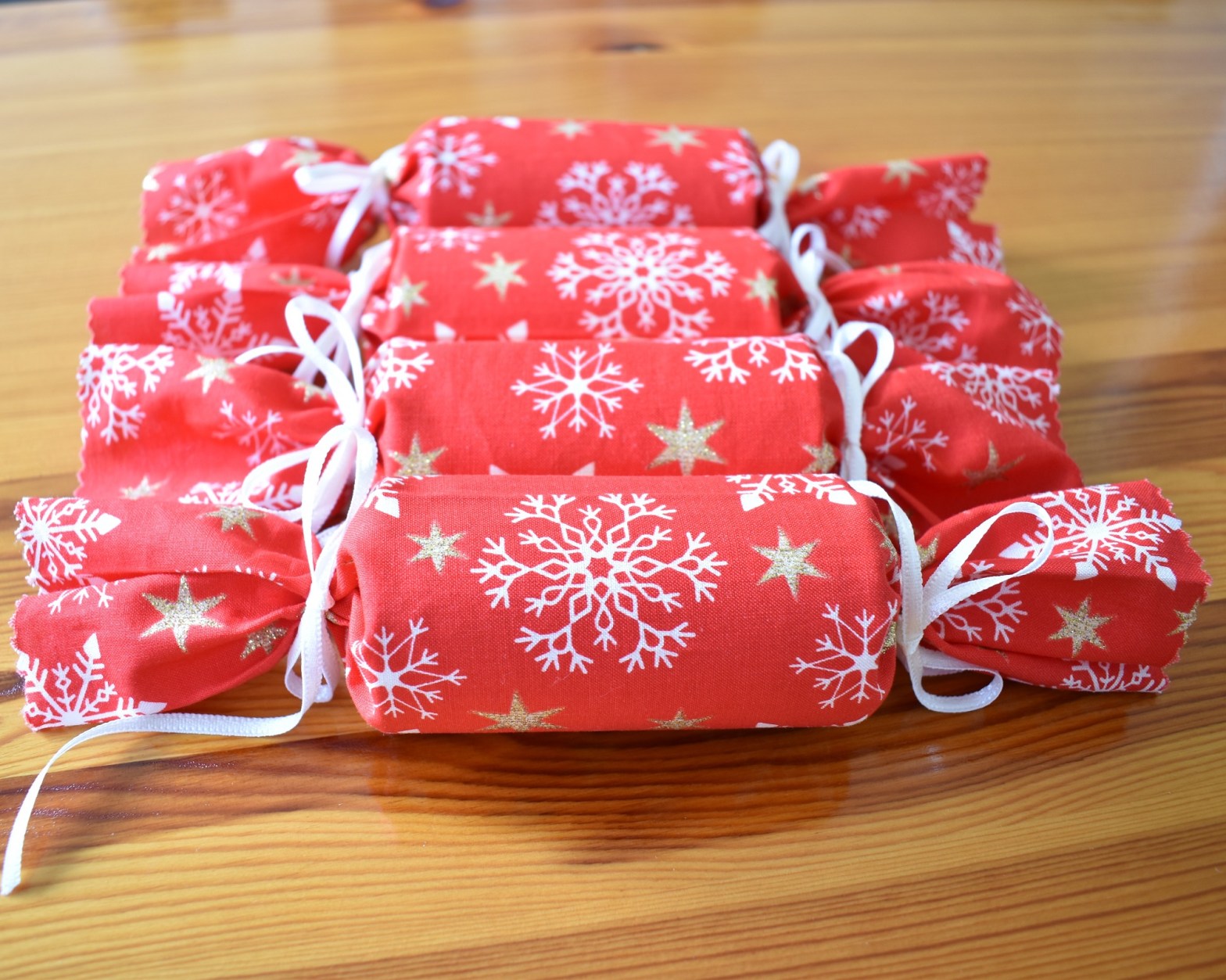
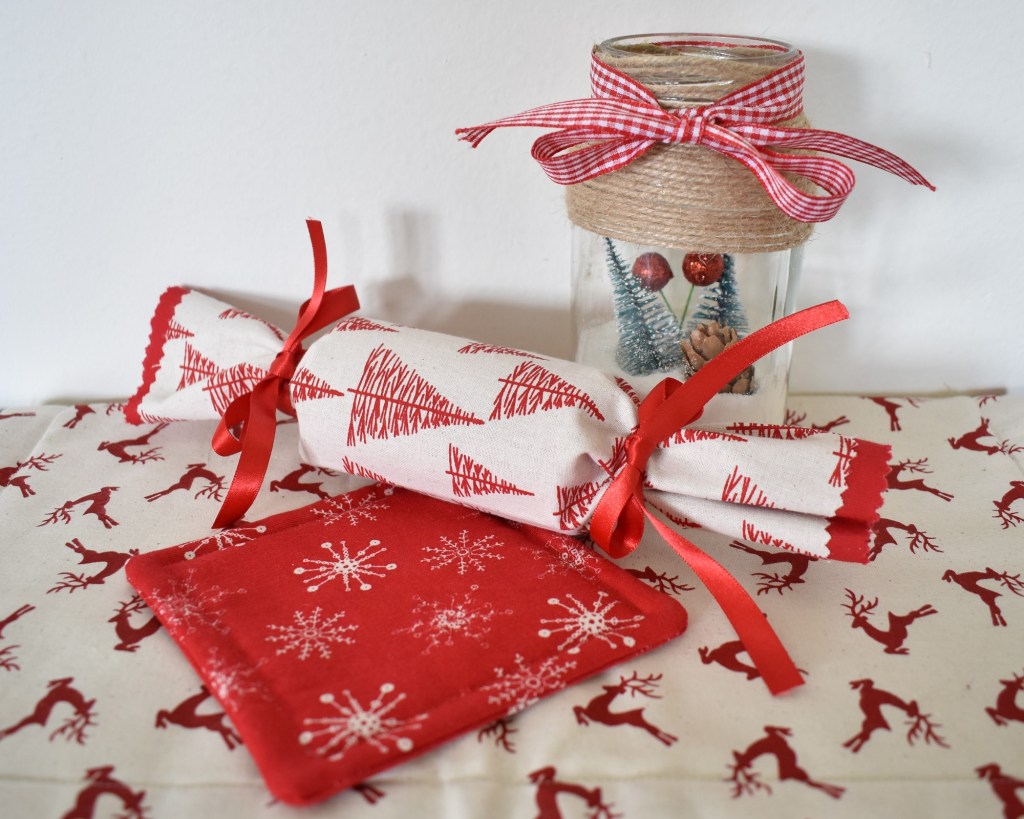
And, Voila! You have a set of delightful, reusable, crackers. Now all you have to do is decide what you’re going to place inside!

But that’s not all, I have another variation for you if you’re interested!

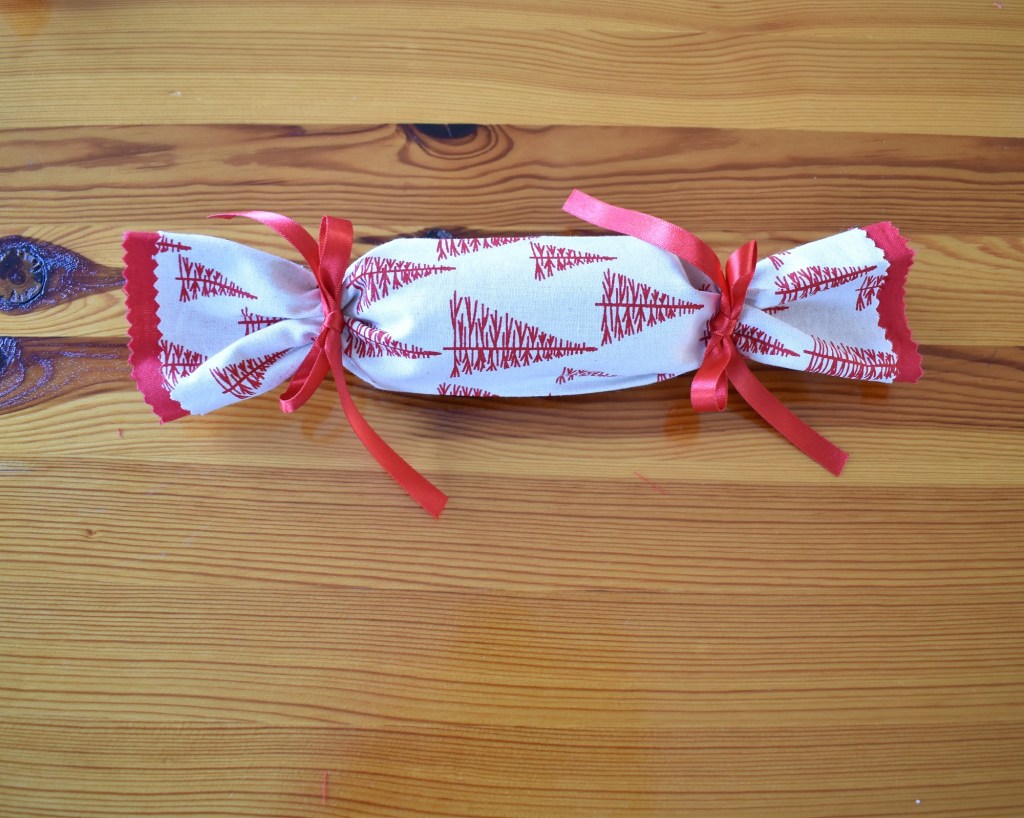
If you fancy adding an extra decorative twist to your cracker consider adding a lining fabric to create an extra trim.

For this, you will need:

4 pieces of fabric measuring 28cm x 17cm and 4 pieces of lining fabric measuring 30cm x 17cm.

Follow the same steps as previously and use pinking shears on both the lining and the main fabric. The only extra step is…

When sewing the fabric together, place the main fabric on top of the lining, leaving 1cm at each end. Fold the fabric as previously and simply sew the two pieces together at the same time. Simple!

And, Voila! Another delightful cracker, this time with an extra decorative trim!

So that’s it for now but if you’re thinking we’ve covered everything we need for our festive table you’d be wrong! Not quite! Next week I’ll be showing you how to make some simple, festive table napkins. Another super simple Christmas craft that will add more homemade joy to your dining table during the festive period! So, until then, happy crafting!

The Twelve Crafts of Christmas #7 Christmas Placemats

On the seventh day of Christmas Jillian Sharples Design gave to me, some lovely, festive placemats for my Christmas table…

Ok, so how have we got to week seven already? This year is certainly flying by! Although, actually, that always seems to be the case when we are heading towards Christmas. In this house at least my Christmas shopping is in full flow and I have pressies hidden all over the place! Although, it seems that sometimes they’re not very well hidden to be honest! My toddler managed to find one of his, a lovely yellow car that he naturally fell in love with straight away. Well, I couldn’t take that off him again could I so, note to self, find better hiding places in future!!!

Anyway, where are we at for our seventh craft of Christmas? Well, we’re going to build on the Christmas coasters we made last week and add some festive table mats to add to the decoration of our Christmas table.

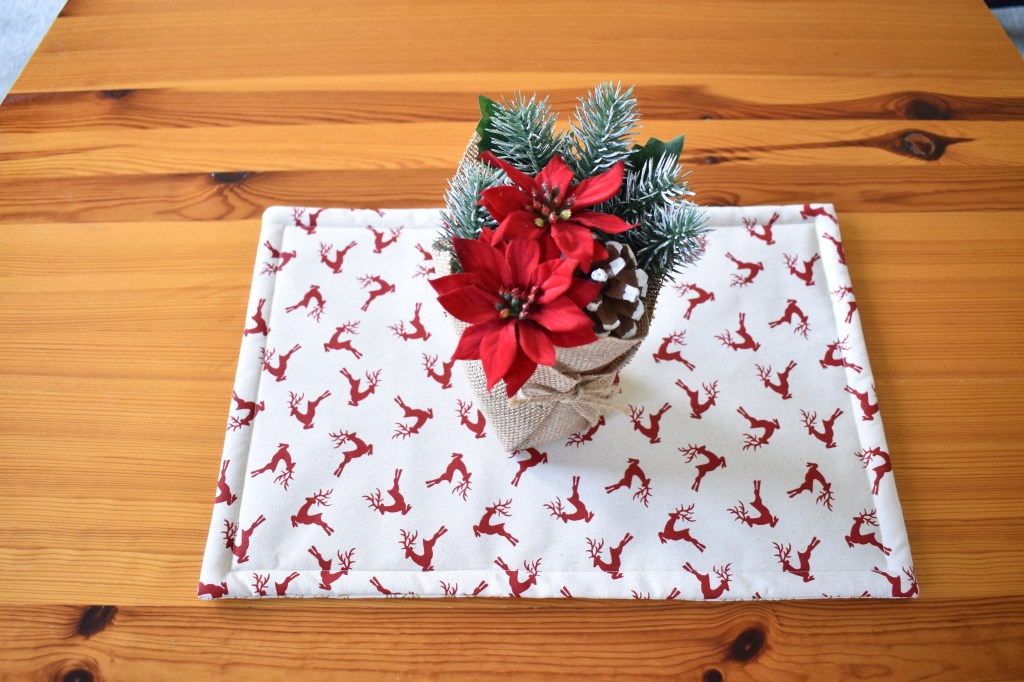
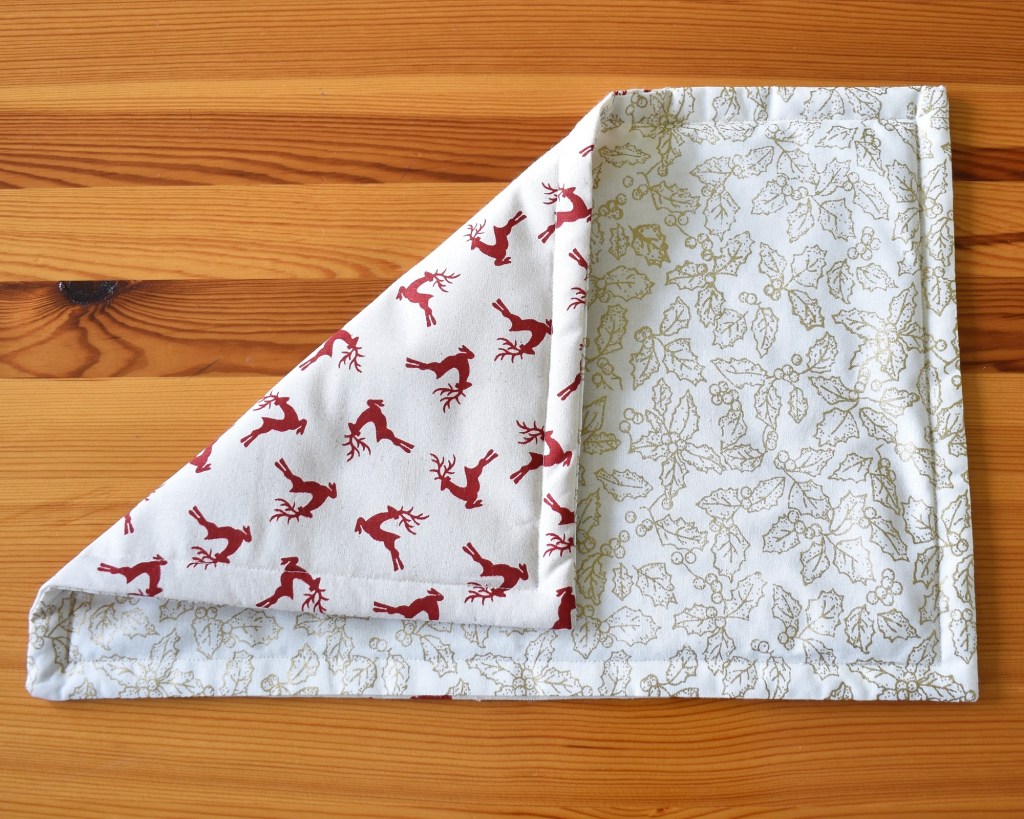
I have a few variations for you for this craft so it completely depends on what kind of look you are after. To give you some options I’m going to show you a rectangular placemat, a circular placemat and a double sided placemat in case you fancy having a different look for Boxing Day or New Year’s Eve.

What you’ll need for the rectangular placemat: 

For the rectangular placemat you will need 

2 pieces of fabric measuring 40cm x 28cm (both the same or in two different designs if you would like a second option)
1 piece of wadding measuring 40cm x 28cm 

Cutting board (if you have one) 

Roller cutter or scissors 

Cutting ruler 

Pins, needle, matching thread, sewing machine 

Making your festive table mats 

1) Place the two pieces of fabric on top of each other, face side together.  

Place the wadding on top of them. 

Pin all three together leaving a 12cm gap along the middle of one edge for turning in the right way. 

 Top Tip 

I always put vertical pins at either side of the gap – so it kind of looks like a doorway – as this reminds me not to sew over this section. 

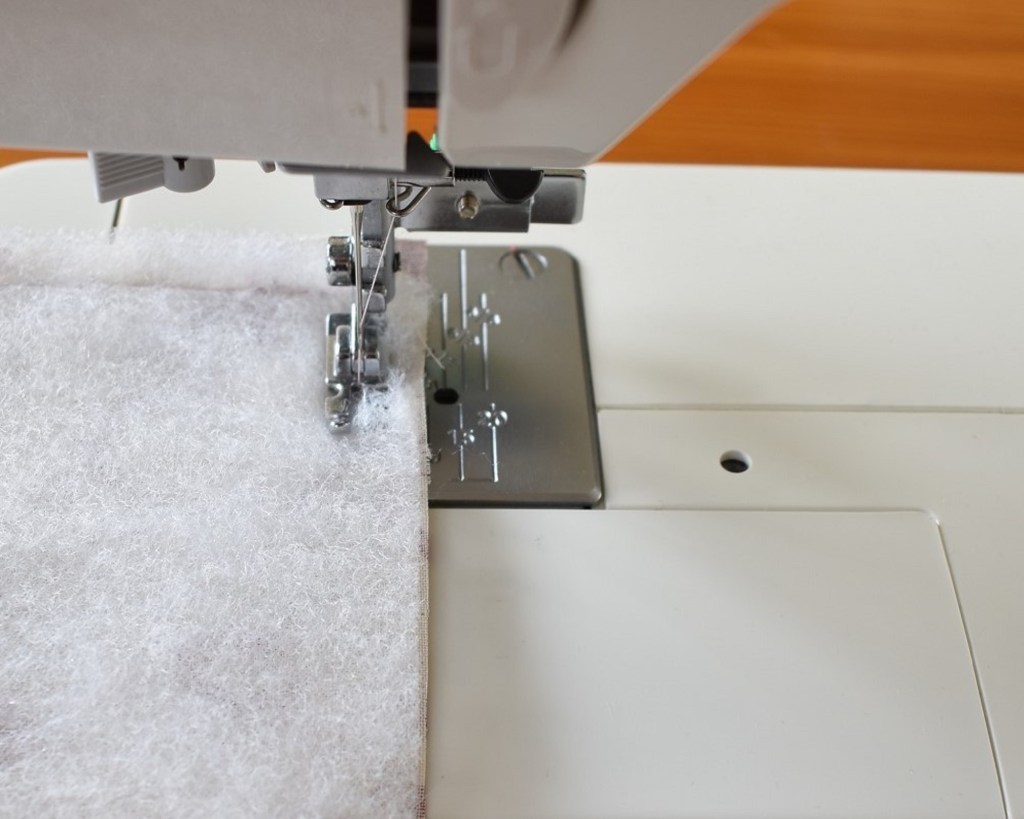
5) Starting at one side of the gap / doorway, sew a stitch line all the way round, 1cm from the edge of the fabric. Remember to do a few backstitches at the beginning and end to secure the stitch line and prevent fraying.  

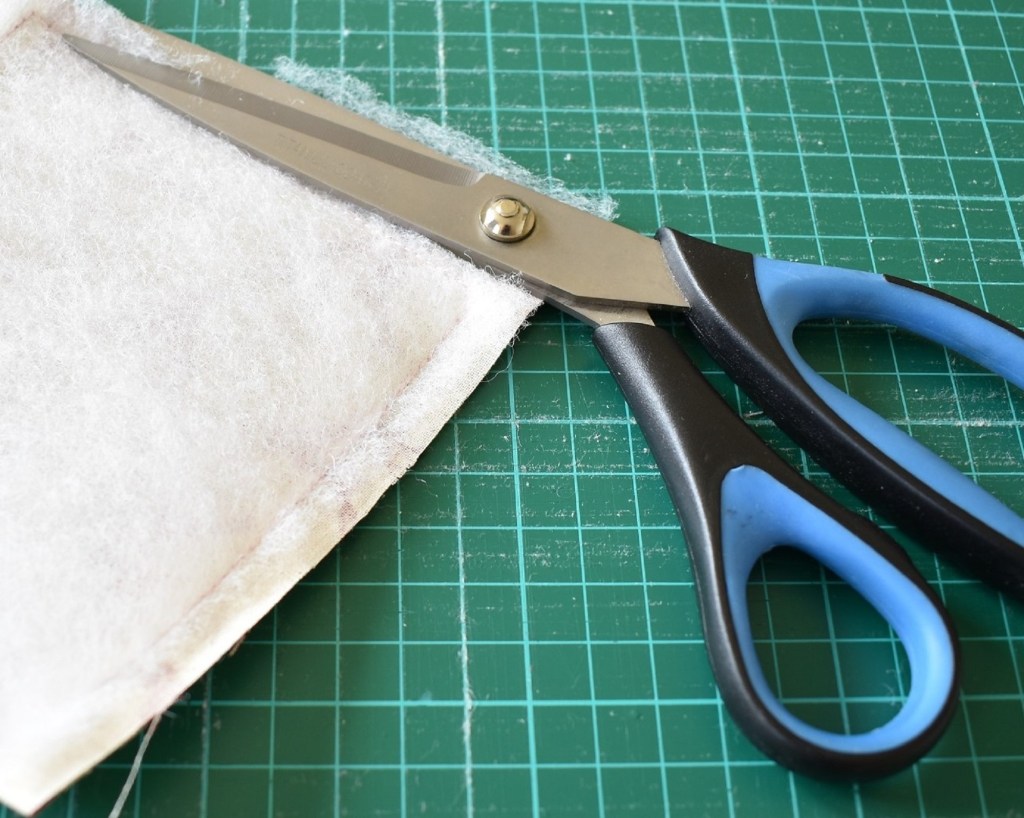
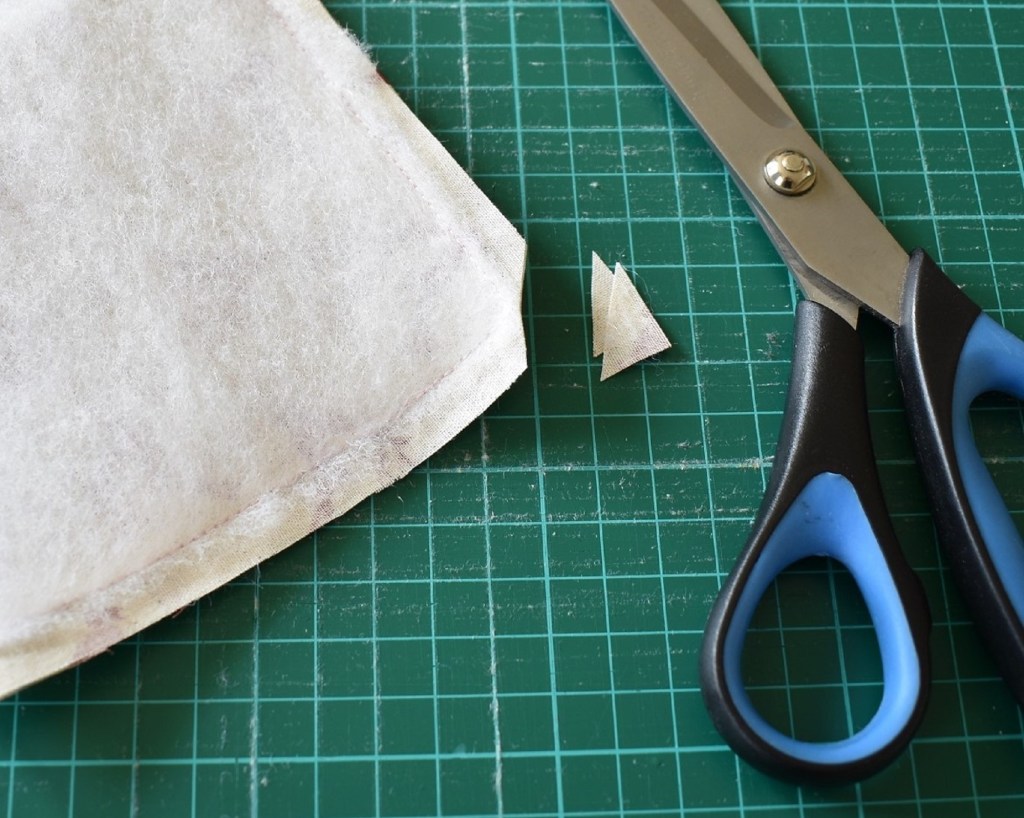
6) Cut off the four corners, leaving a couple of millimeters between the cut and the stitch line.  This helps the corners to be turned neatly with no bunching. 

Trim off any excess wadding, being sure not to cut the fabric! 

7) Using the gap turn in the right way, pushing the corners out with your fingers. If need be, use a pin from the outside to nudge the corners out fully.  

8) Use a simple ladder stitch to close the gap. 

Top Tip

If you are unsure of how to do ladder stitch, or slip stitch as it is also known, please watch my youtube video

9) Finally, sew a stitch line all the way round the front of the placemate, 2cm from the edge of the fabric. Remember to sew a few extra stitches at the end over the start of the line to secure the stitches and prevent fraying. This extra stitch line gives the placemat a little more stability and shape. 

And, Voila! You have a lovely Christmas placemat for your dining table. 

But wait, there’s more…

Your reversible placemat is ready for two festive occasions!

But, one more thing before you go, what about mixing it up with a circular placemat! Keep reading to find out how.

What you’ll need for the circular placemat:

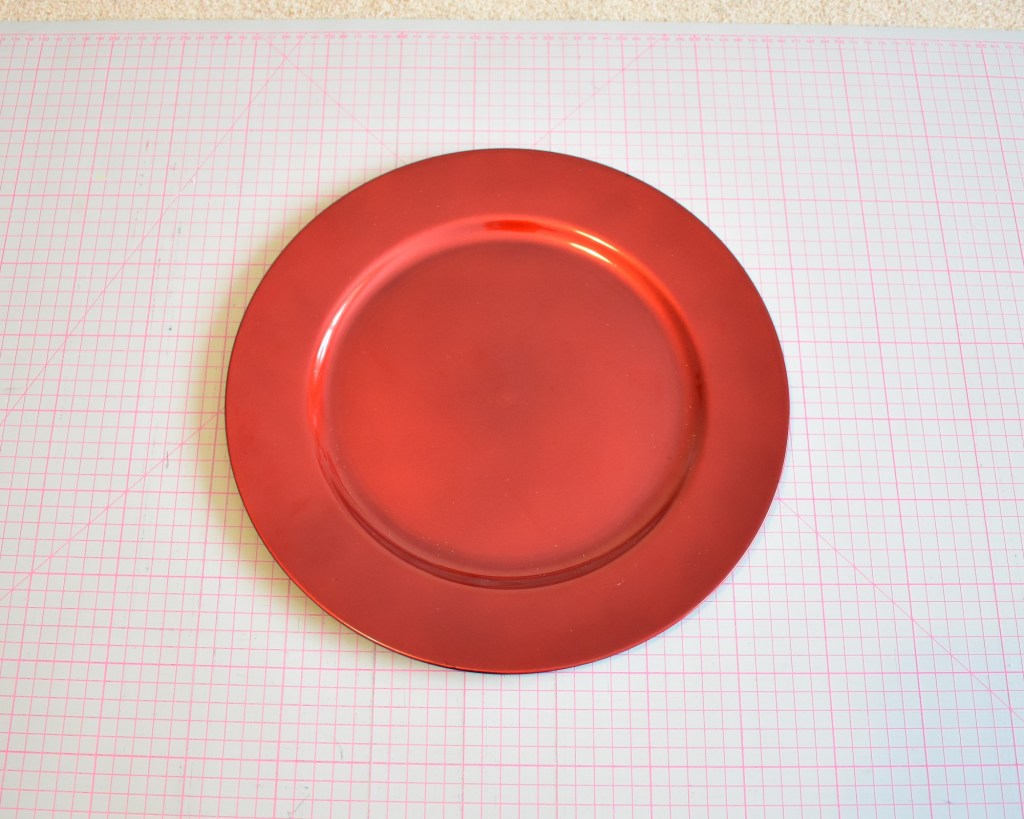
2 fat quarters or equivalent pieces for 2 x circles of 33cm in diameter, or your desired size. My placemate just happens to be 33cm in diameter as this is the size of the serving plate that I drew around.

1 piece of wadding measuring 33cm in diameter (or your desired size) 

A large plate to trace around 

Cutting board (if you have one) 

Scissors 

Cutting ruler

Pins, needle, matching thread, sewing machine 

1) Cutting your fabric 

To get my circle I drew around a large Christmas serving plate. Place it on the back of the fabric and simply draw round with a fabric pencil, or simply a pen or pencil, whatever you have to hand, you won’t see the line.  

Do the same on the wadding. 

Top Tip 

If you don’t have a large enough plate I would recommend making a template on card or paper. The easiest way to scale up is to draw around a regular dining plate then, using a ruler, measure, for example, 2cm (or as big as you like) at regular intervals all the way round. Connect the dots with a line and you have a larger template to draw around on the fabric. 

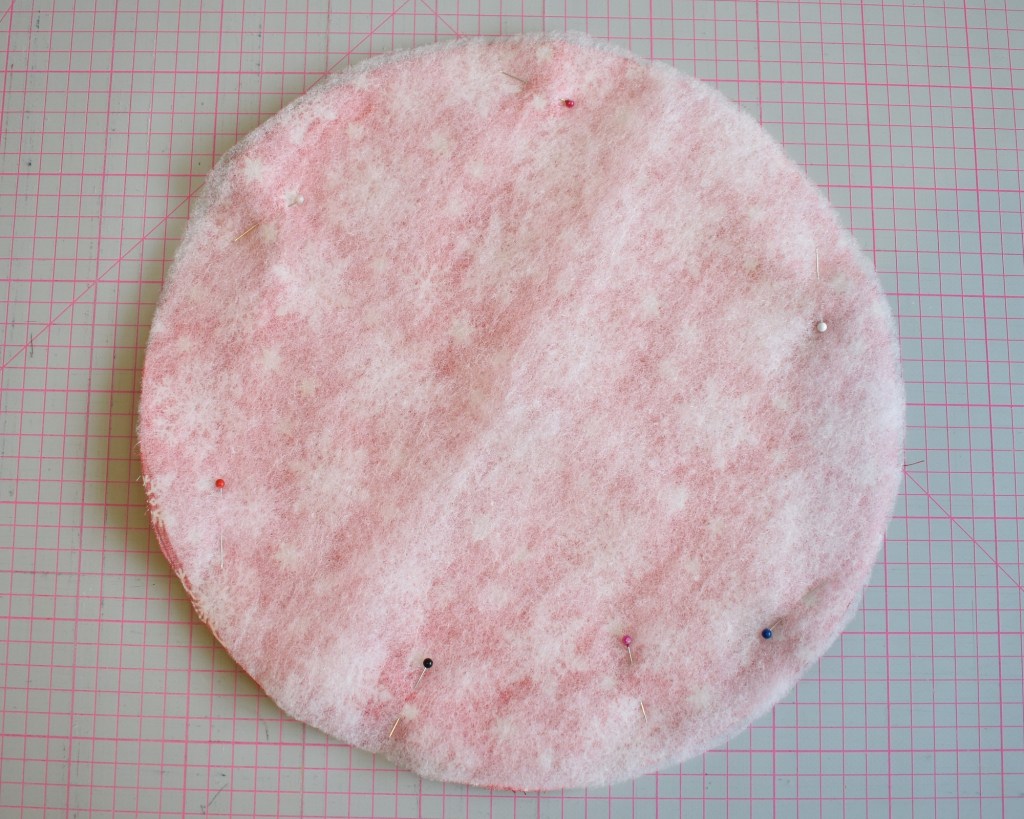
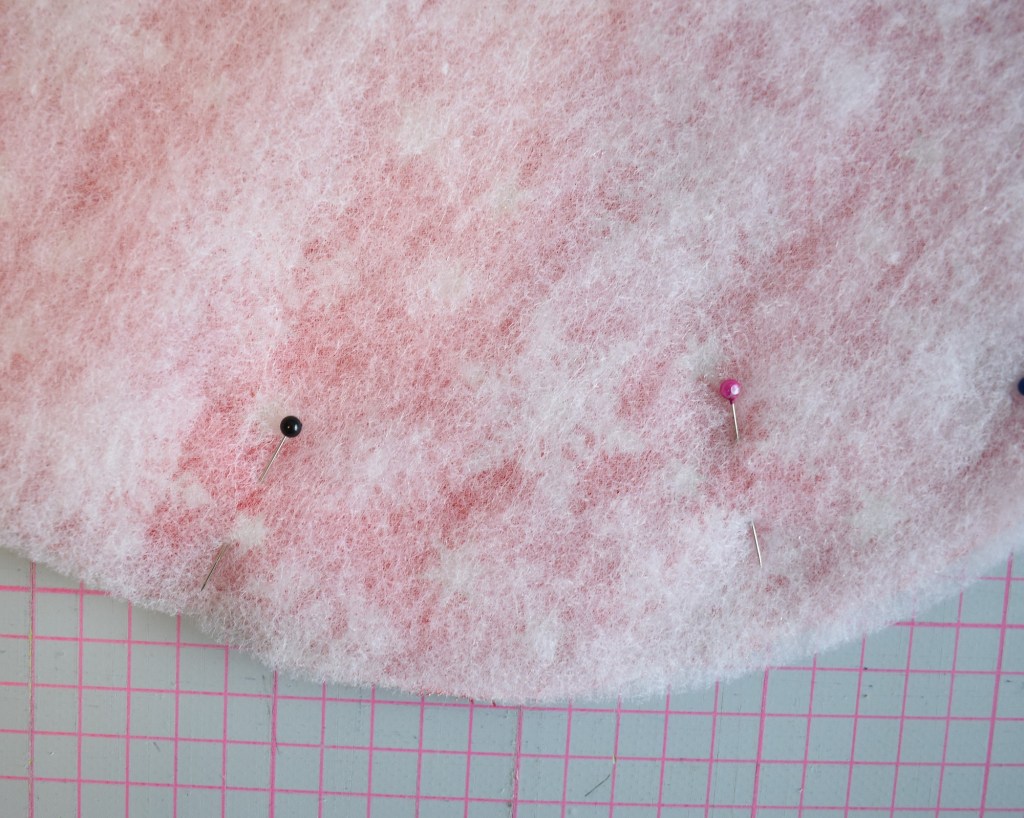
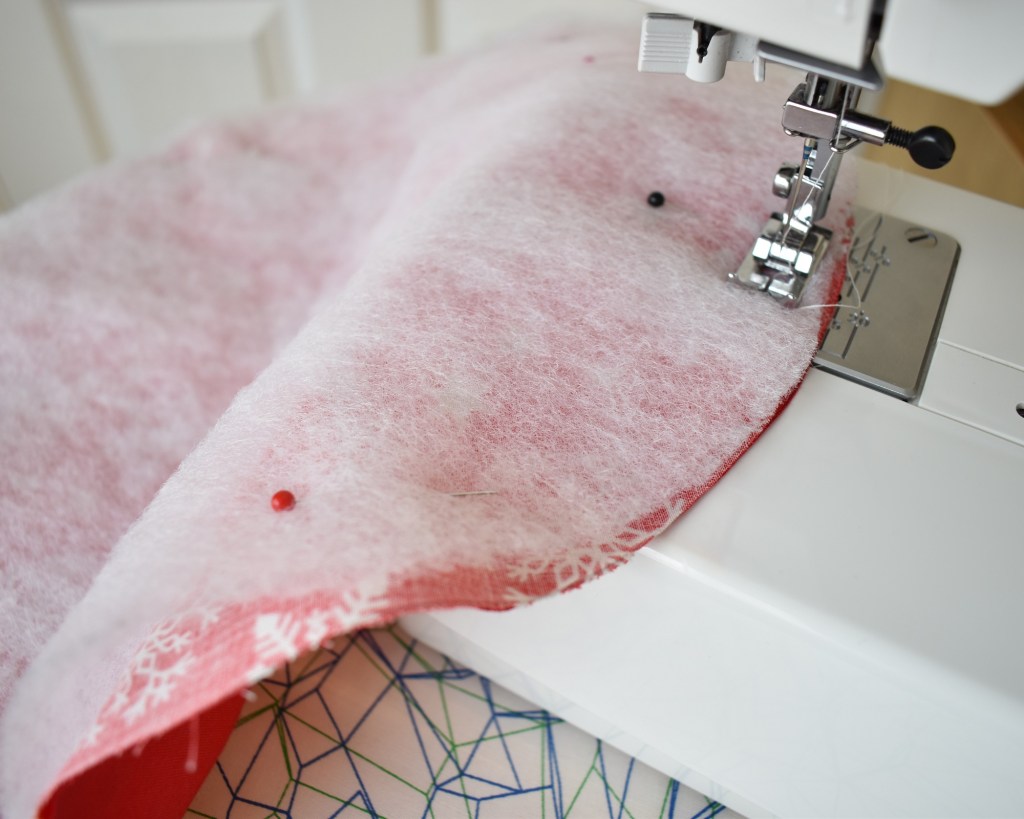
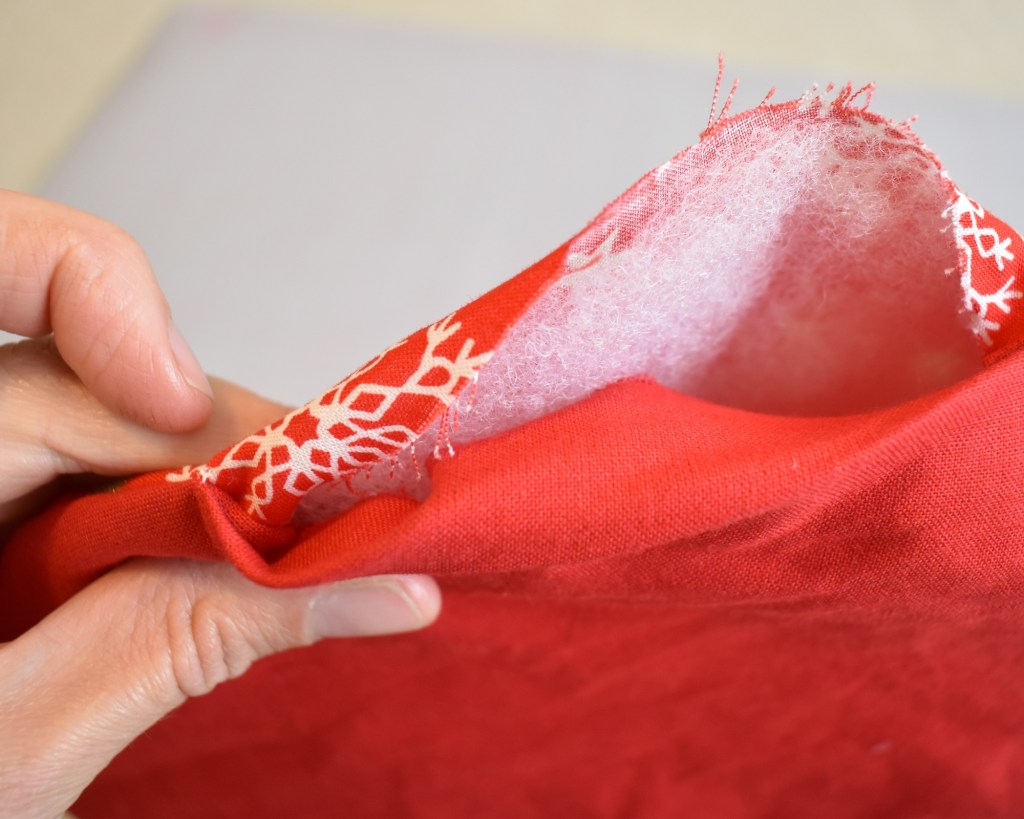
2) Place the 2 pieces of fabric on top of each other, face sides together. Place the wadding on top of this and pin all 3 together leaving a 10cm gap along one part of the edge for turning in the right way. 

 Top Tip 

I always put vertical pins at either side of the gap – so it kind of looks like a doorway – as this reminds me not to sew over this section. 

3) Starting at one side of the gap / doorway, sew a stitch line all the way round, 1cm from the edge of the fabric. Remember to do a few backstitches at the beginning and end to secure the stitch line and prevent fraying. 

Top Tip 

I’d recommend sewing this line more slowly than usual, especially if you are not confident sewing in a circle.

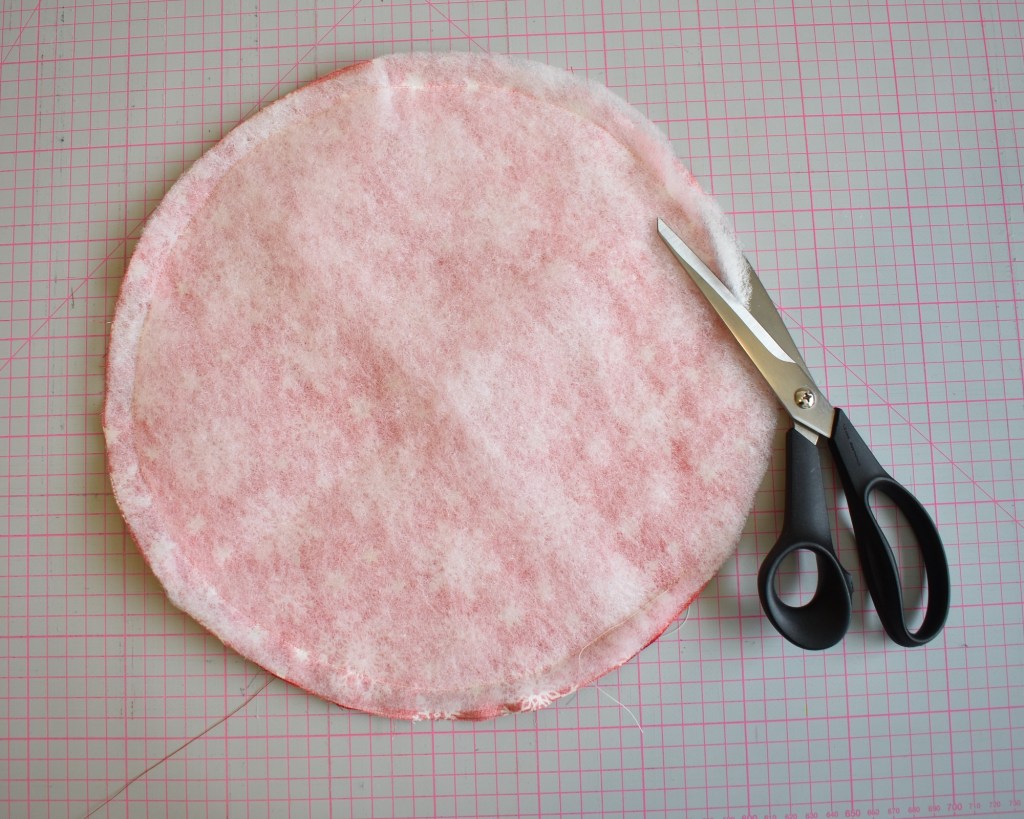
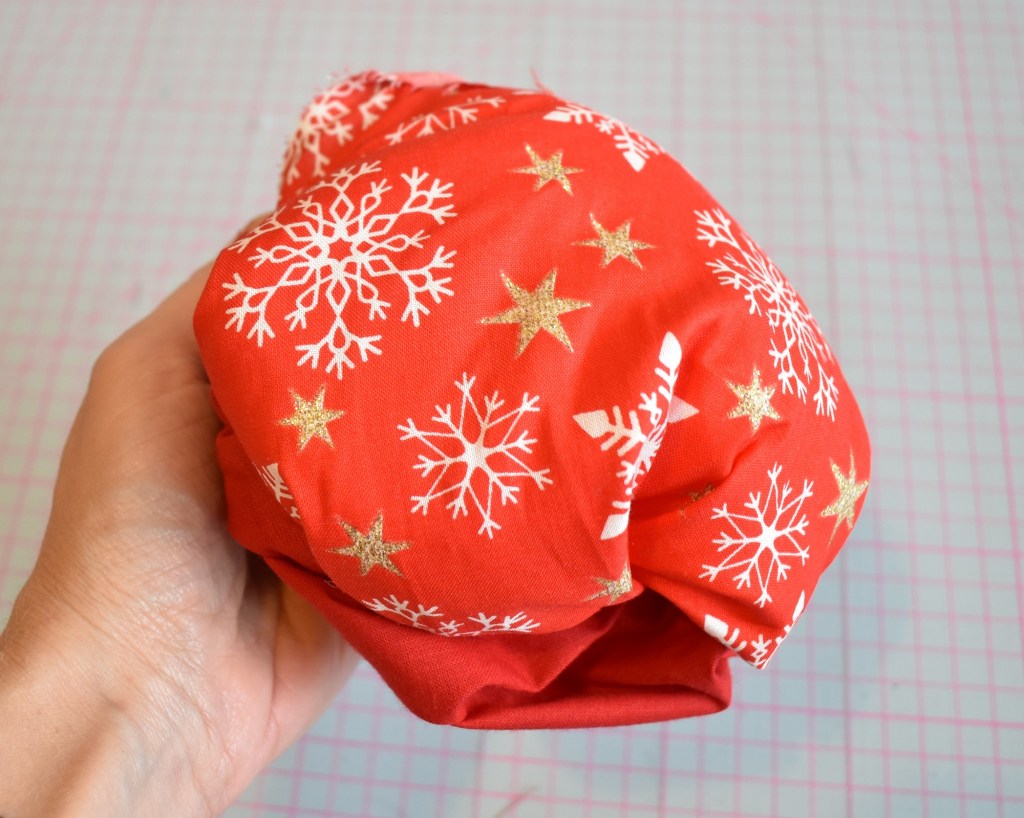
4) Using the gap turn in the right way, pushing the corners out with your fingers. If need be, use a pin from the outside to nudge the corners out fully.  

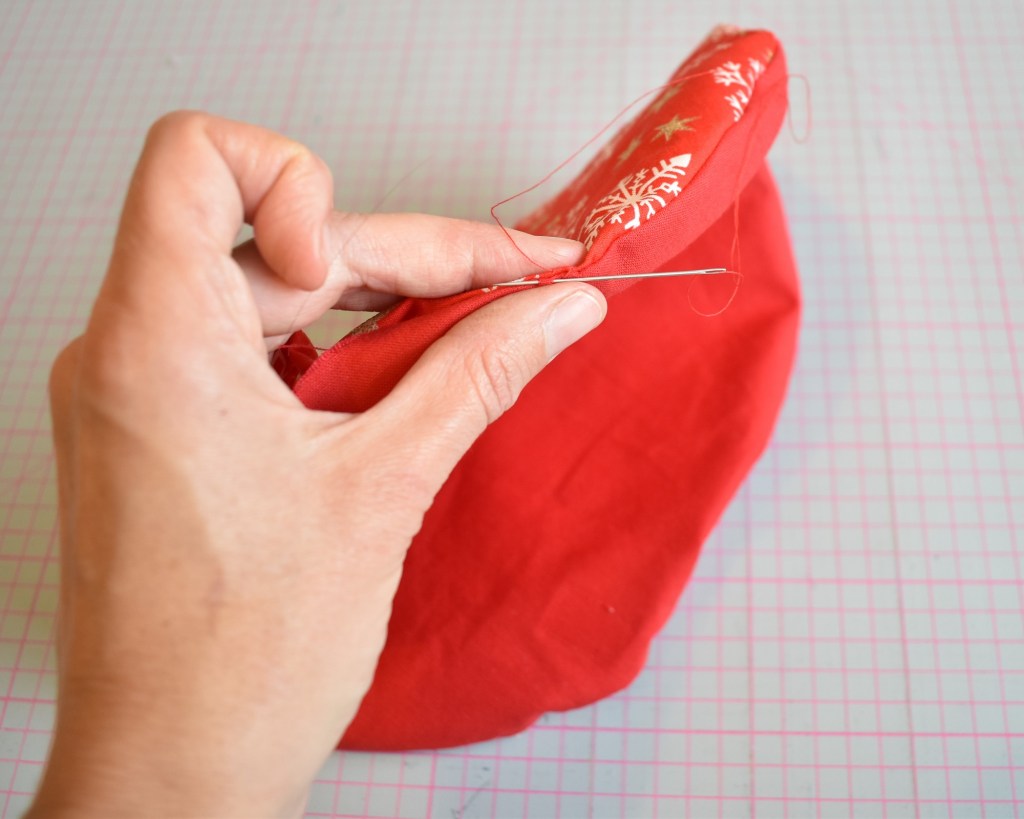
5) Use a simple ladder stitch to close the gap. See the video mentioned above if you are unsure how to do this.

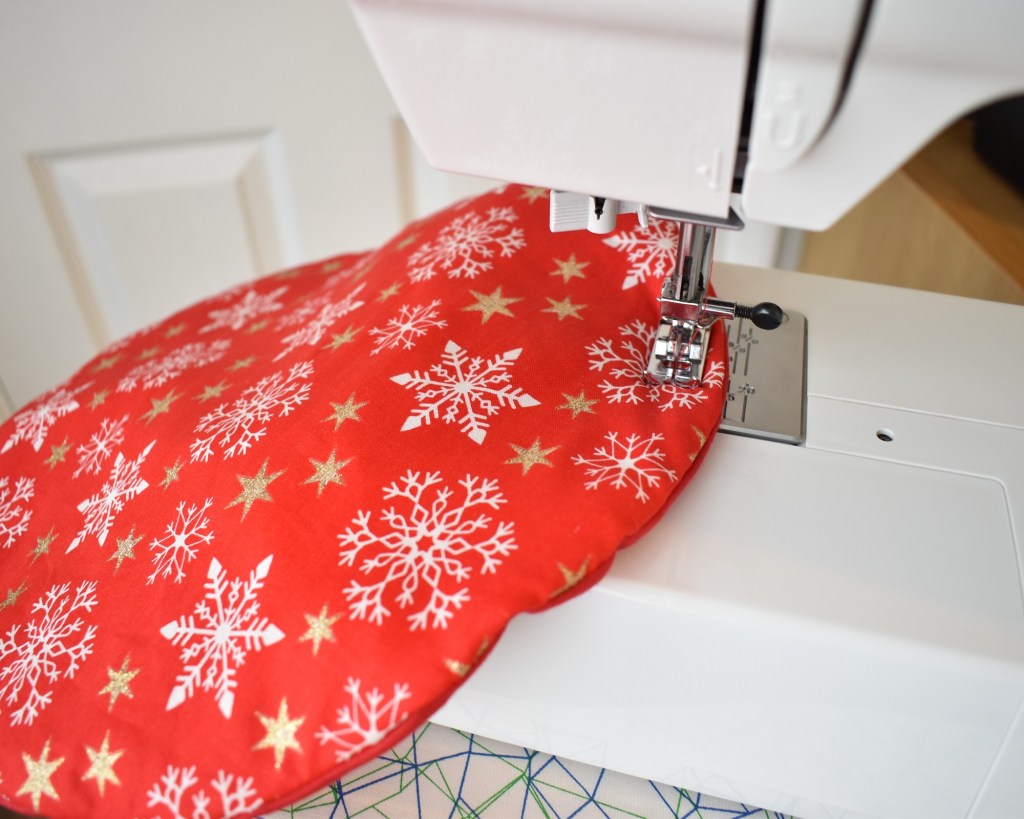
6) Finally, sew a stitch line all the way round the front of the placemat, 2cm from the edge of the fabric. Remember to sew a few extra stitches at the end over the start of the line to secure the stitches and prevent fraying. This extra stitch line gives the placemat a little more stability and shape. 

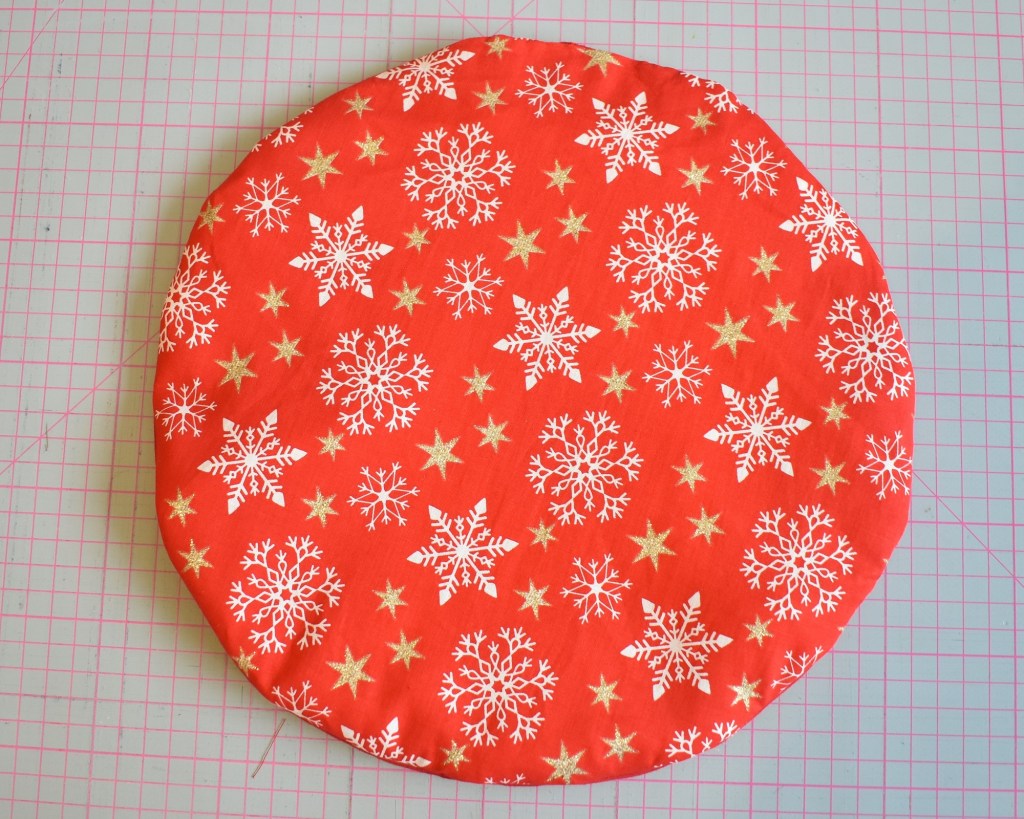
And, Voila! You have a lovely circular mat for your dining table. 

And that’s it! Now we’ve covered festive coasters and festive placemats your Christmas table is really starting to take shape. But there’s one more thing i would love to share with you which will really add the most beuatiful finishing touch to your handmade table decorations. Join me next week when I’ll be showing you how to make reusable fabric crackers. See you then!

The Twelve Crafts of Christmas #6 Christmas Coasters

On the sixth day of Christmas Jillian Sharples Design gave to me, some little Christmas Coasters for my coffee table…

Hi there! Welcome back for week 6 of my ‘Twelve Crafts of Christmas’ festive craft projects. To have a little recap, so far we’ve covered a couple of craft projects to get us started with our Christmas shopping, as well as a few different ways of presenting the gifts that we might be buying on those shopping trips. Now, it’s time to move our attention to the home and think about adding some handmade touches to our Christmas decorations.

This is perfect for 2020 actually. In the face of everything that has been happening, many of us have been turning our attention inwards more than ever and focusing on our families to an even greater degree, so why not try to make this Christmas the best ever by adding some thoughtful, homemade touches to our decorations and our gifts. Maybe it will work out that this year some of us, sadly, won’t get to visit families over the festive period, but that doesn’t mean we aren’t thinking of them. Any of the projects we have covered so far would make lovely Christmas or Advent gifts for friends and family and today’s is no exception. So let’s get started and look at how we are going to make these, super simple, Christmas coasters that could even just be popped in an envelope with a Christmas card for a little pre-Christmas treat.

What you’ll need: 

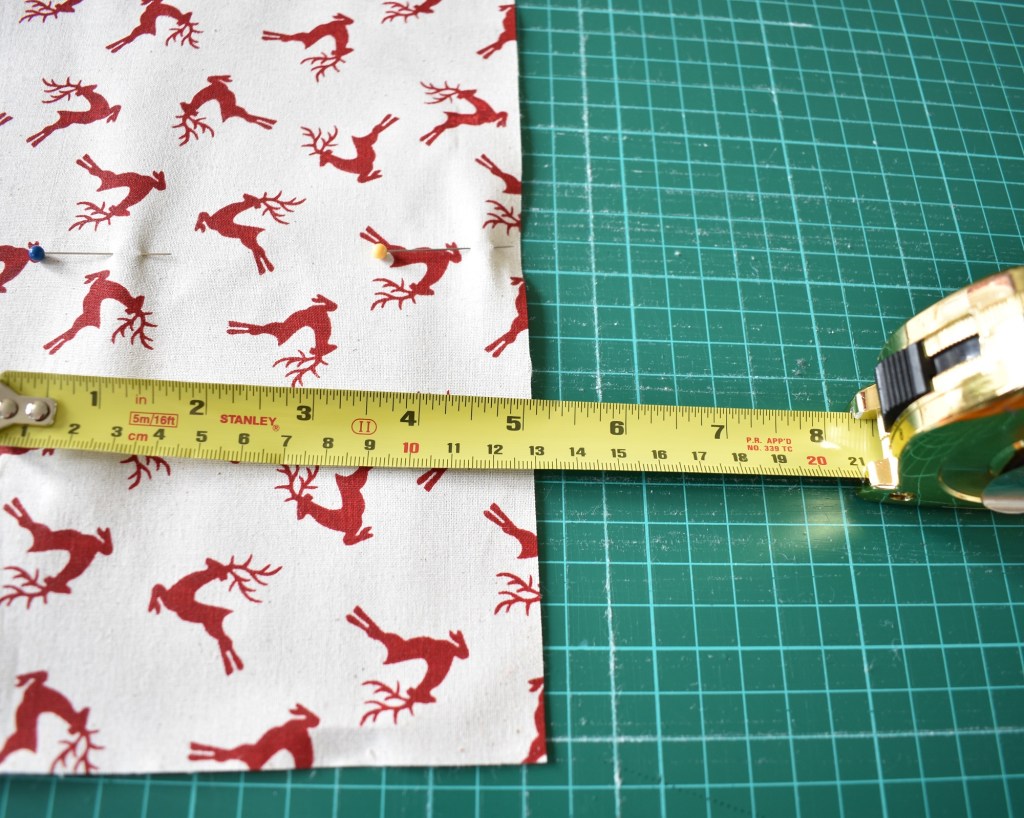
8 pieces of fabric 15cm x 15cm 

4 pieces of wadding fabric 15cm x 15cm 

Cutting board (if you have one) 

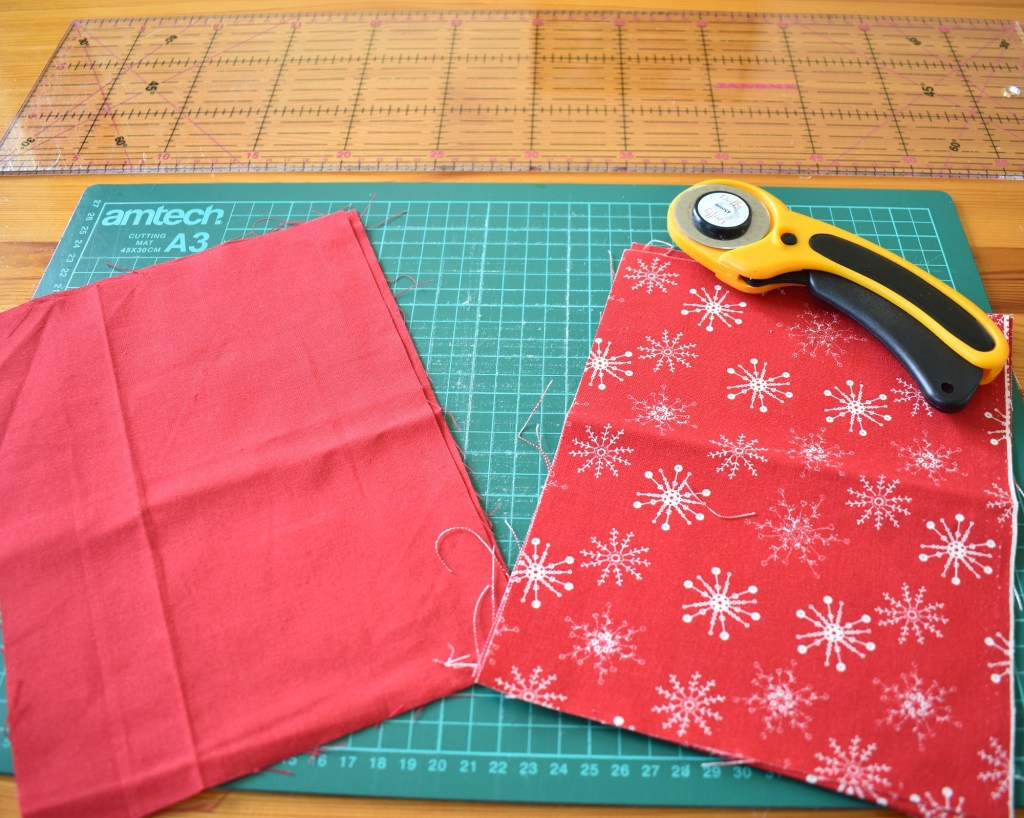
Roller cutter or scissors 

Cutting ruler (if you have one) 

Pins, needle, matching thread, sewing machine 

How to make your Christmas Coasters:

1) Place two pieces of fabric on top of each other, face sides together.  

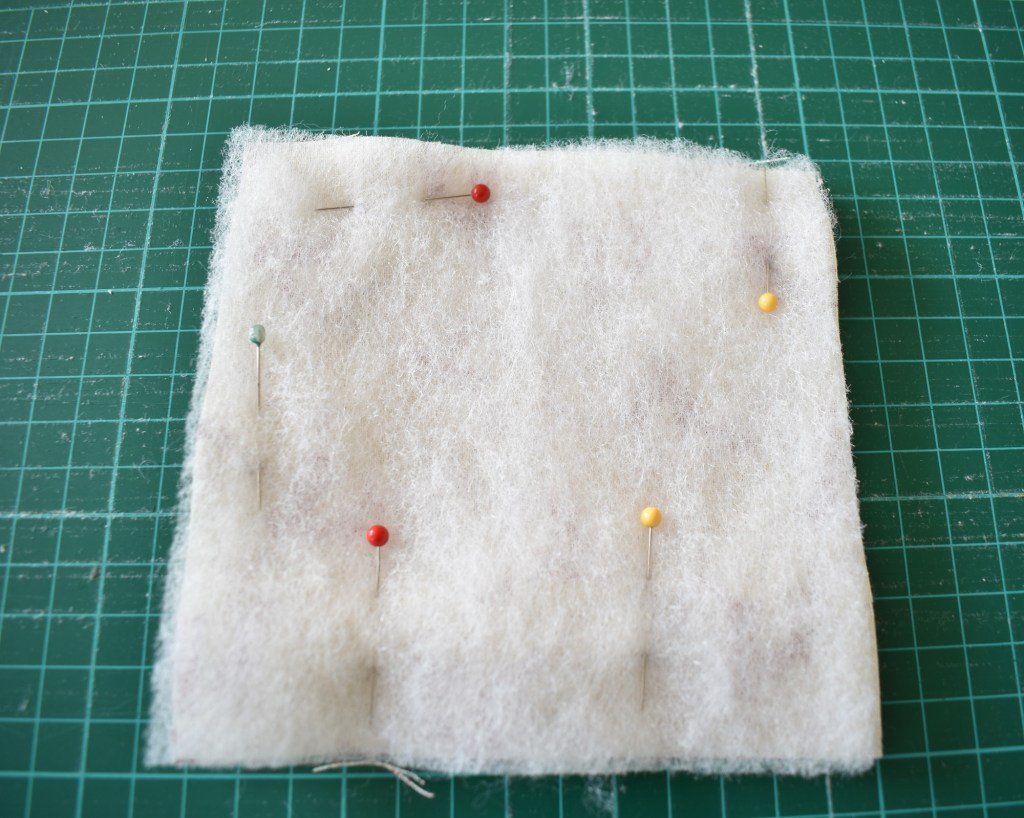
Place the wadding on top of them. 

Pin all three pieces together leaving a 7cm gap along one edge for turning in the right way. 

 Top Tip 

As I’ve mentioned before, I always put vertical pins at either side of the gap – so it kind of looks like a doorway – as this reminds me not to sew over this section. 

2) Starting at one side of the gap / doorway, sew a stitch line all the way round, 1cm from the edge of the fabric. Remember to do a few backstitches at the beginning and end to secure the stitch line and prevent fraying.  

3) Cut off the four corners, leaving a couple of millimeters between the cut and the stitch line.  This helps the corners to be turned neatly with no bunching. 

Trim off any excess wadding, again leaving a couple of millimeters between the cut and the stitch line so as to prevent cutting the fabric! 

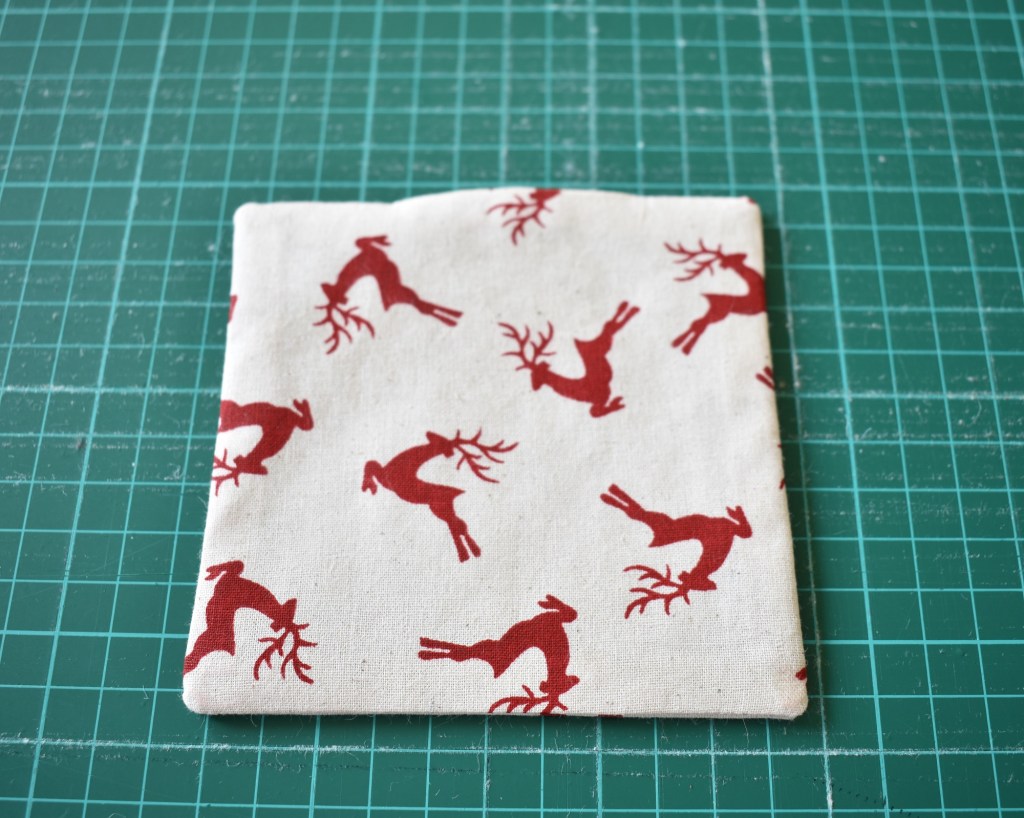
4) Using the gap turn in the right way, pushing the corners out with your fingers. If need be, use a pin from the outside to nudge the corners out fully.  

5) Use a simple ladder stitch to close the gap. You may wish to iron the hems flat first.

Top Tip

If you are unsure of how to do ladder stitch, or slip stitch as it is also known, please watch my youtube video

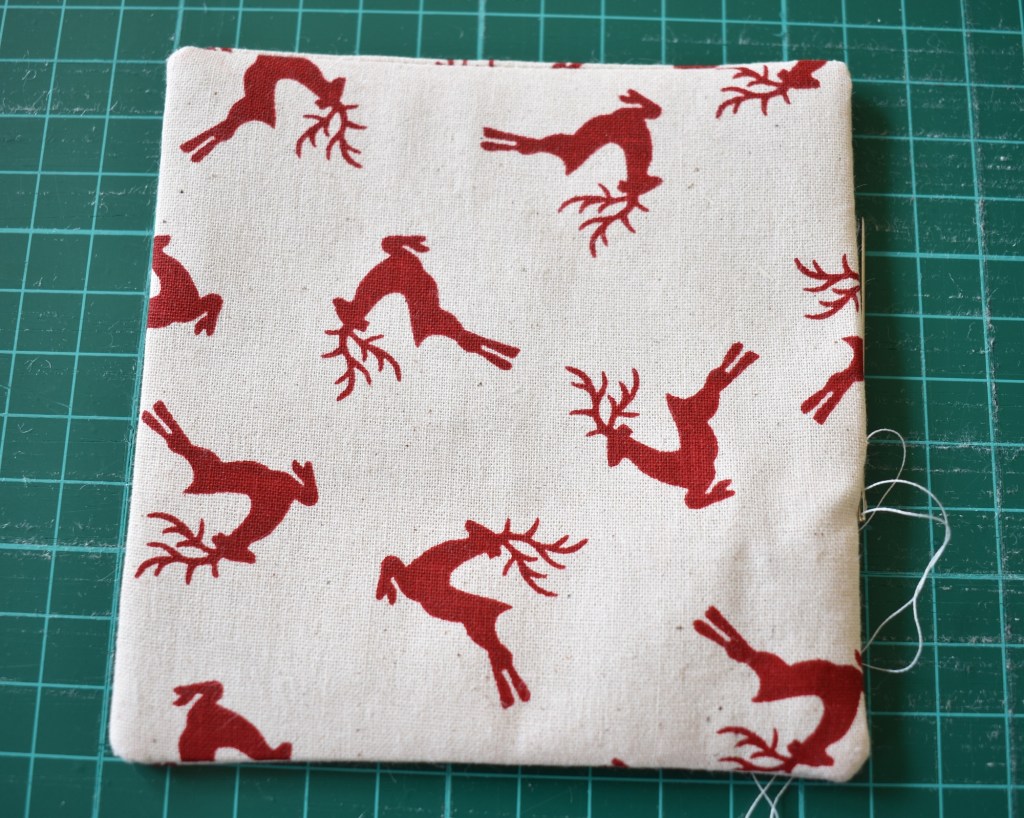
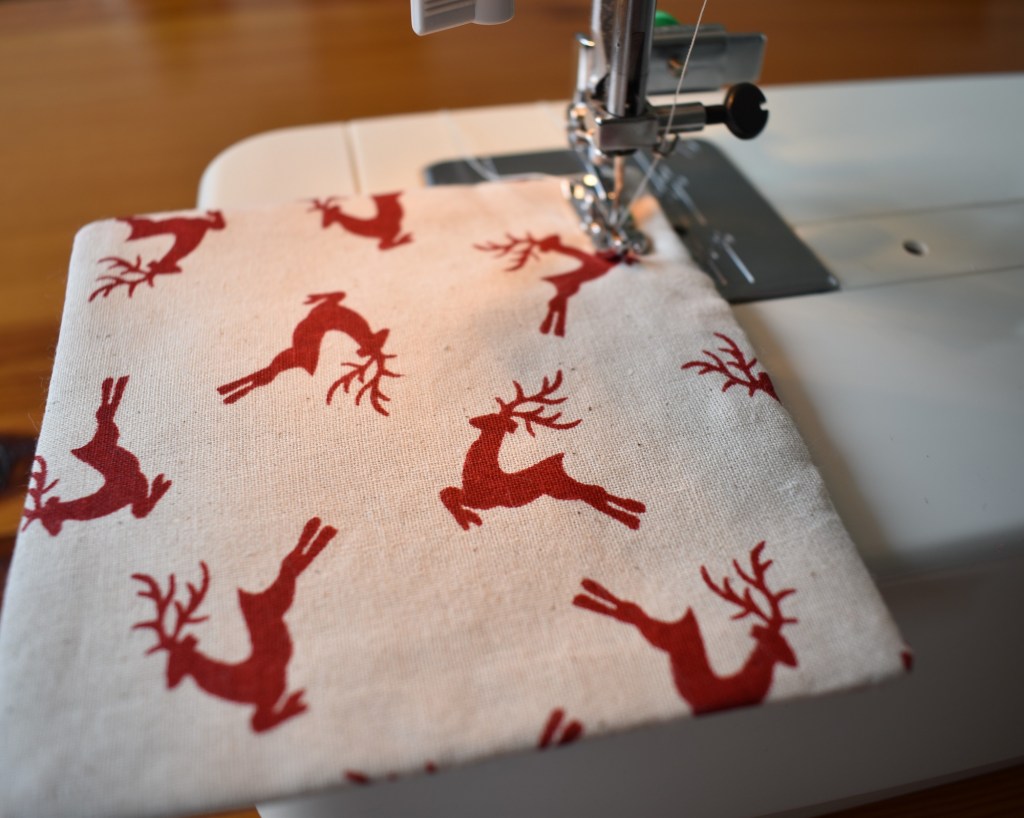
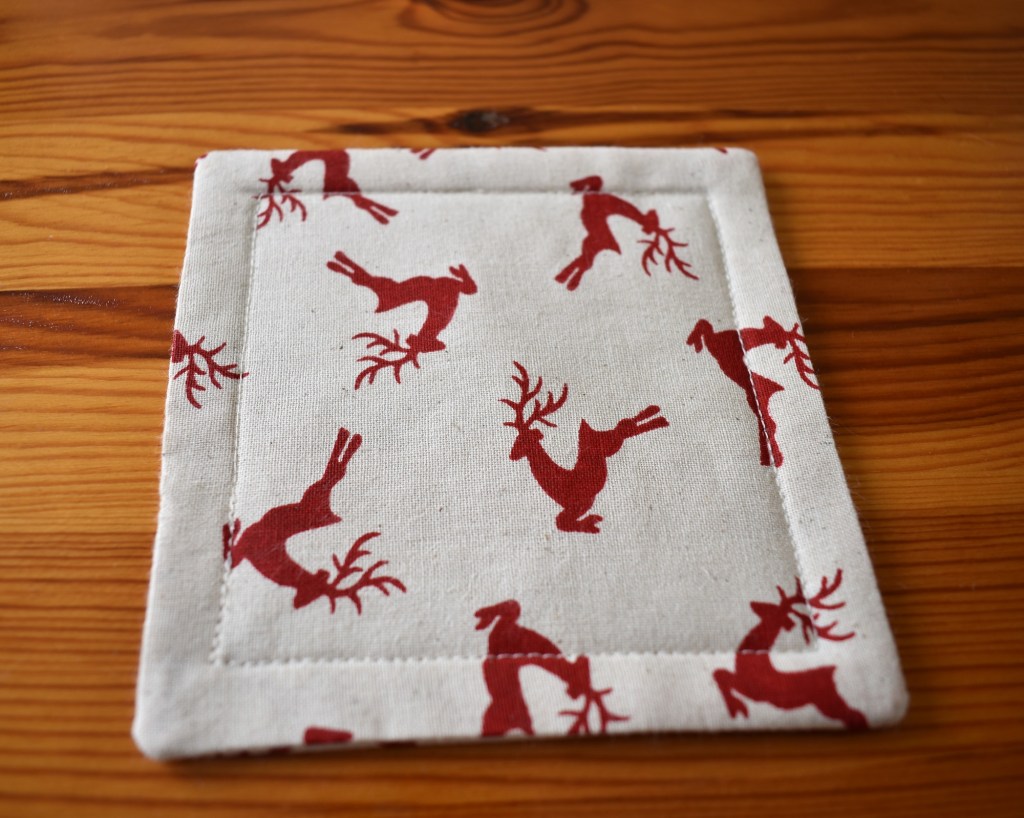
6) Finally, sew a stitch line all the way round the front of the coaster, 1cm from the edge of the fabric. Remember to sew a few extra stitches at the end over the start of the line to secure the stitches and prevent fraying. This extra stitch line finishes off the coasters, giving them a little more stability and shape. 

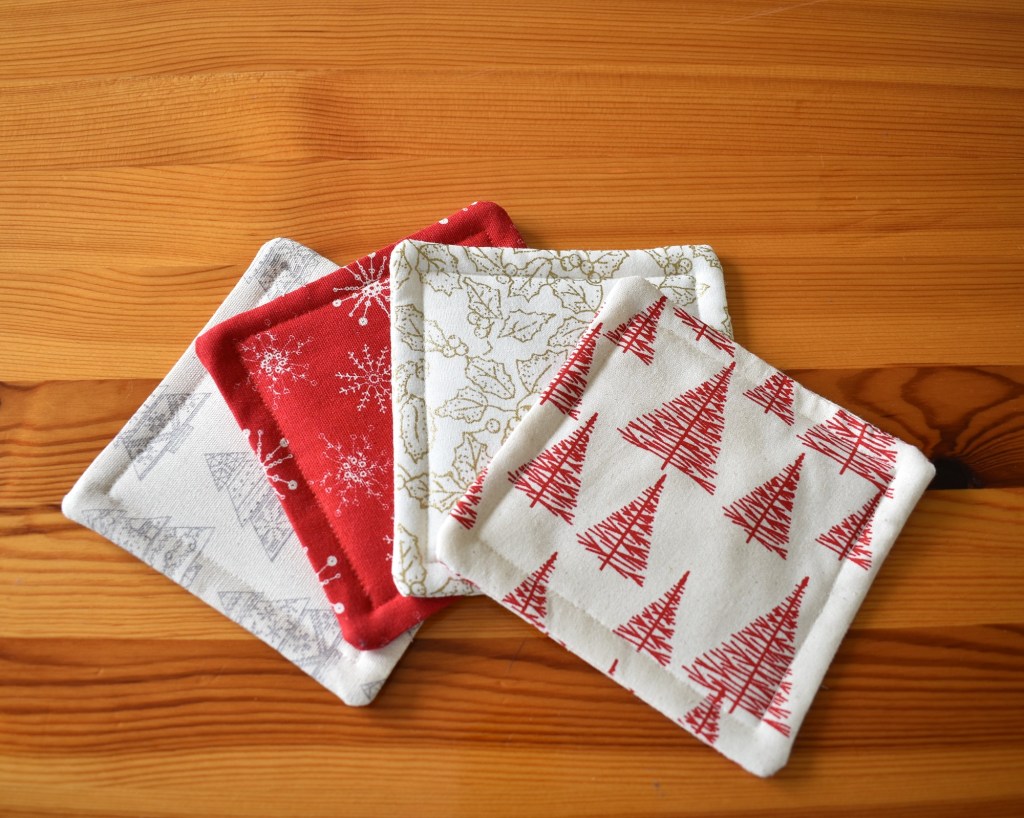
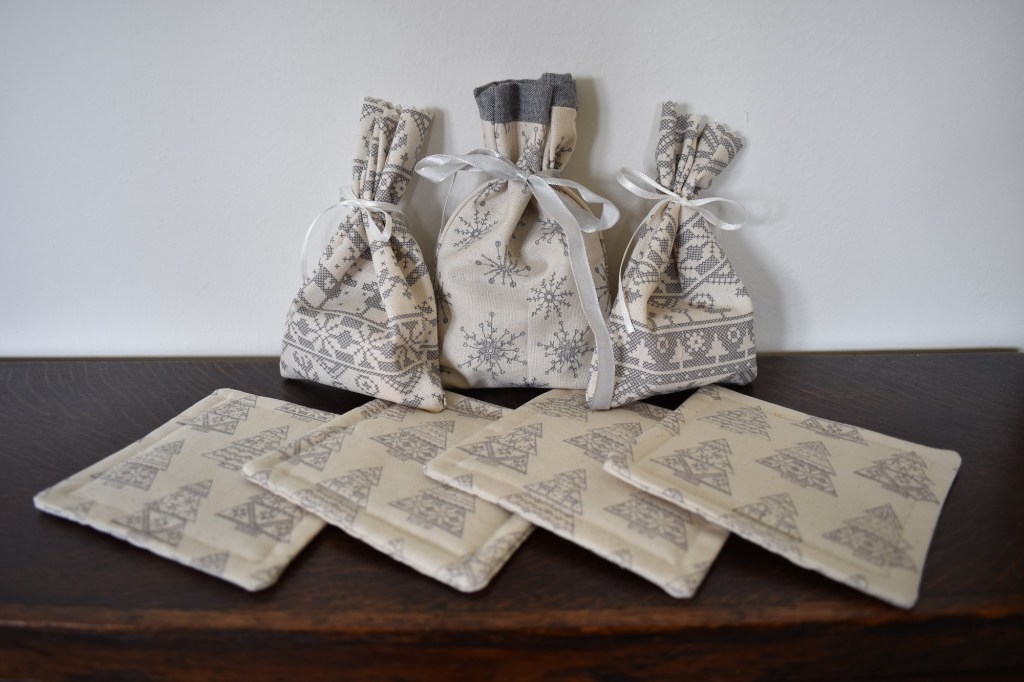
And, Voila! You have a lovely Christmas Coaster to brighten your coffee table this Christmas.

So if this little project has given your festive planning some food for thought, join me next week when we’ll be making some Christmas placemats to add a further homemade touch to your Christmas table this year.

The Twelve Crafts of Christmas #5 Christmas Gift Bags

On the fifth day of Christmas Jillian Sharples Design gave to me, some lovely, reusable Christmas gift bags…

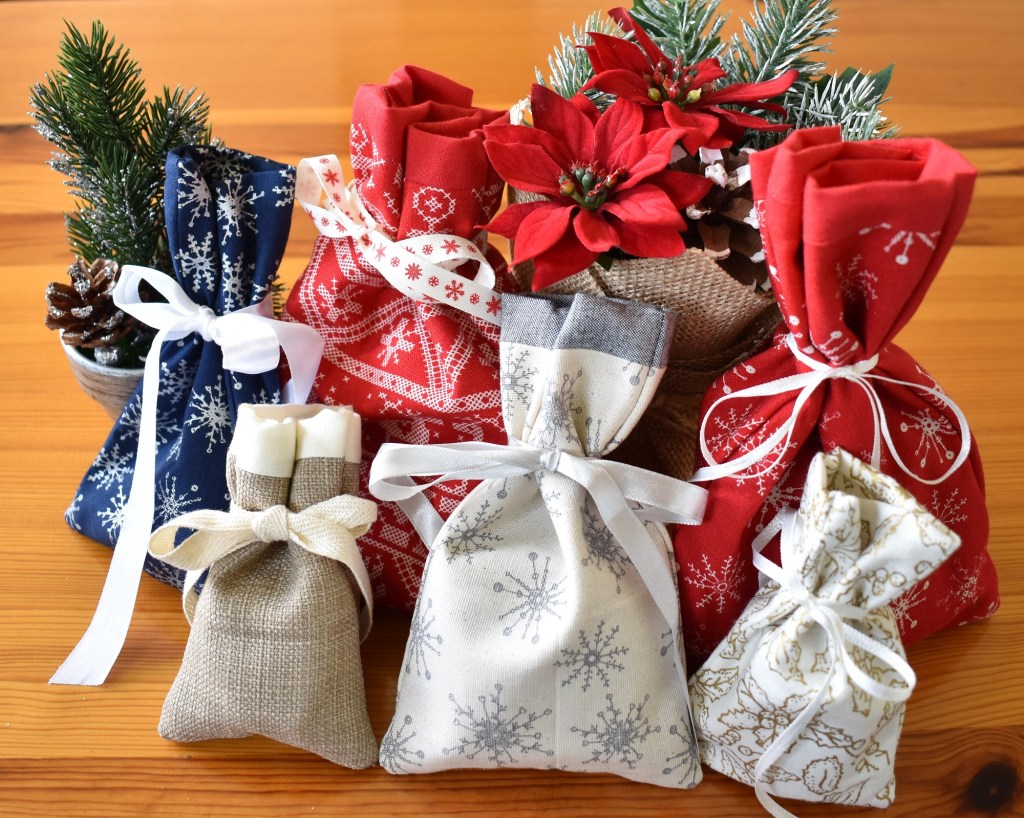
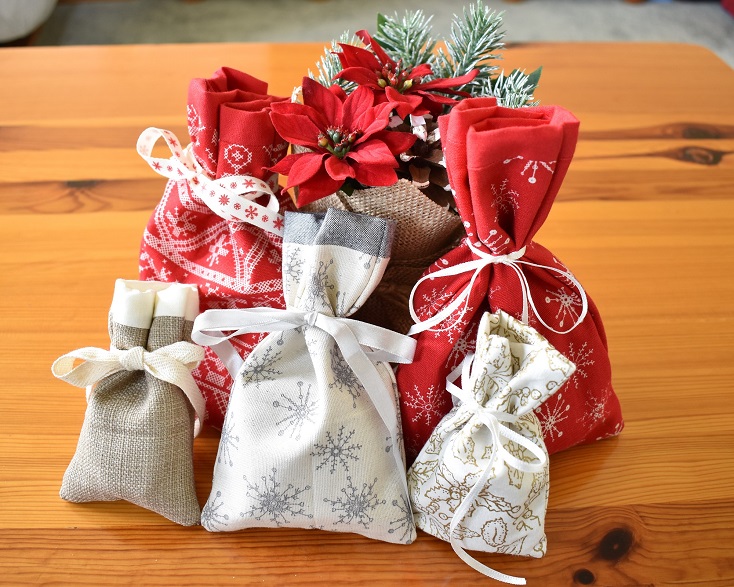
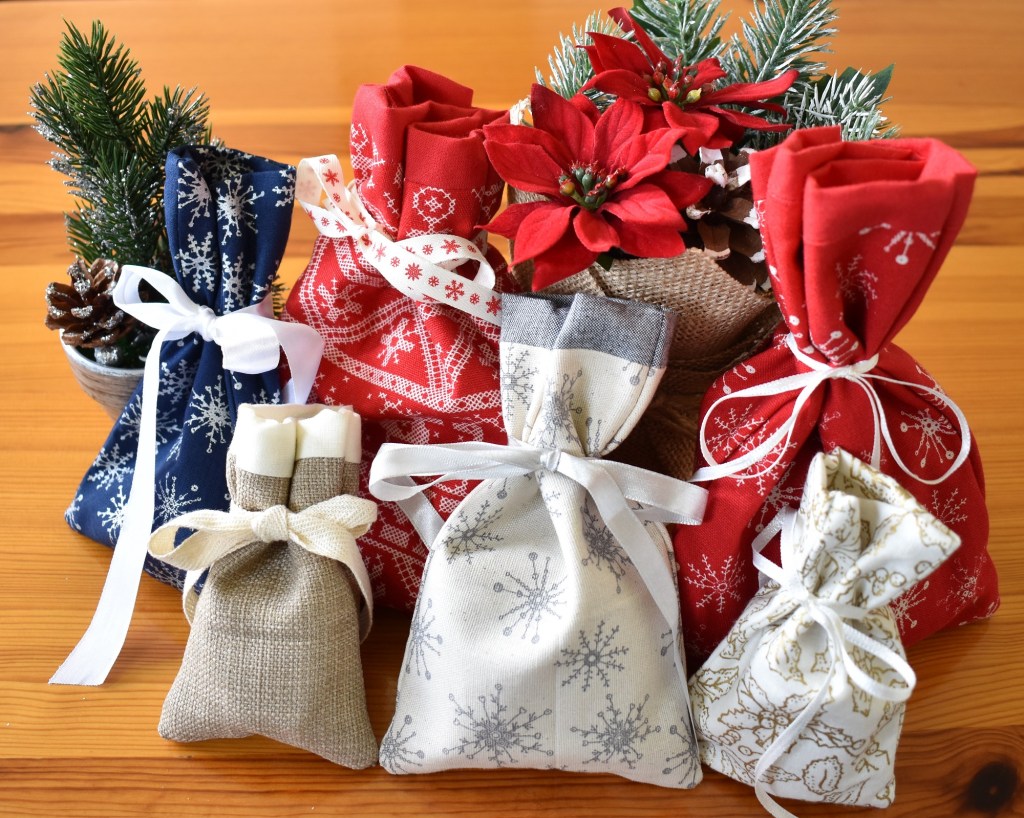
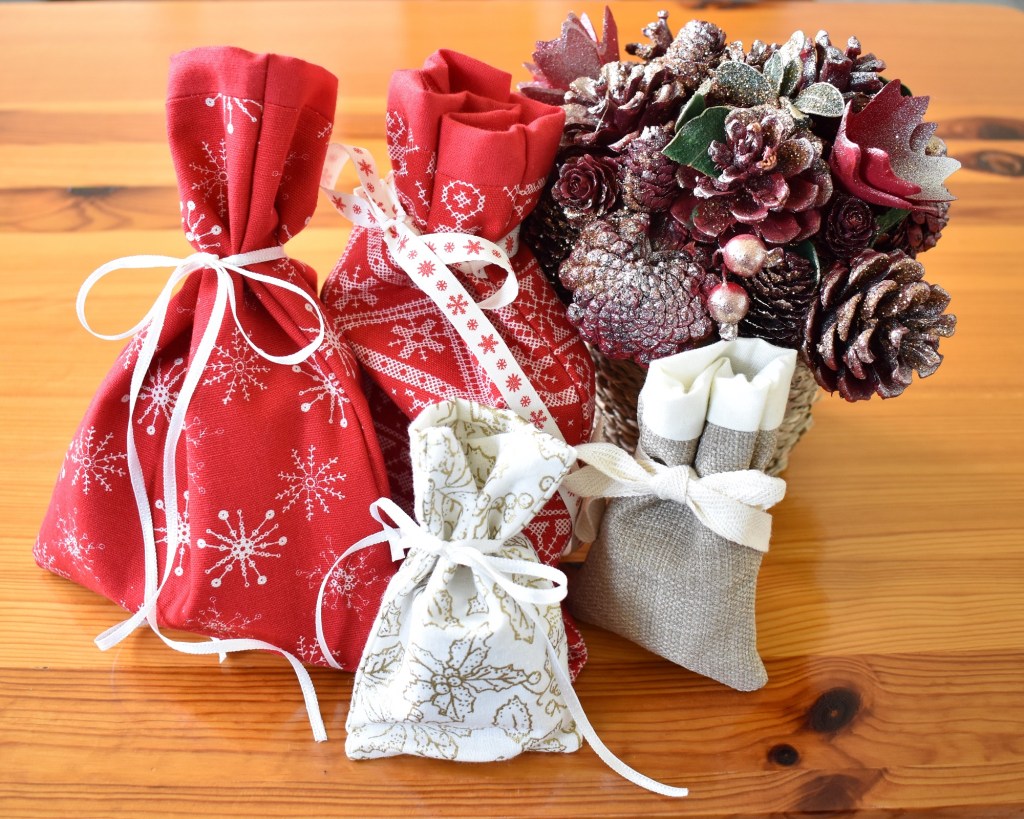
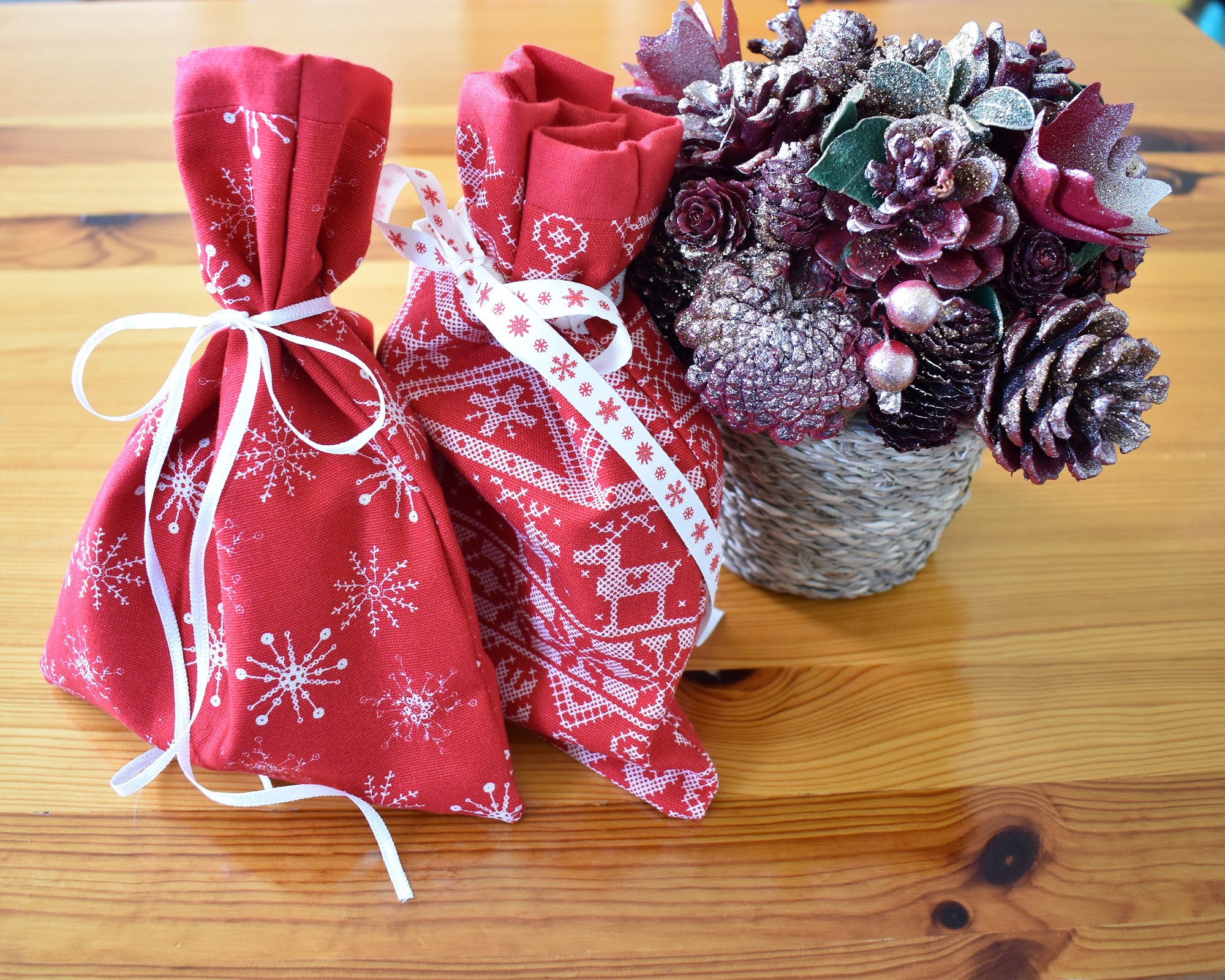
If you ever find yourself thinking, like most of us do at some point, that Christmas is just about the most un-environmentally friendly time of the year then you will love these Christmas gift bags. Not only do they add a beautiful, personal touch to the gift you are giving, but they are also reusable and therefore kinder to the environment. What’s not to like right! You could just make them for those extra special gifts, or, as I have inspired my mum to do, you could make them for every single gift you give! My mum has tonnes of excess fabric from a lifetime of collecting and crafting, and since I first showed her these little gift bags she has set to work making them for every gift she’s given since. Amazing right, no more paper in her house! And, an added bonus that I hadn’t thought of, my toddler found them much easier to get into on his recent birthday than getting through layers of cellotape. Everyone’s a winner right!

So if that gets you inspired and you fancy agetting creative today, let’s get going. I’m going to start by giving you the sizing for three different sizes of gift bags. These have stayed fairly small for the purposes of this post simply because I have been aiming to give you fat quarter projects. But you could of course get carried away and make them as big as you like. For example, I’ve almost finished one that’s about 1m square to pop all the little one’s pressies in under the tree!

What you’ll need: 

Large bags 

2 pieces of outer fabric measuring 18cm x 23cm 

2 pieces of inner fabric measuring 18cm x 25cm 

Length of ribbon measuring 80 cm 

Medium bags 

2 pieces of outer fabric measuring 13x 18cm 

2 pieces of inner fabric measuring 13cm x 21cm 

Length of ribbon measuring 60cm 

Small bags (Perfect for small items of jewellery) 

2 pieces of outer fabric measuring 10cm x 13cm 

2 pieces of inner fabric measuring 10cm x 16cm 

Length of ribbon measuring 50cm 

Now, depending on what fabric you’re working there are two different options. One with a contrasting lining where the lining acts as a trim at the top of the bag and one that has matching lining.

Important point – the making of them differs in one way only.

Bag with contrasting lining: The lining is the longer piece of fabric.

Bag with matching lining: The lining is the shorter piece of fabric.

What else you’ll need: 

Cutting board (if you have one)

Cutting ruler (if you have one)

Roller cutter or scissors 

Tape measure 

Sewing machine 

Matching thread 

Needle and pins

How to make your Christmas gift bags:

So, we’re going to start off by making a large gift bag with contrasting lining.

1) Cut your fabric pieces to size: 2 outer pieces of 18cm x 23cm, 2 lining pieces of 18cm x 25cm. (As above, simply swop the sizes over if you are using the same fabric to line the bag).

2) Lay your first piece of lining fabric down, face side up. Place the first piece of outer fabric on top, face side down with top edges together. Pin together along the top edge and stitch along this edge, 1cm from the edge of the fabric. Repeat for the second piece of lining and main fabric.
3) Iron your hems flat for neatness and to avoid bunching.

4) Lay your first side of your bag down, face side up. Place the second side on top, face side down. The two face sides should be together on the inside.
5) Pin together all the way round leaving a space of about 8cm along the bottom of the lining fabric which will be used for turning. I tend to put these pins in vertically so that it looks like a doorway, then I remember not to sew through it. 
Top Tip

I always start pinning in the middle of one of the long sides. This is the easiest way of ensuring that the fabrics match up neatly. i.e. the lining of one matches to the lining of the other and the same for the outer fabric. It’s not the worst thing in the world if they don’t match precsiely but if you like to be a perfectionist starting here will prevent them slipping.

6) Sew around the bag 1cm from the edge of the fabric. Start about one cm from one side of the gap and do a few backstitches in order to secure the stitch line and prevent fraying. Remember to do a few backstitches when you arrive at the other side of the gap too.

7) Using scissors cut triangles off each of the 4 corners, being careful to leave a couple of milimetres between the cut and the stitch line. Turn the bag in the right way. Smooth down the two sides of your gap, ironing flat if you wish and pin together.

8) Using a simple ladder stitch sew up the gap and push the lining down inside the main bag. Make sure you smooth round all the edges and push the corners of the lining fully into the corners of the main fabric for neatness. If necessary, use a pin to nudge the corners out fully.

Top Tip

If you are unsure of how to do ladder stitch, or slip stitch as it is also known, please watch my youtube video

If making a gift bag with a contrasting trim, there will be about 1cm of trim showing at the top of the bag.

For a gift bag that has matching lining, as the lining was the shorter piece of fabric, the join is inside the bag and cannot be seen.

So all that shouldn’t have taken you too long right? Fingers crossed anyway, these are supposed to be quick projects after all! You almost have your finished festive gift bag, we just need to add the ribbon.

Adding the ribbon:

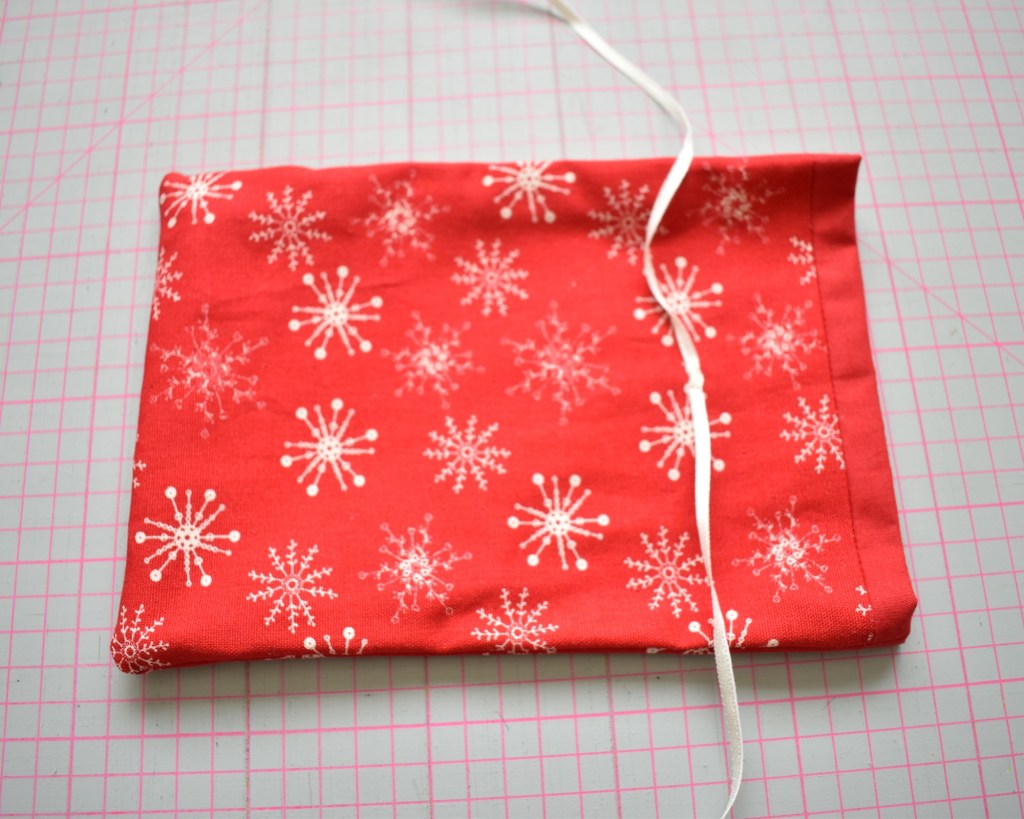
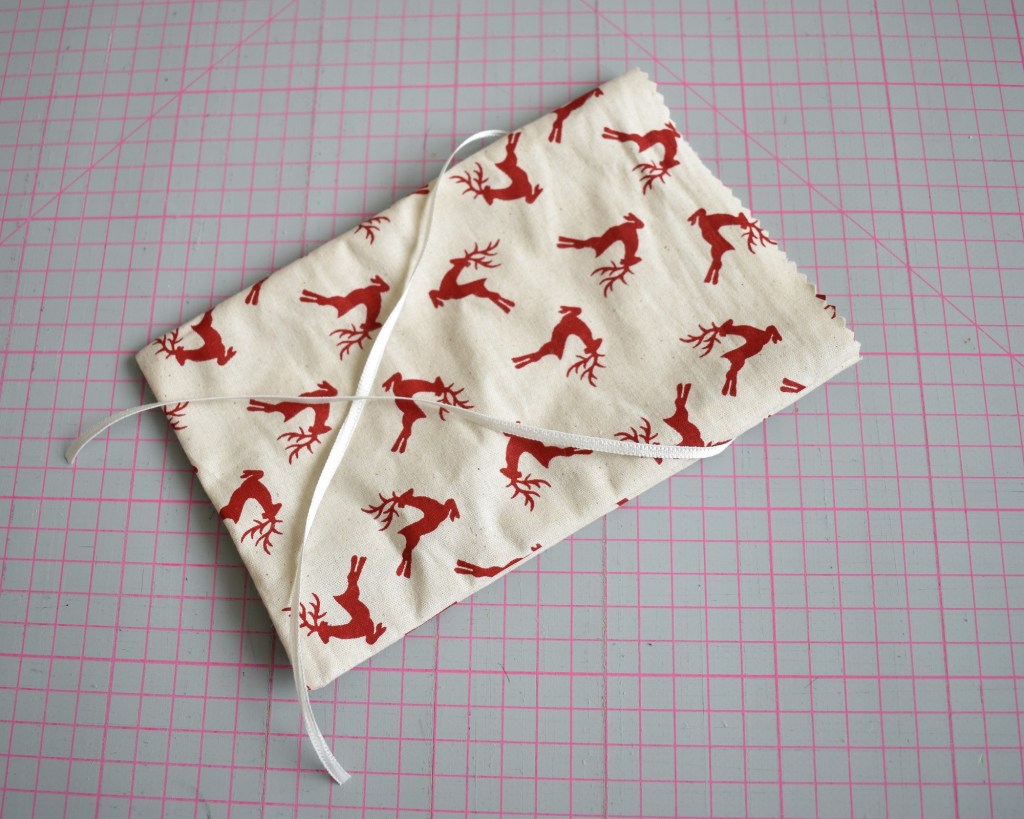
Fold your length of ribbon in two to find the middle. Pin it on the back of the bag, 5cm from the top and using a matching thread sew it onto the back of the bag. Knot the thread and draw it up underneath the ribbon so it can’t be seen. I tend to double up my thread so it is nice and strong for this step and requires less stitches. Using just a few stitches, secure the ribbon in place.

There are two choices for how to do this:

  1. Make a cross stitch in the middle of the ribbon and repeat this three times before knotting and cutting off the thread. This is what I did for my ribbon here as it is very thin.
  2. Sew a few slip stitches along the two edges of the ribbon about 1.5cm along.

For this very narrow ribbon i did a few cross stitches over the centre point of the ribbon. The thread was exactly the same colour so can barely be seen.

For this wider ribbon i did a few stitches on both the top and bottom edge of the ribbon, about 1.5cm along each.

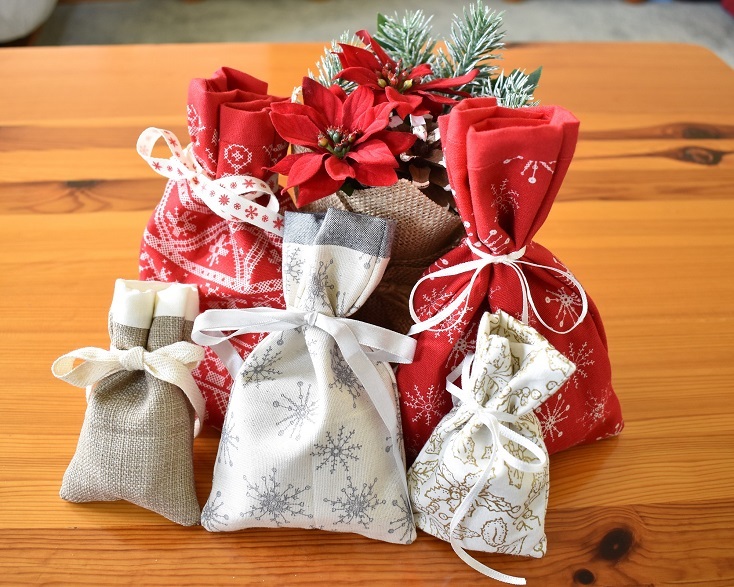
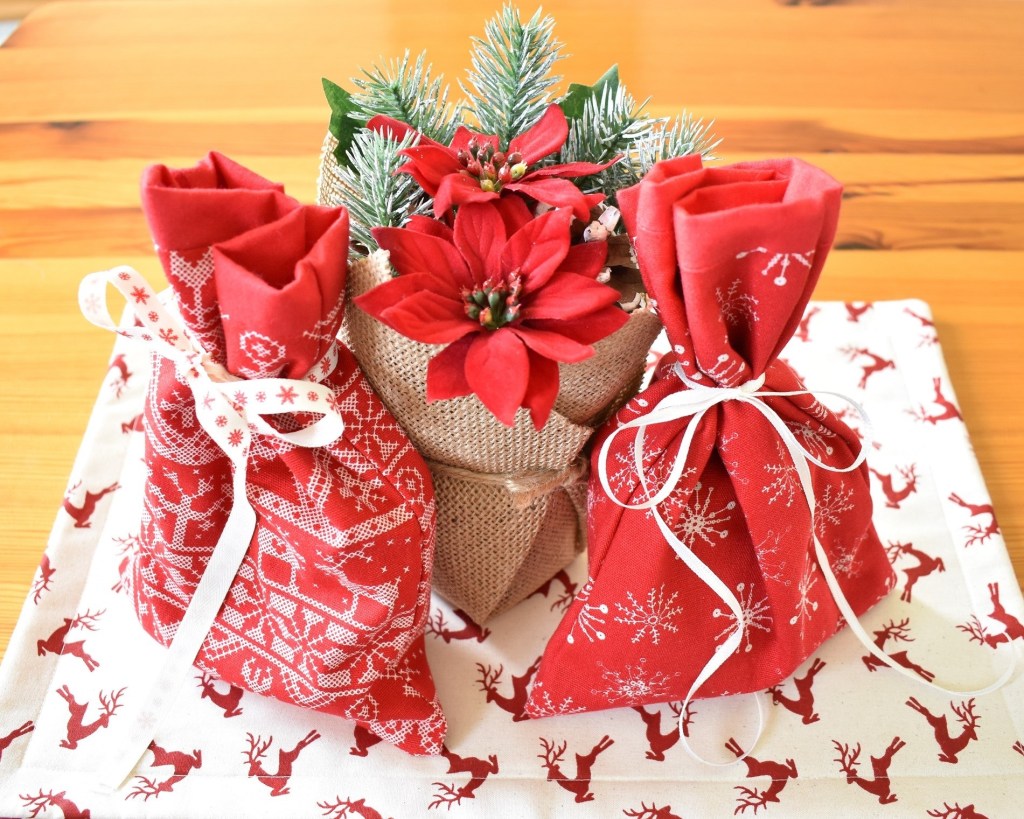
And, Voila! Before you know it you have a lovely set of Christmas gift bags to add that personal touch to your festive celebrations.

Well, that’s us for today! I hope you’ve enjoyed making these lovely little gift bags. It really is a pleasure to give someone a gift in one of these instead of wasting yet more paper! Happy sewing, and if you liked this little project, join me next week when we’ll be making some Christmas coasters, perfect to brighten up your coffee table with an extra personalised festive touch.

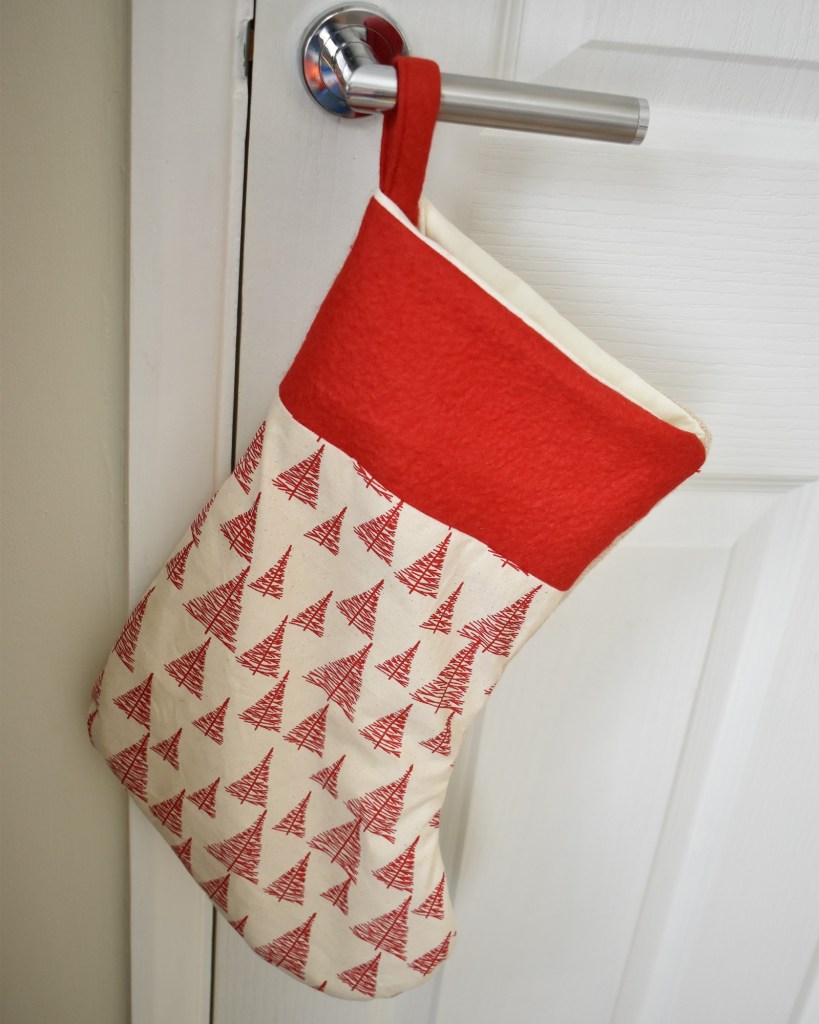
The Twelve Crafts of Christmas #4 Christmas Stocking

On the fourth day of Christmas Jillian Sharples Design gave to me, a christmas stocking…

Hey there! So how are we getting on with our Christmas preperations? Well, let’s see, last week we covered the lucky dip advent calendar, enabling us to give our loved ones that one little gift each morning of December, you’ve gotta love Advent right! But what about Christmas morning? The big day itself! Who, no matter what your age, doesn’t want to start Christmas day with the joys of opening their Christmas stocking? Especially if you can do it with a glass of something chilled in your hand right, or a lovely cup of tea and some Christmas chocolate. Well, however you like to start Christmas day, here I’m going to show you some super simple instructions for making your very own Christmas stocking. Best of all, if you want, you can make them as big as you like for outsized pressies! Your Christmas, your choice! Let’s get going…

What you’ll need:

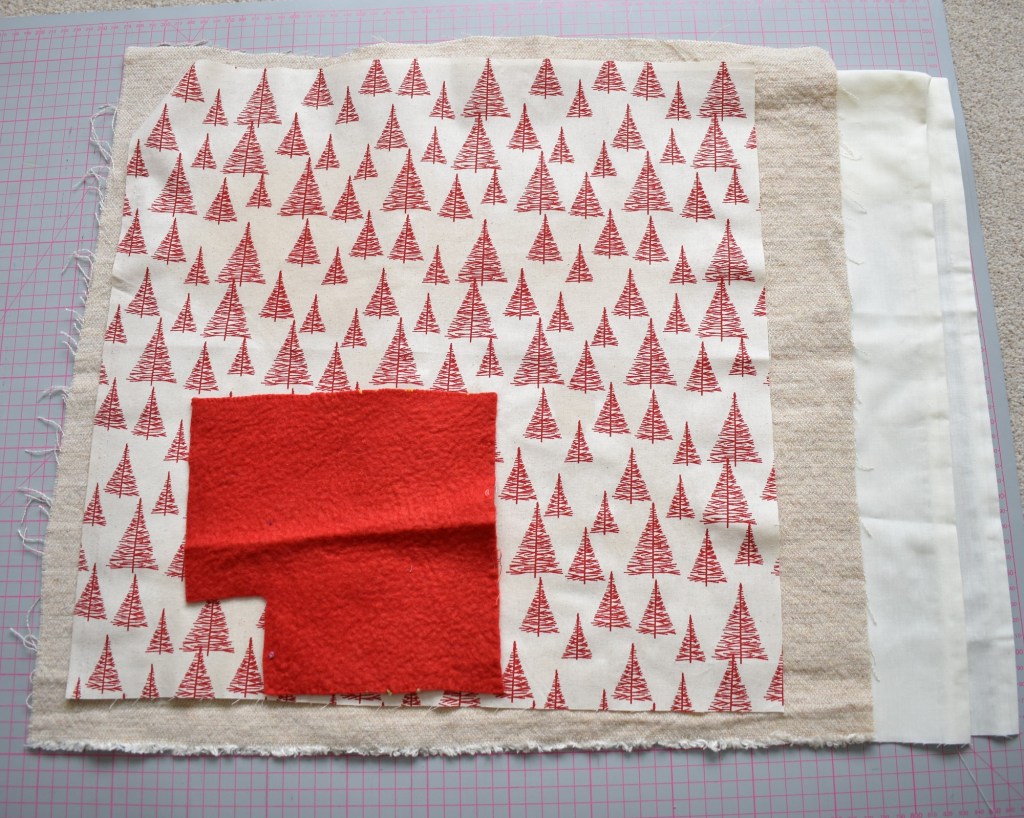
4 fat quarters or roughly 1m x 1m of fabric (If using fat quarters, 2 will be used for the main fabric and 2 for the lining)

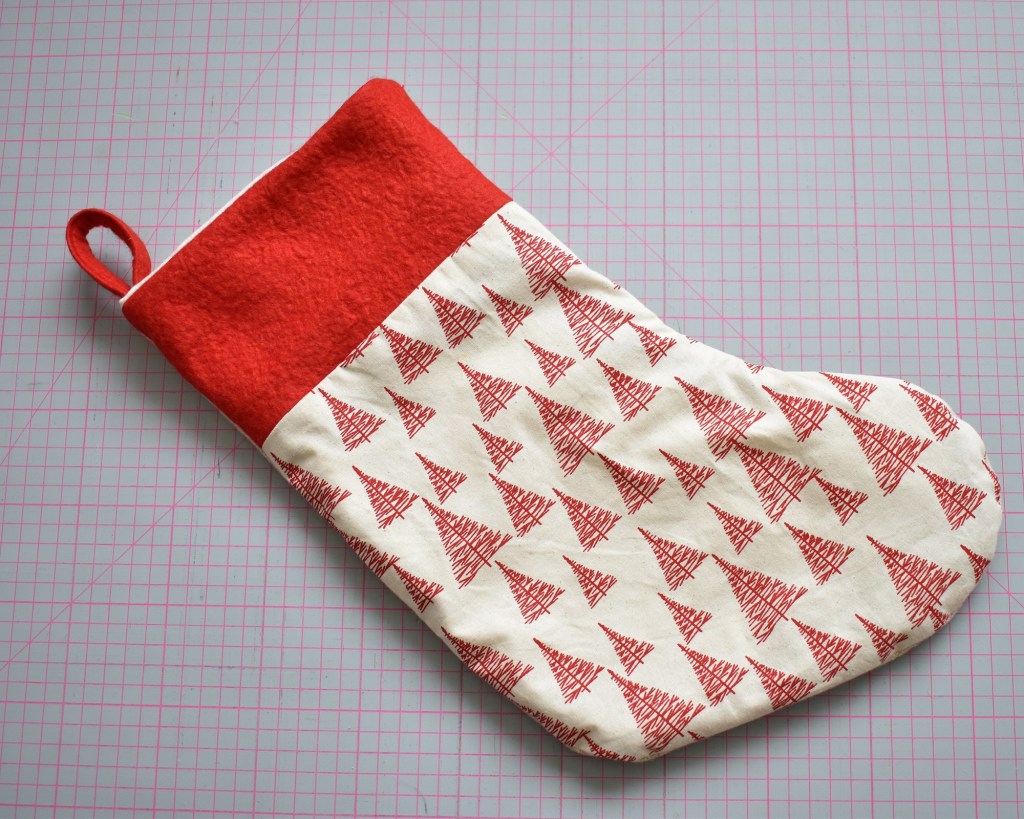
Plus any fabric you may like to use as a trim. A textured fabric works really well, maybe fur, felt or a glittery fabric to add some texture. You’ll see from the photos that I’ve used a piece of red felt that I happened to have which I’ll use as a small trim round the top of the stocking.

Stocking template (see note below on how to make) 

Cutting board (if you have one)

Cutting ruler (if you have one)

Roller cutter or scissors 

Tape measure 

Sewing machine 

Matching thread 

Needle and pins

For the template: 

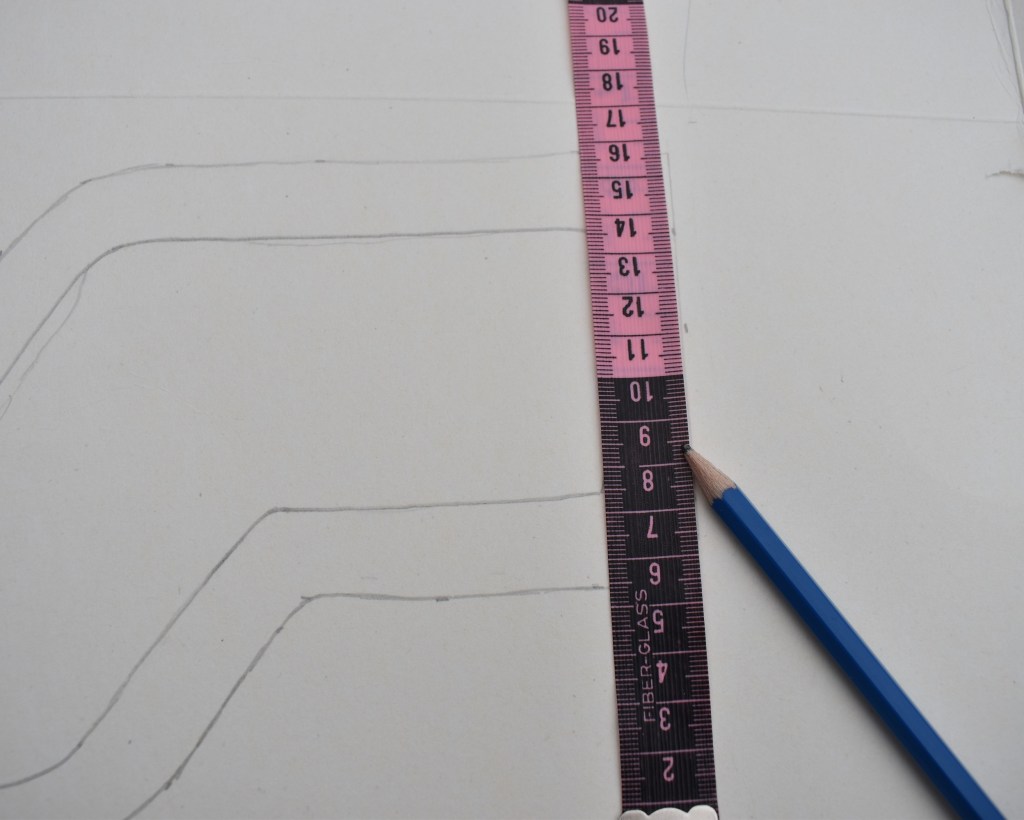
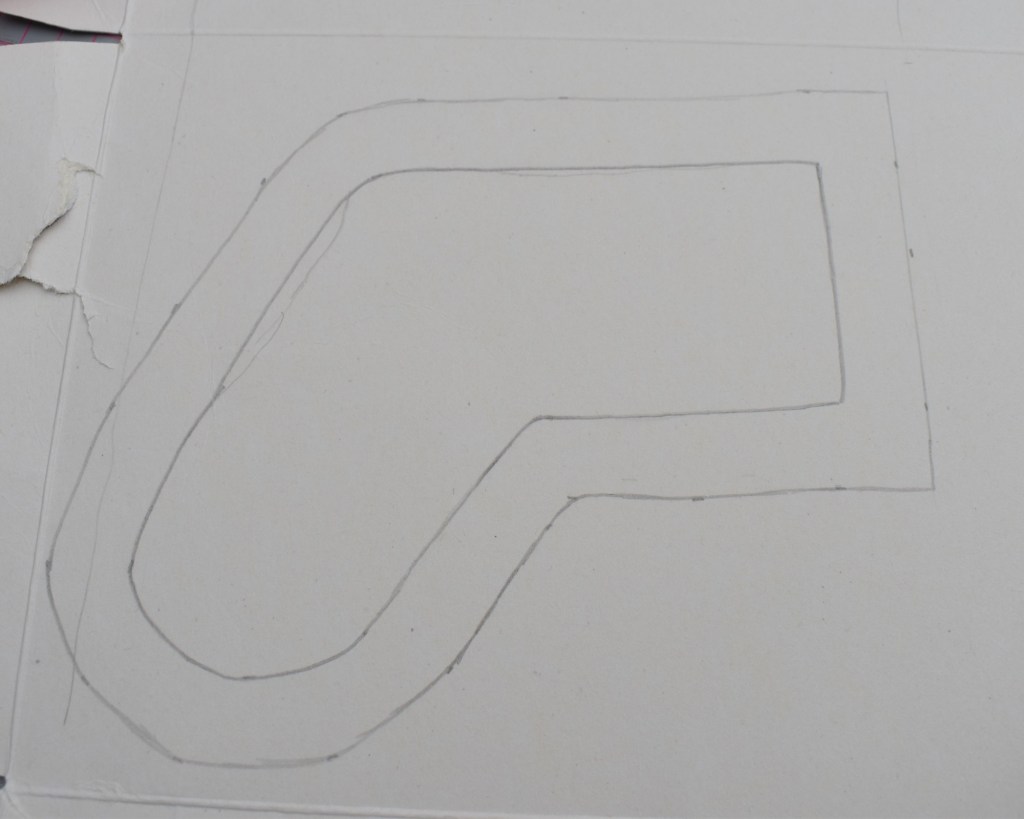
You might want to make a fairly big stocking to fit all those little gifts in for Christmas morning. The easiest way to make this is to draw round an existing Christmas stocking if you have one (which is what I did). Or, if you don’t have one, draw round a large sock and using a ruler measure out to make it bigger until it is the size you require. I did this anyway after drawing around my existing Christmas stocking. I added an extra 2 cm all the way round as this allows plenty of extra fabric for the hems. 

For the template simply flatten out a cereal box to use. The card is nice and firm so it is perfect for this kind of project. 

How to make your Christmas Stocking: 

1) Please read all of point number 1 before commencing!

Draw round your template onto your 4 fat quarters, having decided which fabric you are using for your lining and which is your main fabric.

First, if you are using a trim, decide how deep you want it to be as you will want to take this away from the length of the front piece of outer stocking fabric. 

Trim

For example, my stocking template measures 45cm from the base of the foot to the top edge.

My piece of felt was 13cm deep of which i required 1.5cm for the hem that would be used to join it to the main fabric.

This means 11.5cm of this fabric could be used in place of the main fabric. Leaving a required length of 33.5cm for my front piece of outer fabric.

Therefore, for your outer fabric, 1 piece will be the full length of your template. The second piece will be 33.5cm long. The lining fabric does not change.
 

Top Tip  

For each fabric, lining and outer, you’ll need to draw round your template twice, once with the toe pointing left and once with the toe pointing right. If you don’t do one of each the stocking won’t fit together, you’ll literally have two left feet!

So you will need a left and a right foot for both the lining and the outer fabric.

2) Now you have 4 stocking templates cut out your 4 stocking pieces. 

3) If you are using a trim, pin it to the main fabric along the top edge and sew together 1.5.cm from the edge. Now you have two complete outer stocking pieces. 

4) Lay the front piece of main fabric down, face side up, and lay the first piece of lining fabric on top of it, face side down. Pin together and stitch along the top, 1.5cm from the edge. Repeat for the back piece of fabric and lining.  

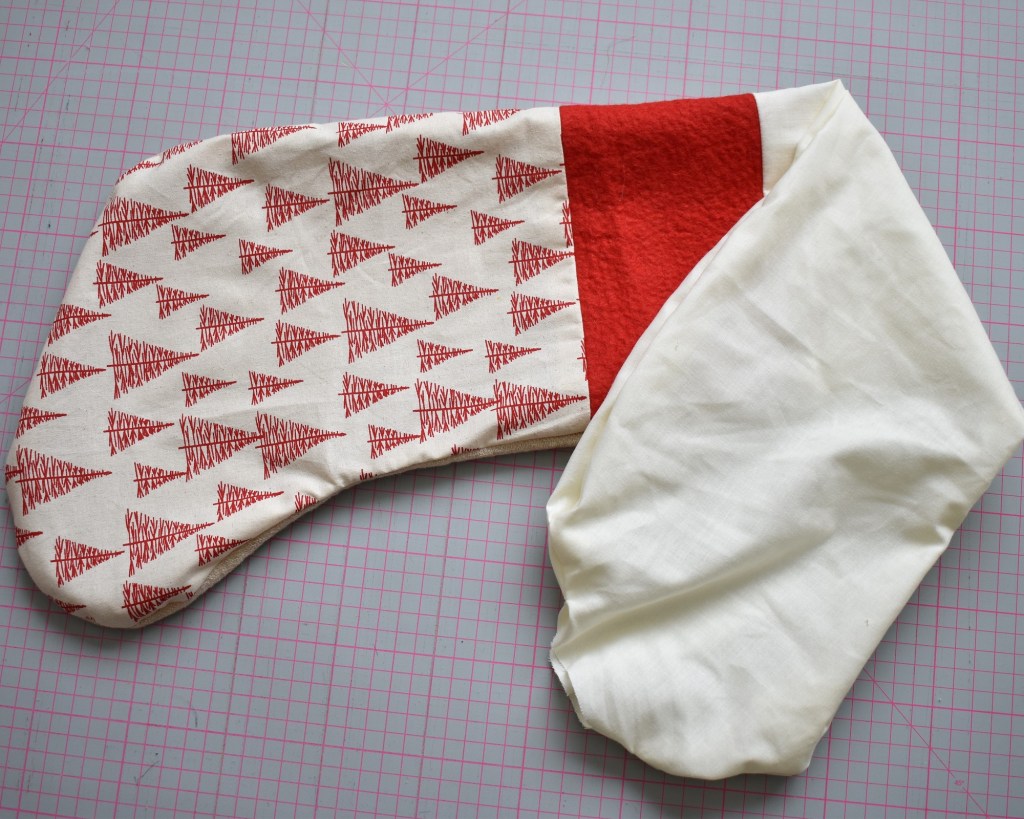
5)  Next, lay the front stocking piece face side up and place the back piece on top, face side down. Pin together all the way round leaving a space of about 10 cm along the sole of the lining fabric which will be used for turning. I tend to put these pins in vertically so that it looks like a doorway, then I remember not to sew through it. 

6) Sew the stocking together 1.5cm from the edge of the fabric and starting about one cm from one side of the gap. Start with a few backstitches in order to secure the stitch line and prevent fraying. Remember to do a few backstitches when you arrive at the other side of the gap or doorway too. 

7) Using the gap turn the stocking in the right way. 

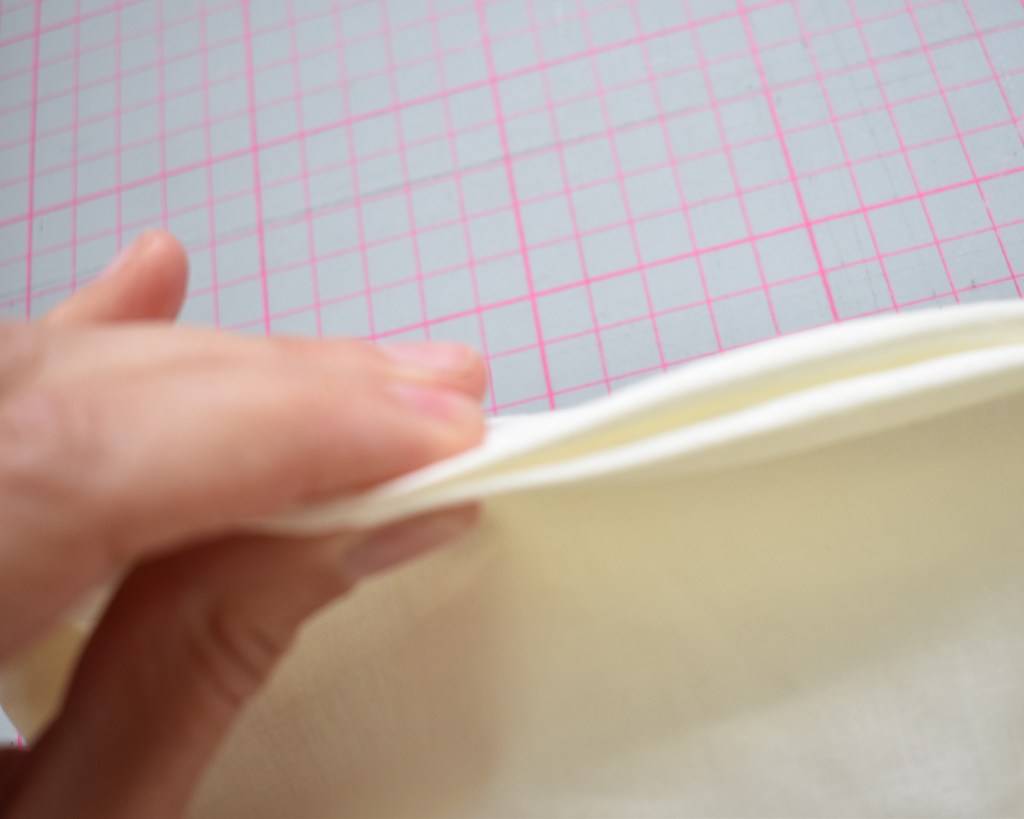
8) Flatten the hems of the gap down, using an iron if need be, so they are straight and, using a simple ladder stitch, sew up the gap. 

Top Tip

If you are unsure of how to do ladder stitch, or slip stitch as it is also known, please watch my youtube video

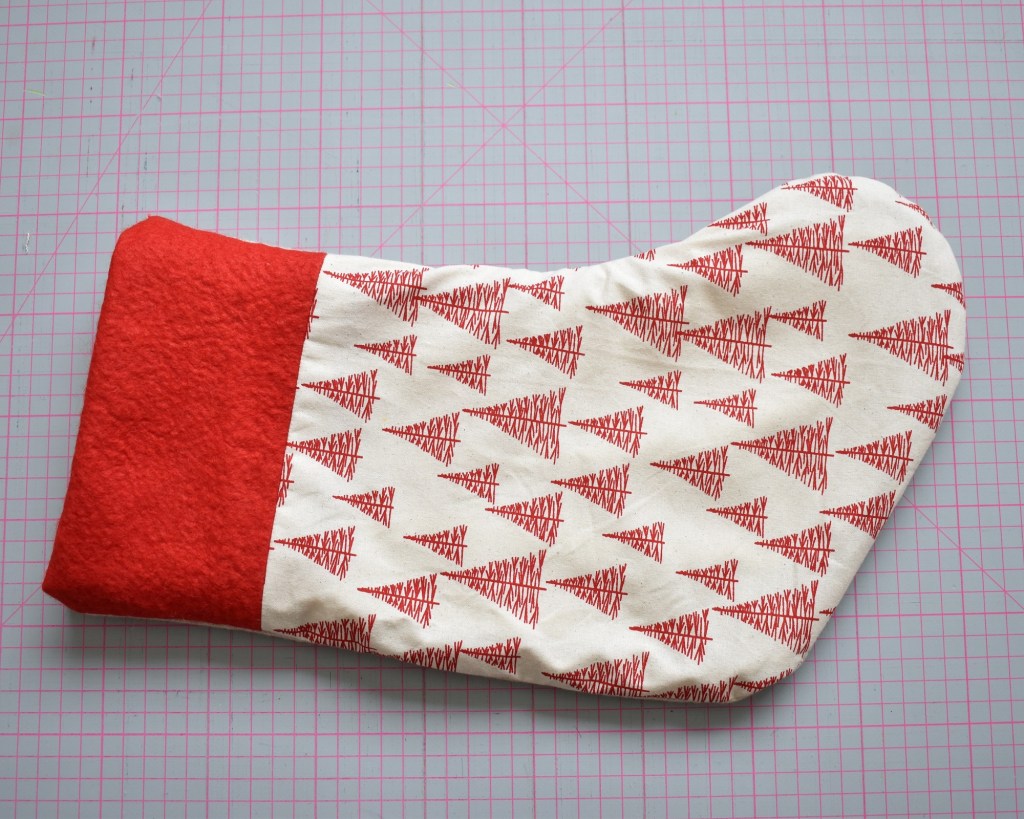
9) Push the lining fabric down into the foot of the stocking and smooth it round. 

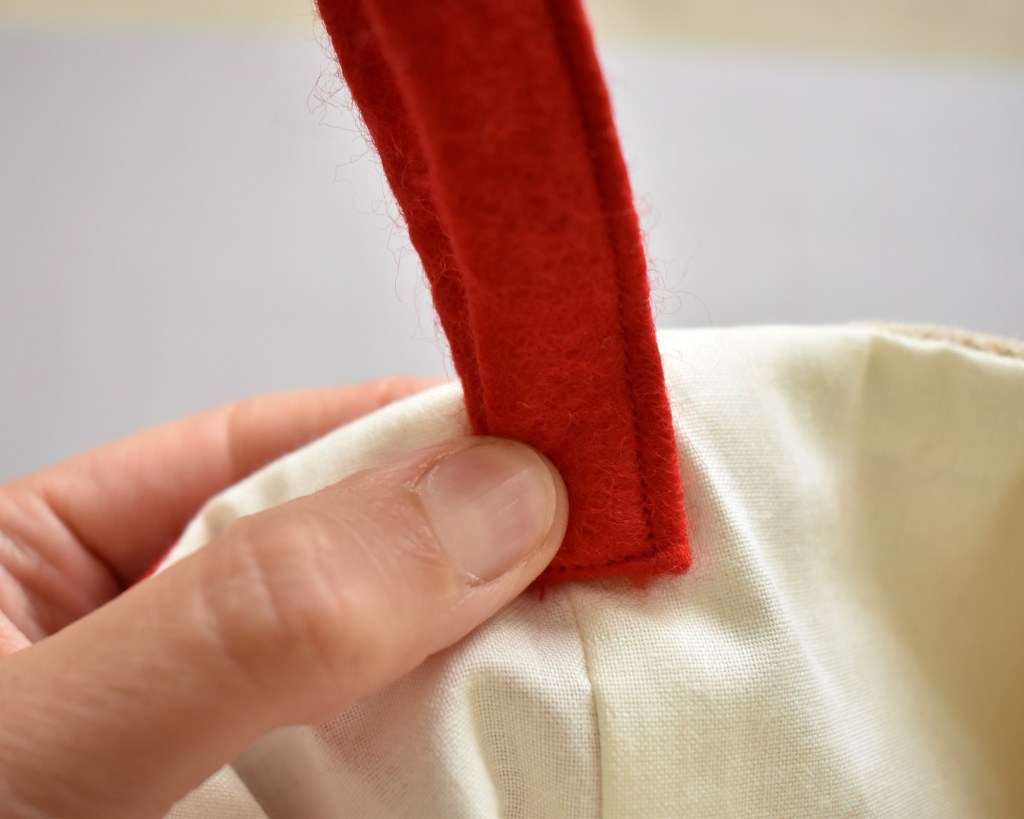
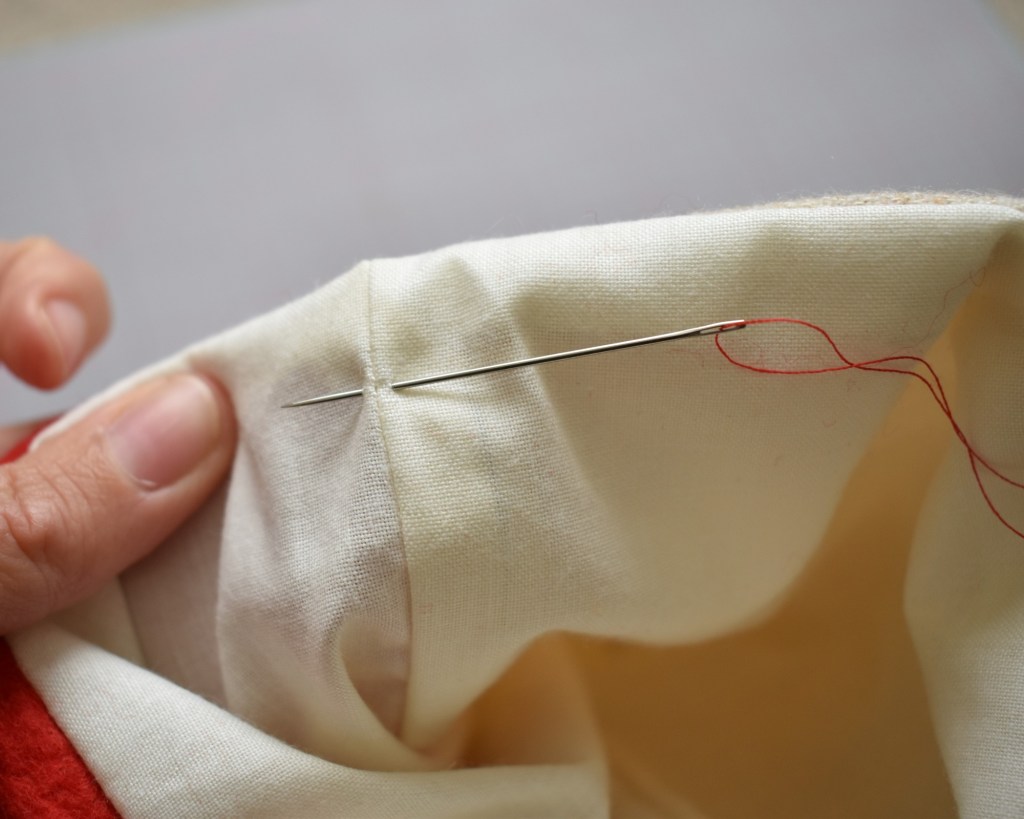
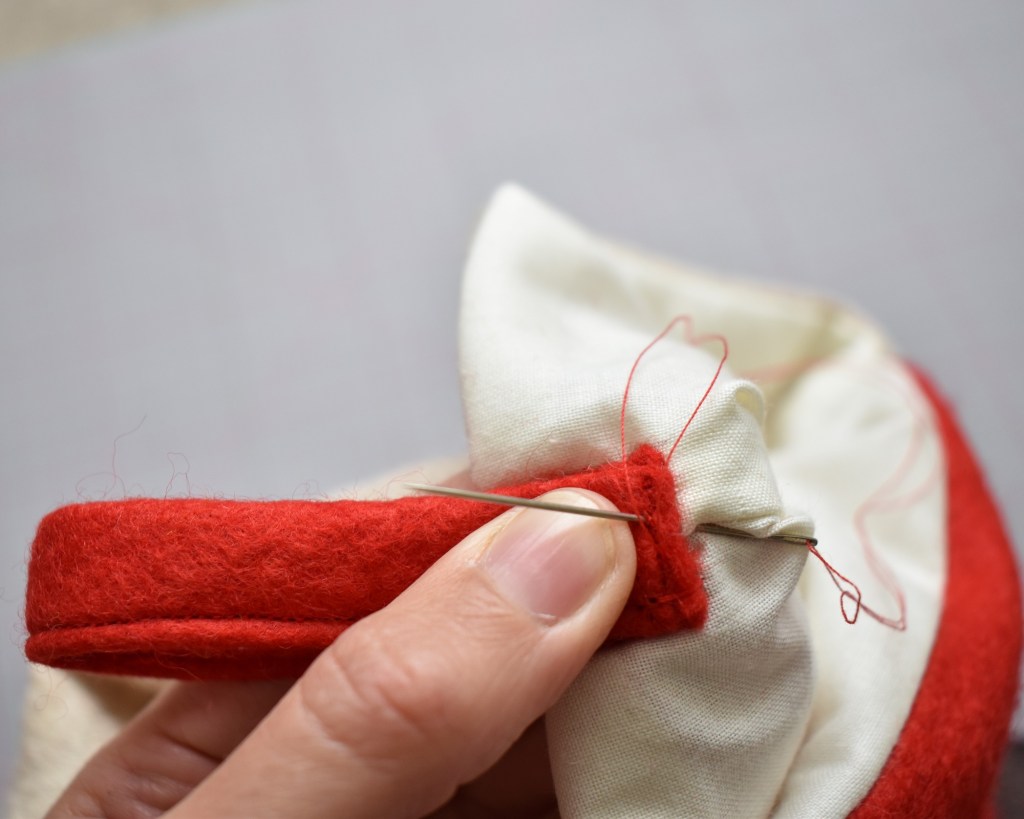
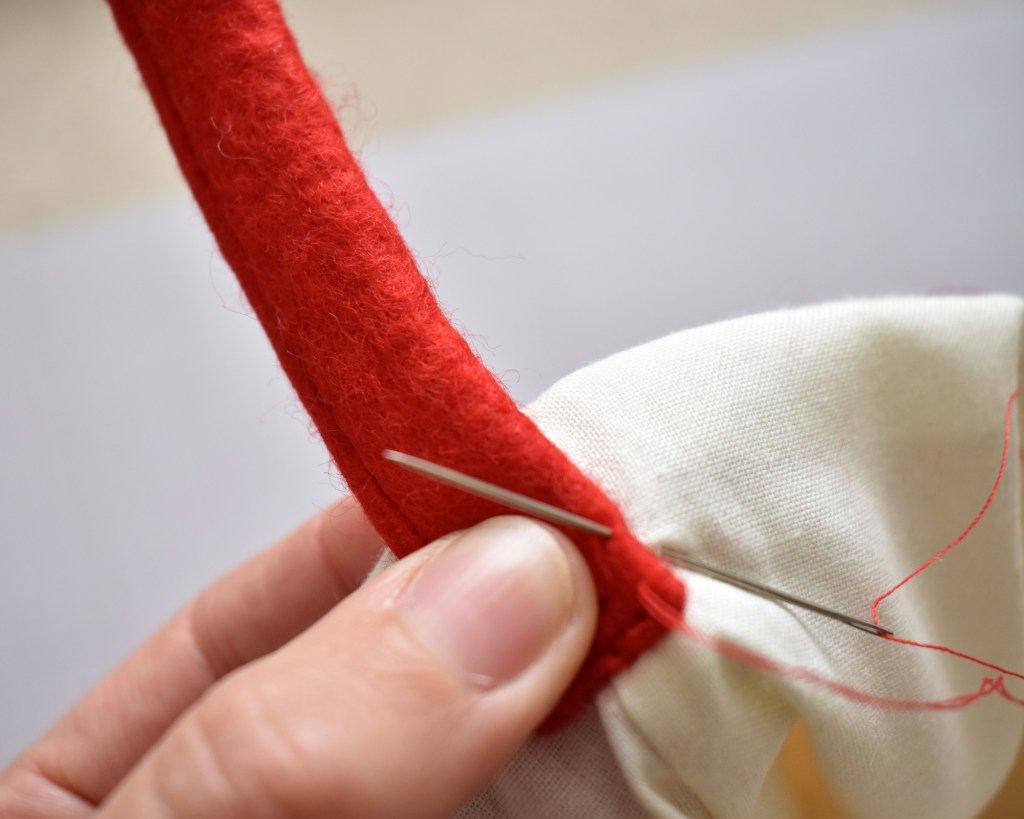
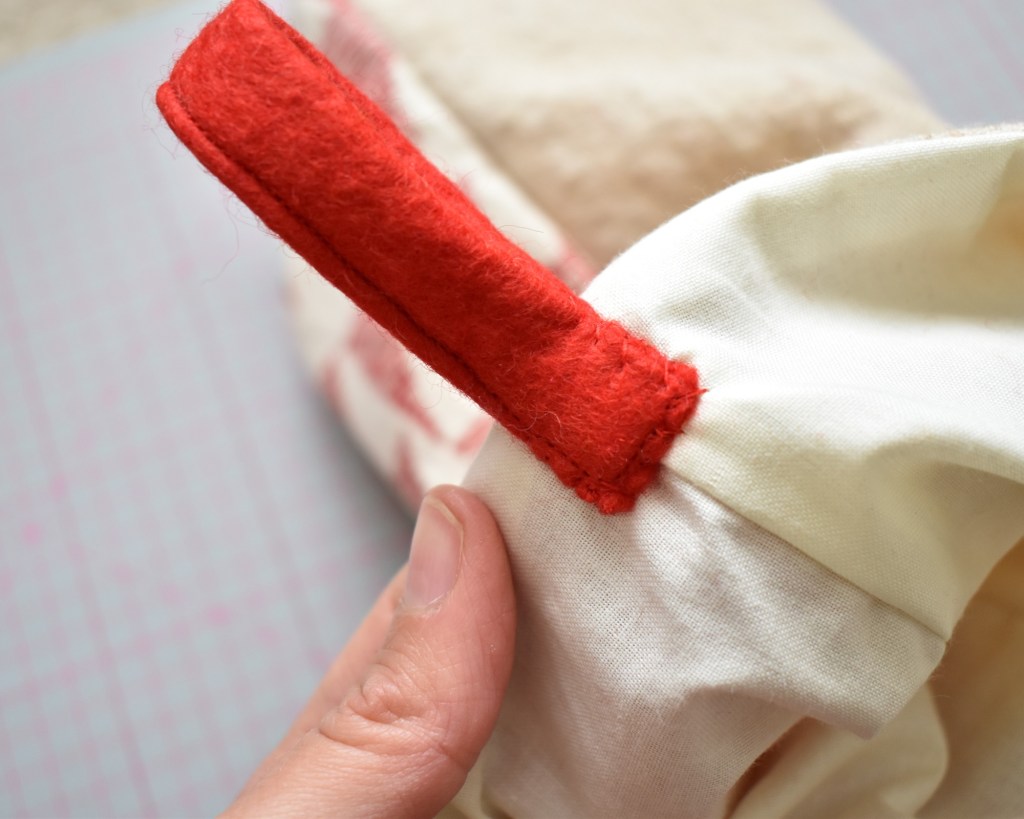
10) You can add a hanging hook at the top, back side of the stocking if you wish. For this, you can either use a strong ribbon or a piece of leftover fabric. 

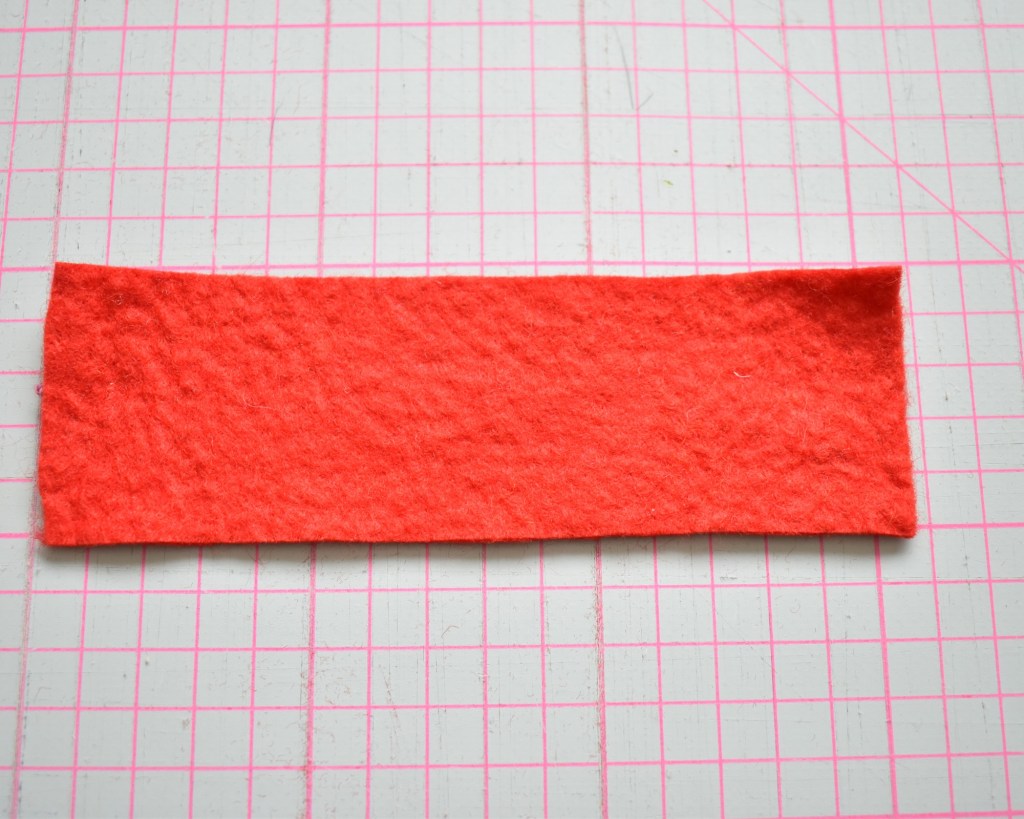
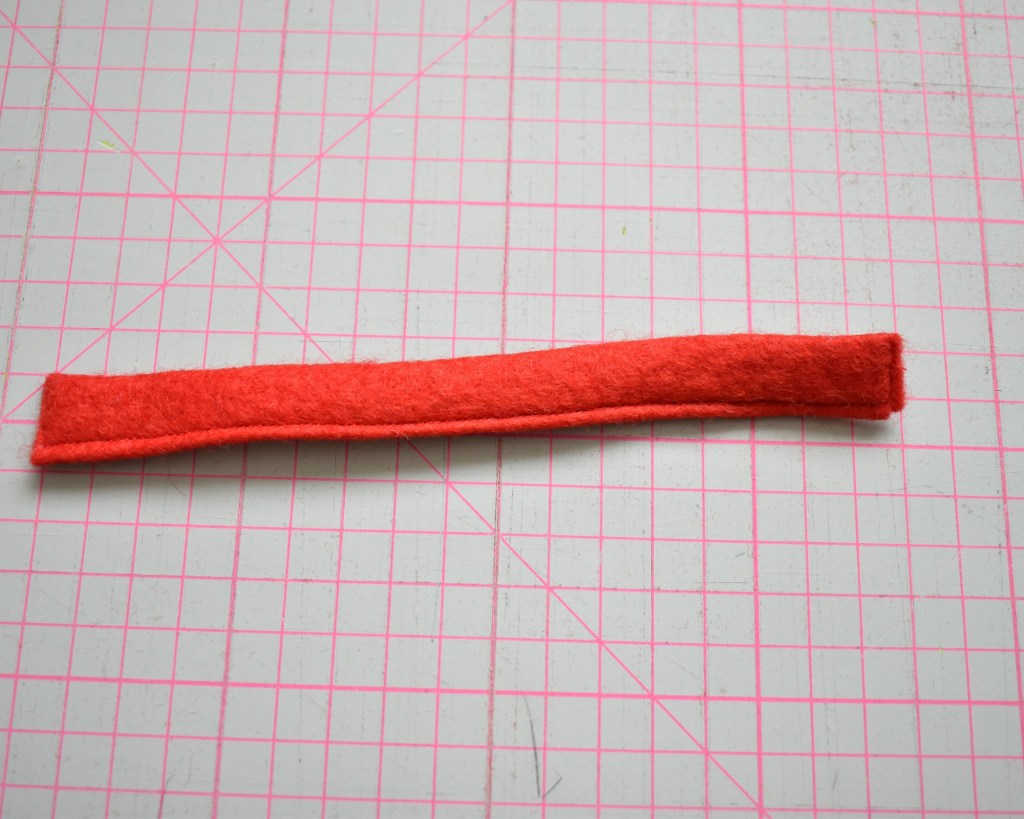
I used some felt that I had leftover and which measured 15cm x 5cm. You can make the hook as long as you like though.

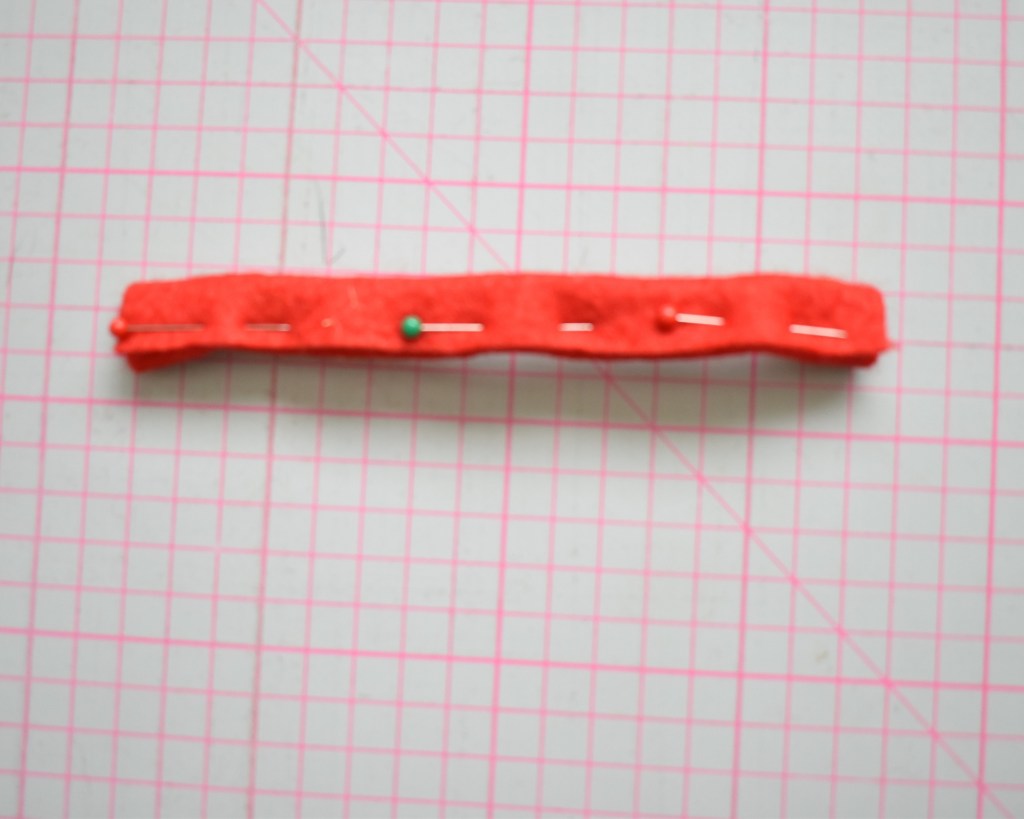
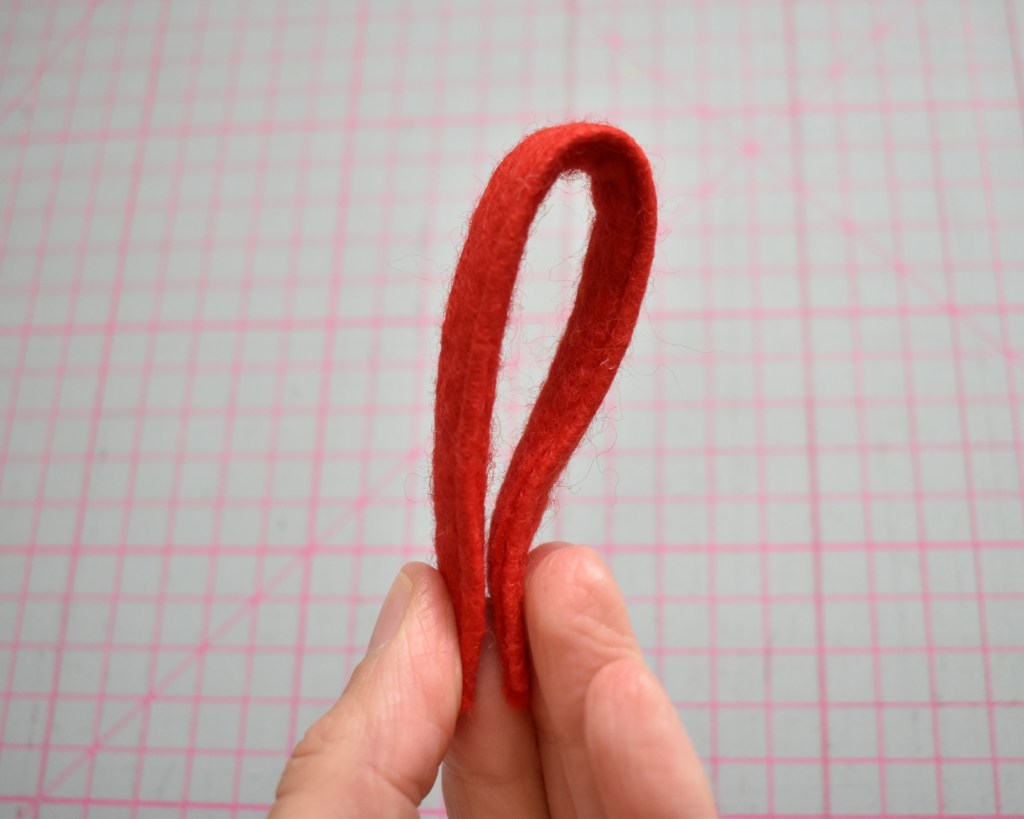
Fold the fabric in three and stitch along the three sides, doing a couple of backstitches at each end. Place it inside the stocking and stitch it on. As felt is quite thick, I stitched the bottom side on first, around all three sides, stopping just short of the top of the fabric, and then stitched the top side on to this. 

If you are using ribbon you can stitch it all on the first time. 

Top Tip 

I knotted my thread and did a couple of stitches in the fabric first for extra strength. 

Make sure you only stitch through the lining fabric so you can’t see the stitches on the outside! 

And Voila!! There you have it, a lovely, bespoke Christmas stocking. Now you just need to get out your Christmas Tote Bag, pop off to the shops and find some lovely things to pop in it. 

If you liked this Christmas craft project, join me next week when I’ll show you how to make some beuatiful little, reusable gift bags – perfect for adding an extra special touch and, just as good, for diminishing the amount of excess paper lying around!

The Twelve Crafts of Christmas #3 Lucky Dip Advent Calendar

On the third day of Christmas Jillian Sharples Design gave to me, a lucky dip advent calendar

Hi there, so do I dare ask where we’re all at with our Christmas planning!? Don’t worry if you’re still struggling to think that far ahead, beacuse this week I’m back to help you with another lovely homemade Christmas project, my ‘Lucky Dip Advent Calendar’. Helping you treat your kiddies, partners, or just yourself every day throughout advent 2020. If you’re anuthing like me, you love those advent choccies first thing on a December morning!

It makes sense, we’ve thought about Christmas shopping trips so now it’s definitely time to start thinking about the presents you’re going to start buying! Definitely one of my favourite things about the Christmas period, and no I don’t mean all the lovely gifts I get, I mean coming up with ideas and picking fun and thoughtful gifts for those I love. It’s so much fun isn’t it, being able to spoil those around us that we love. And, maybe this will take on even more meaning this year as we find ways to spend special time with the people we love who we maybe haven’t been able to see so much thanks to the current Covid situation.  

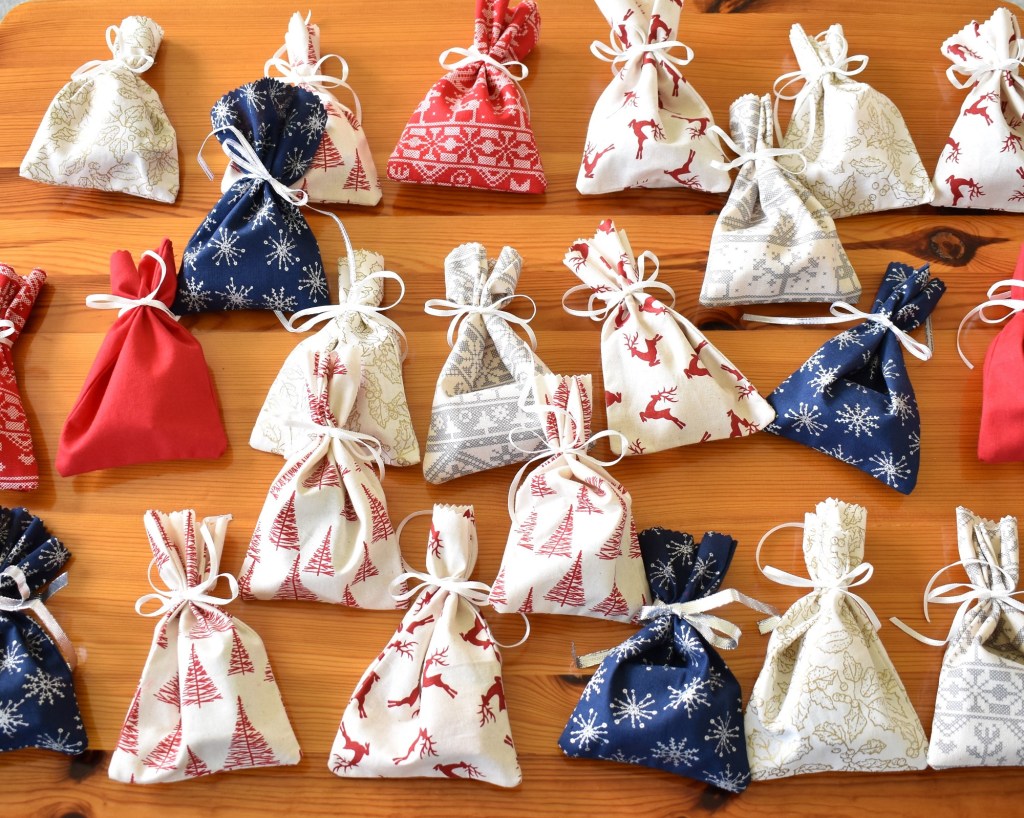
I’ve called this my lucky dip advent calendar as I haven’t included any numbers, making it slightly less traditional than the usual. Although if you want you can get all kinds of different craft numbers to tie on to the ribbons or stick on to the fabric as you like. 

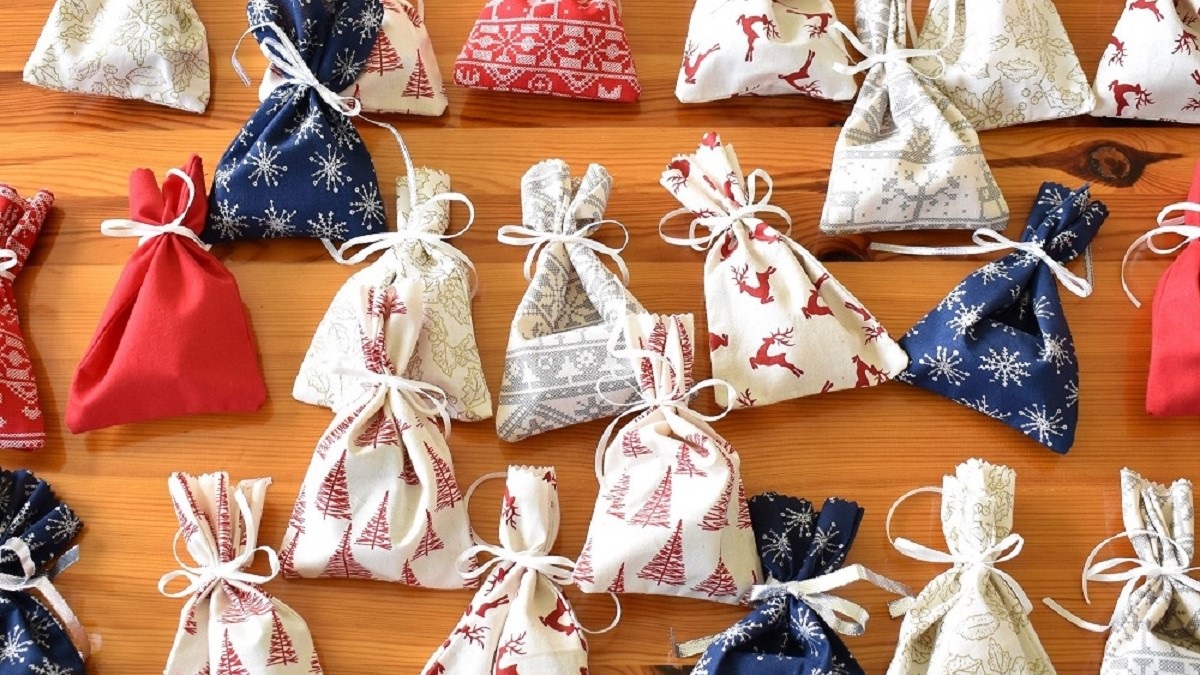
This is made up of 24 simple little gift bags, or if you’d prefer to make little Christmas stockings there’s an extra option for this at the end.

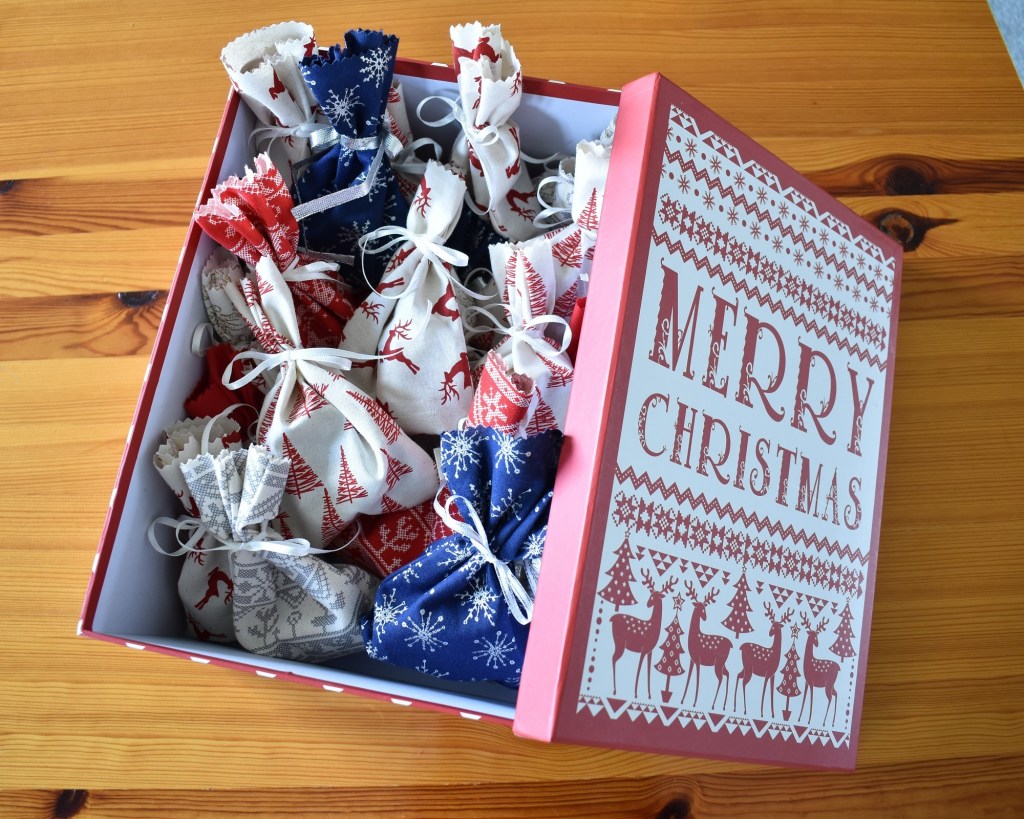
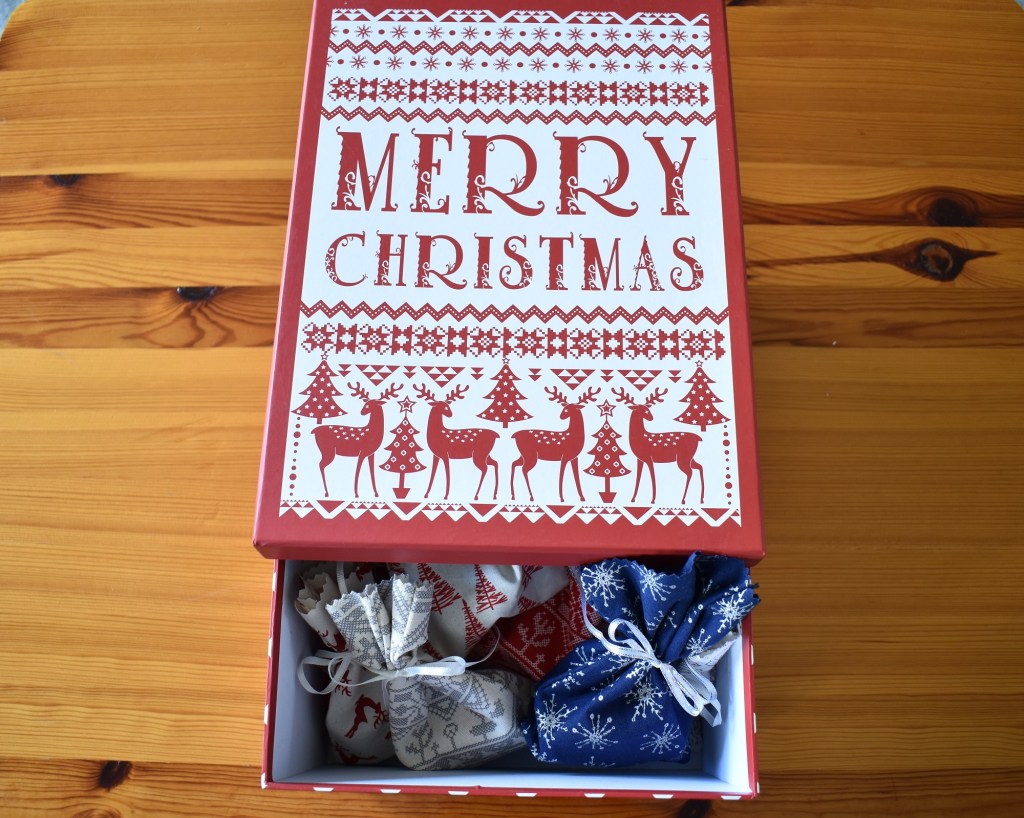
I’ve based the third of my Twelve Crafts of Christmas on an advent calendar I made my niece a few years ago where I decided to improvise away from the standard style of homemade calendar. The issue I found when doing research is that calendars of this type often involve hanging stockings from a string, a bit like bunting, which affects the kind of gift you can put in them as they can’t be too heavy. Or, they hang stockings on some kind of heavy board that, quite frankly, I find cumbersome and difficult to store throughout the year. Well, I did some thinking and decided to make little gift sacks and pop them in an A4 size Christmas Eve style box. This makes storage much easier, both throughout advent as it’s easy to simply pop the box under the tree, and throughout the year as you can store things in the box.

I’ve also made this craft project super simple for you, because let’s face it, while it really is lovely to have some homemade touches around the home, making 24 of anything is fairly time consuming! That’s right, I’ve actually thought of everything to make this as simple as possible for you!! So are we ready to get making?

What you’ll need: 

6 Fat quarters (each fat quarter measuring 40cm x 40cm or 50cm x 50cm will provide fabric for 3 bags)

OR

1.25metres of fabric (Please note this is based on standard craft fabric which tends to measure 115cm in width)

OR

Mix it up by using leftover pieces of fabric as I have. It doesn’t necessarily need to be Christmas fabric if you want to create a certain theme.

10 metres of matching ribbon to make 24 pieces of 40cm

Cutting board (if you have one)

Cutting ruler (if you have one)

Roller cutter or scissors 

Pinking shears 

Tape measure 

Sewing machine 

Matching thread 

Needle and pins

1) Preparing the fabric: 

You want to begin by cutting out 48 pieces of fabric 13cmx18cm 

Using pinking shears cut across the very top edge of each piece, this effect looks sweet and prevents fraying without the need for extra sewing.

2) Making the advent bags 

Place one piece of fabric down, face side up. Place the second piece of fabric face side down on top. Pin together. 

Sew all the way round the three non-pinked sides of the bag, 1cm in from the edge of the fabric. Start about 1cm down from the top edge and do a few back stitches to secure the stitches and prevent fraying. Repeat this at the end also.  

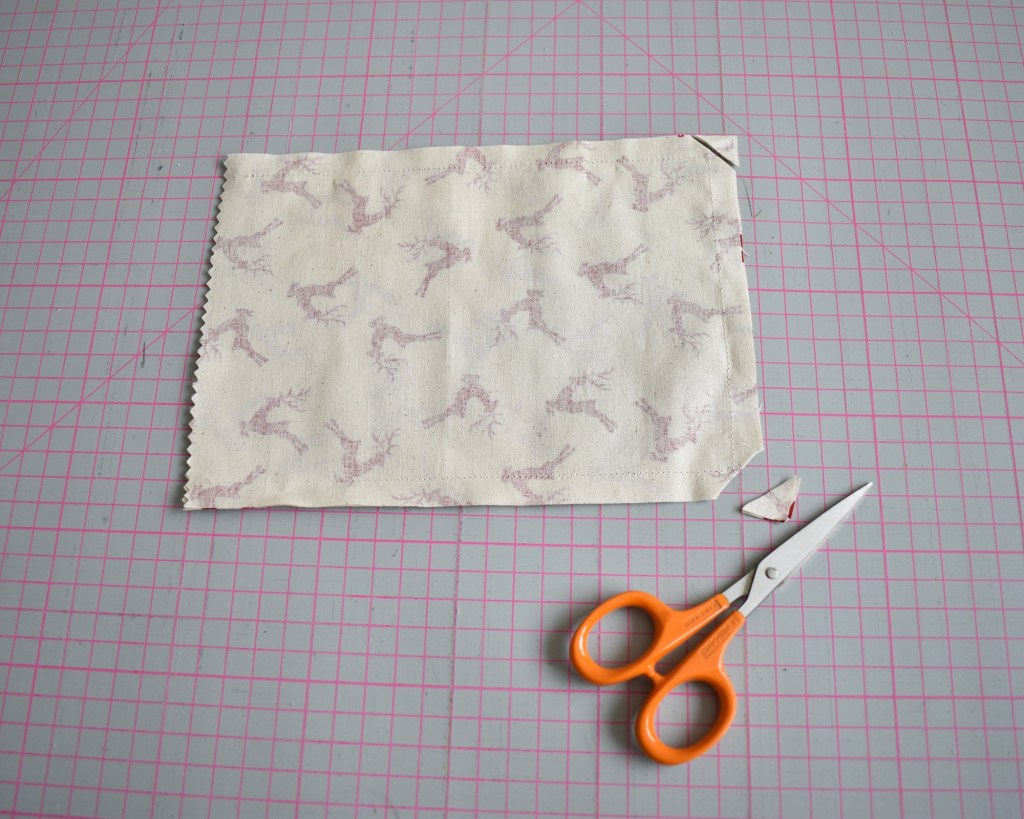
Cut off the two bottom corners, leaving a couple of millimeters between the cut and the stitch line.  This helps the corners to be turned neatly with no bunching. 

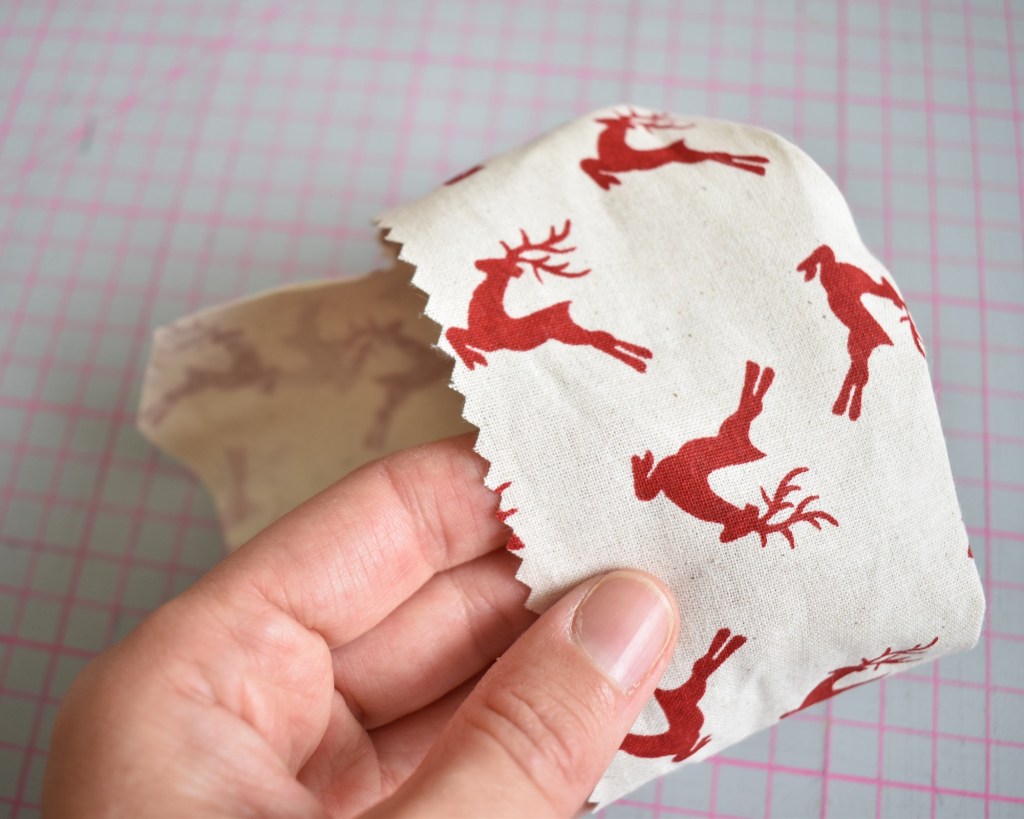
Turn the bag in the right way. 

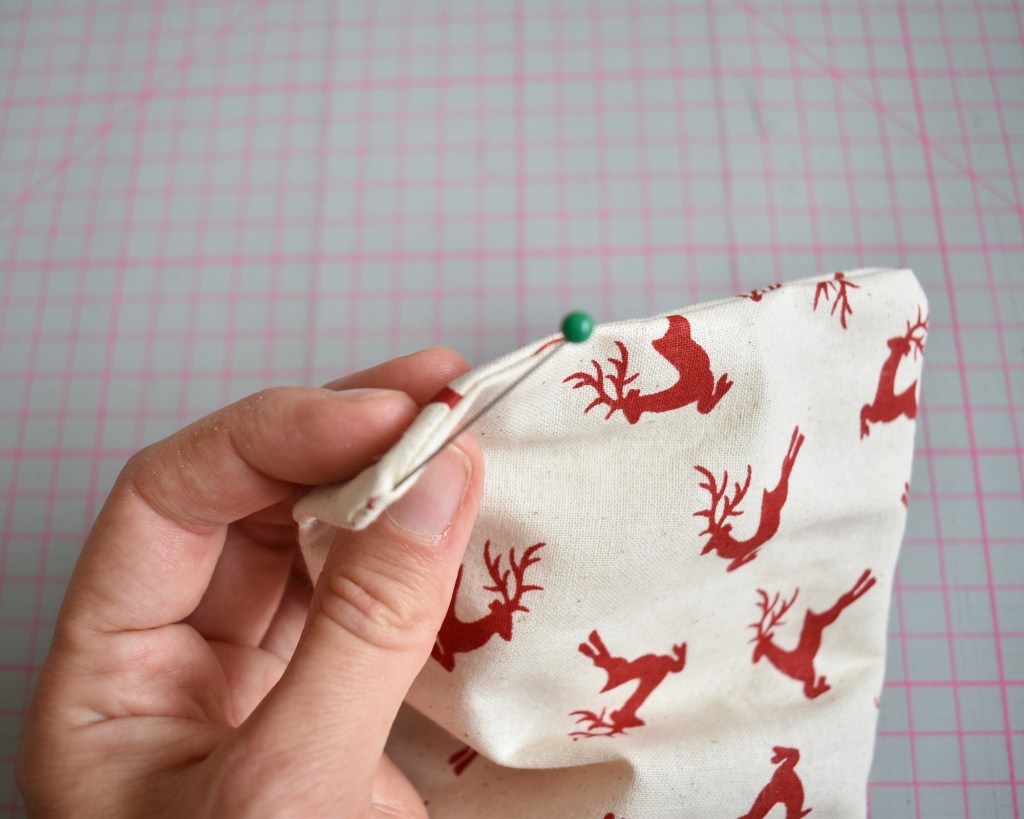
Using a pin nudge out the bottom corners if necessary. 

3) Attaching the ribbon 

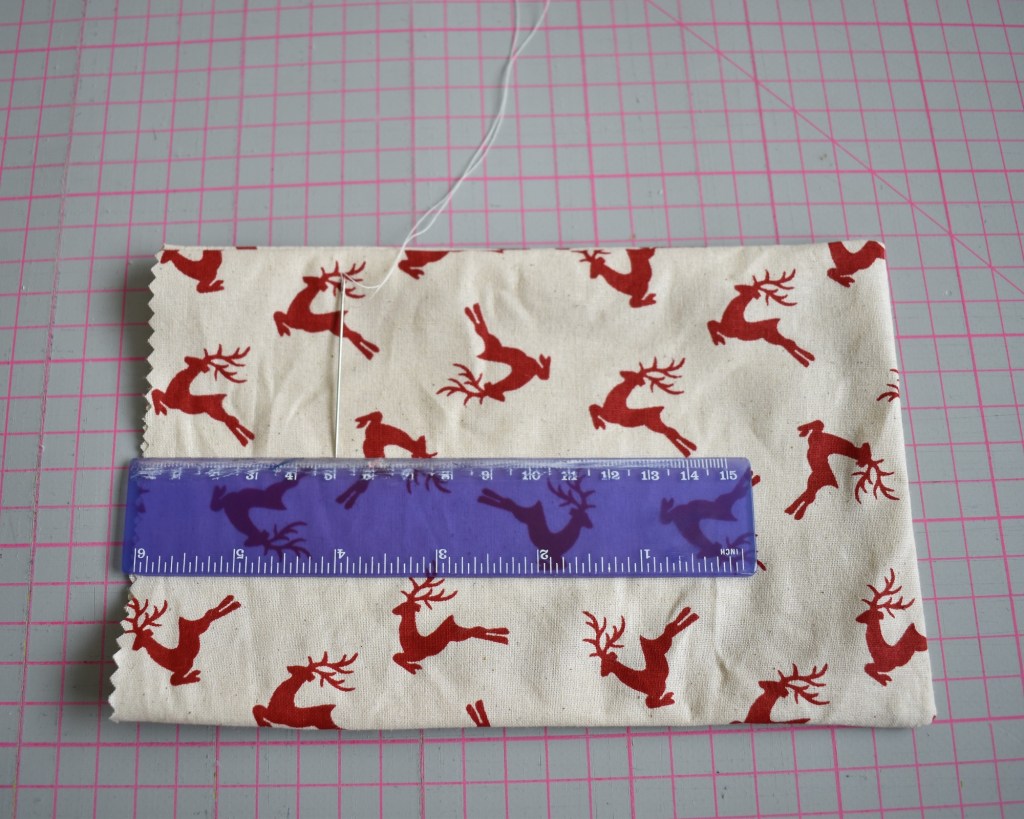
On the back of the bag, measure 5cm from the top and lay the ribbon down. I double my thread for extra strength. Bring the thread through from the inside of the bag and attach the ribbon with a few stitches. For a thin ribbon like I am using I tend to do a cross stitch and go over this three times to secure. For a thicker ribbon, you can either use this method or using tiny stitches attach the ribbon along both edges for about 1.5cms.  

But that’s not all…

Today I have a second option for you! How do you fancy making 24 mini Christmas stockings for your ‘Lucky Dip Advent Calendar’ instead? It’s just as simple and won’t take any more of your precious time.
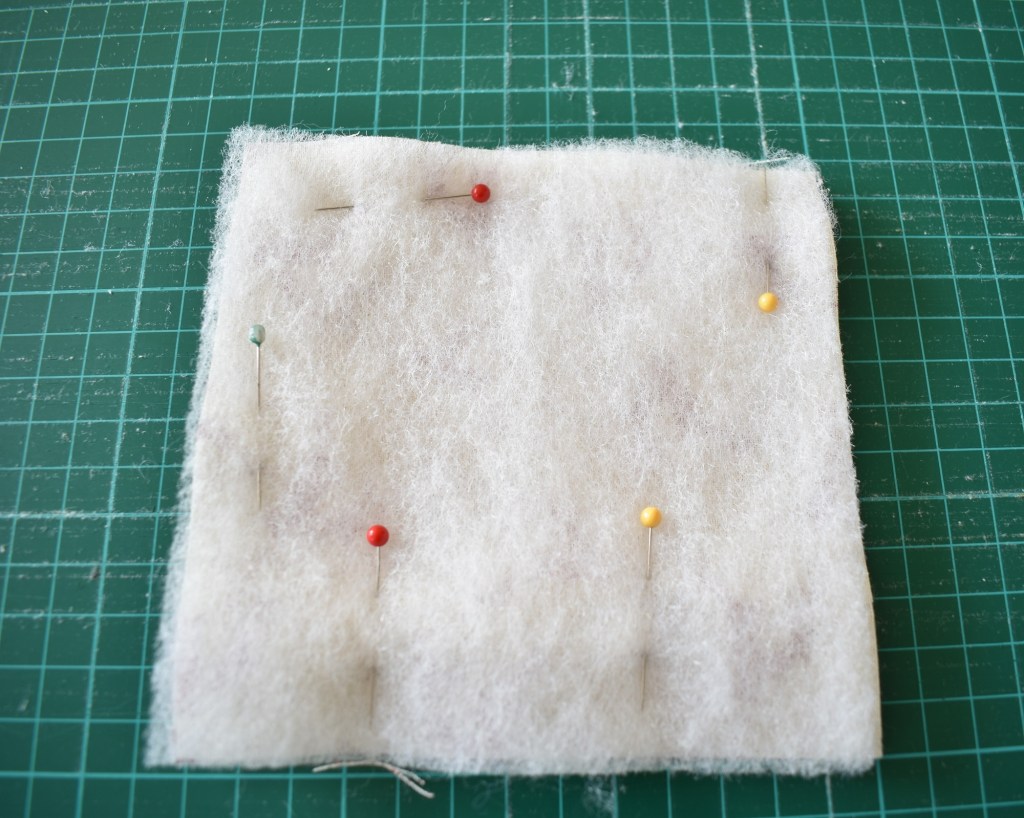
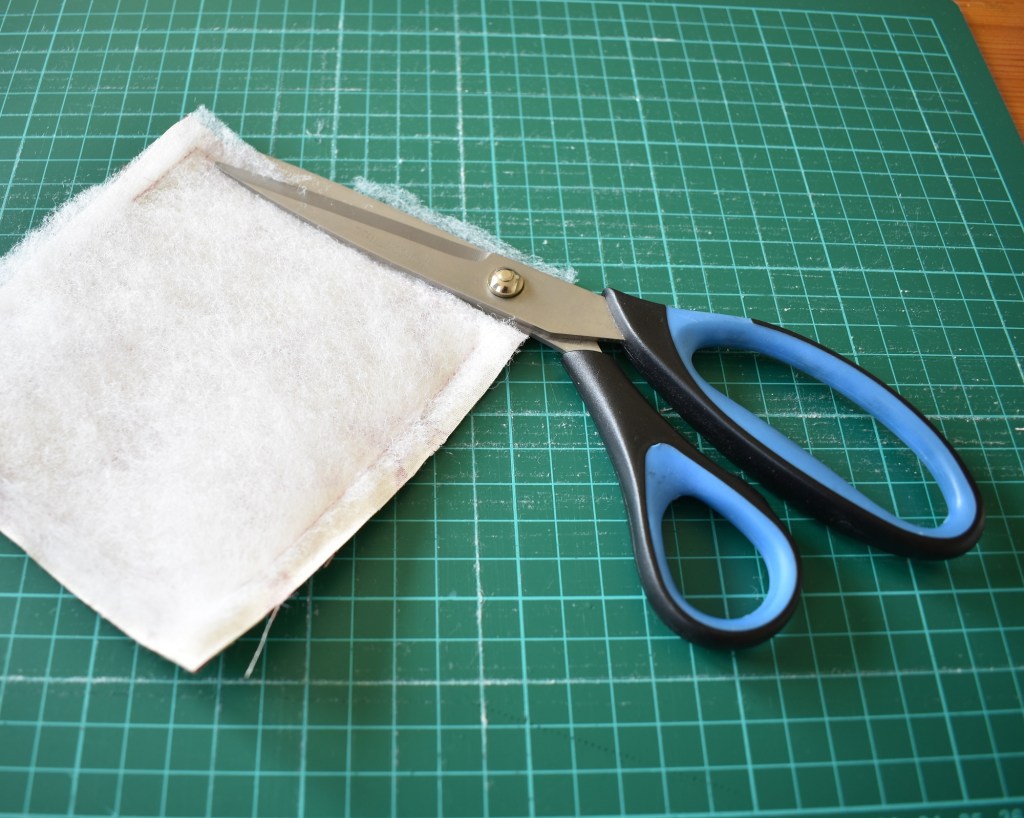
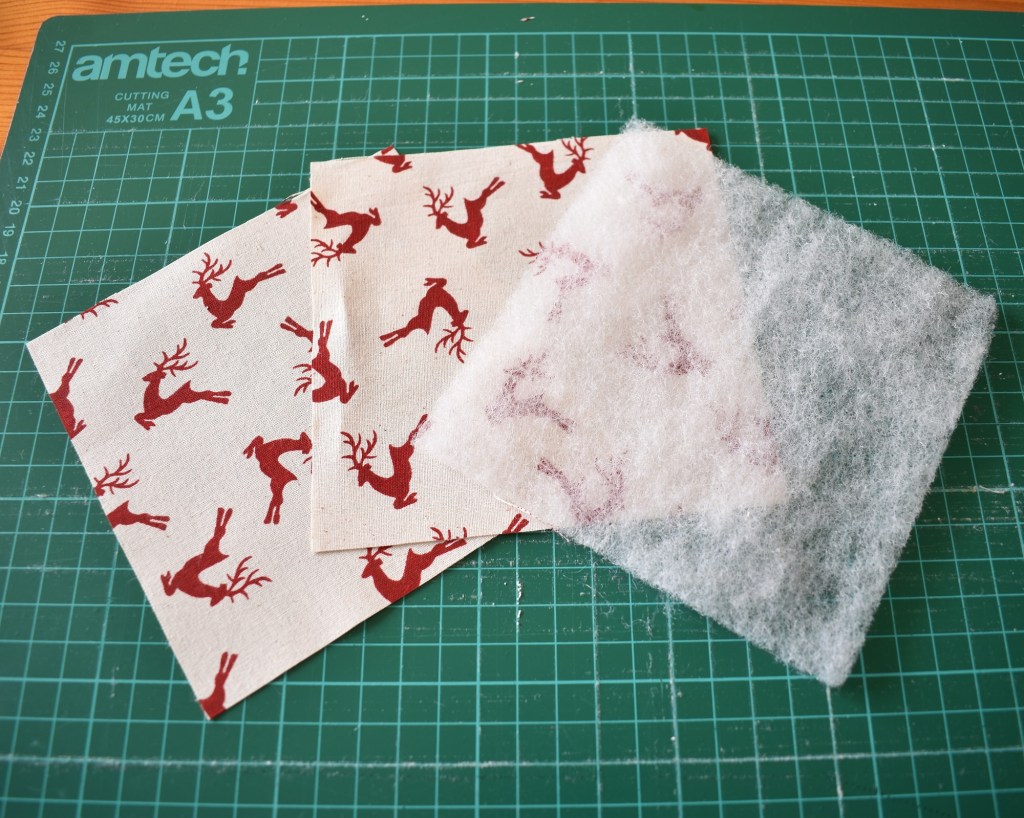
The only difference in what you’ll need for this is your ribbon as you don’t need anywhere near as much.

You’ll need 2.5 metres for 24 lengths x 10cm.

1) Preparing the fabric 

The first thing you’ll need to do is make a stocking template and the simplest way I’ve found is to simply draw around an existing sock! I tend to use a fairly big sock, either a man’s sock or one of those cosy, fluffy kinds as it gives the extra width for the hem allowance.

Draw round your template twice, once with the toe pointing left and once with the toe pointing right. If you don’t do one of each the stocking won’t fit together, you’ll literally have two left feet!

2) Making the advent stockings 

Cut out your stockings and as before use pinking shears to cut along the top edge.

Lay the two pieces of fabric on top of each other, face sides together and pin togther. As before, sew round the body and foot of the stocking, 1cm from the edge and remembering to do a few backstitches at the start and end to secure the stitch line.

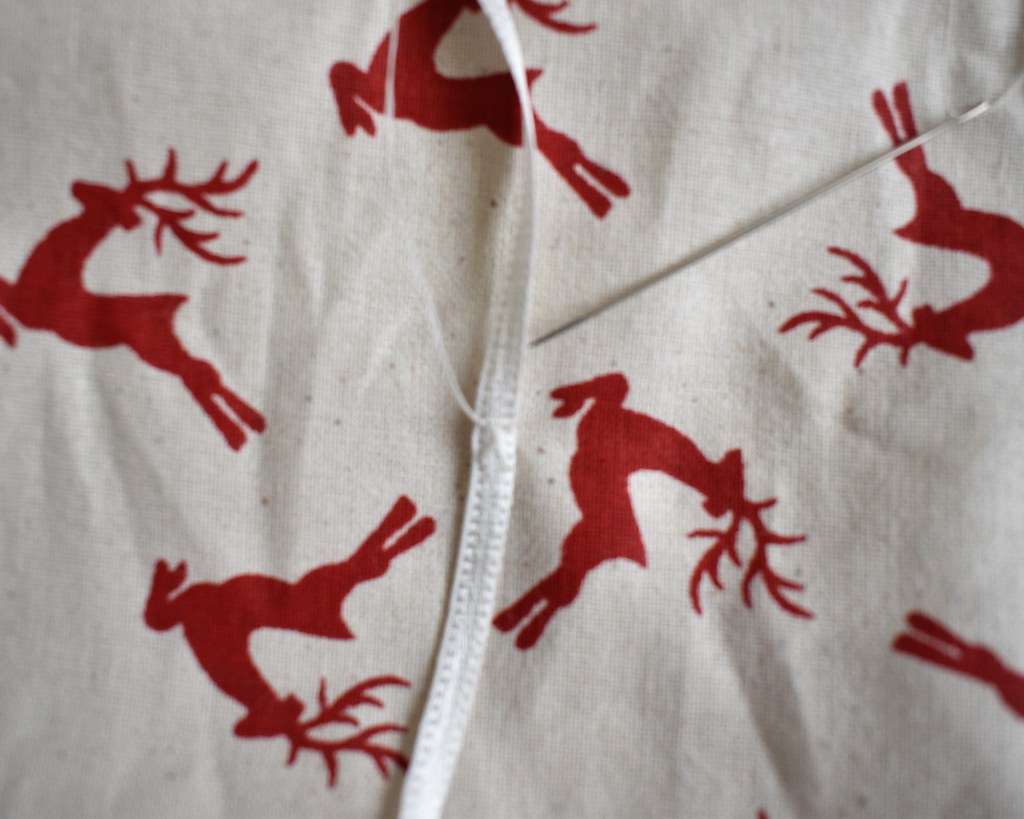
Once you’ve turned your stocking in the right way, attach the ribbon. To do this fold the ribbon in two and place the bottom end inside the stocking. I have placed it about 1cm from the top, in between the two inside hems, and attached it with a simple cross stitch. Attaching it here means you can sew it in firmly and there are no visible stitches on the outside.

So there you have it, a lovely alternative to a homemade advent calendar that you can fill with lovely little gifts year after year. Now there’s no need to keep buying cardboard calendars that need to be recycled! But don’t worry, you can still fill these with yummy chocolates if that’s how you like to start those dark mornings of advent.

If you’re getting into the swing of my ‘Twelve Crafts of Christmas’ join me next week when I’ll be showing you how to make a full size Christmas Stocking for the big day itself.